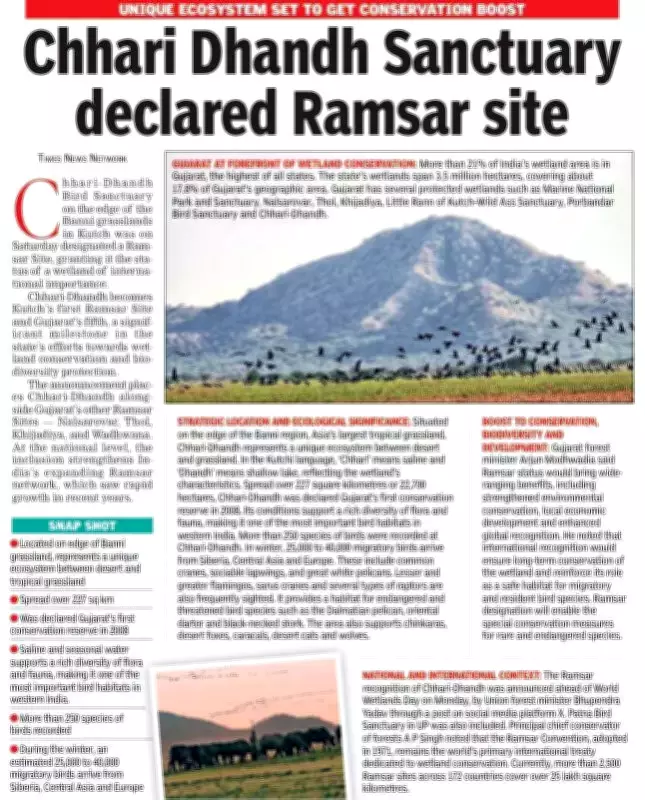
In a significant development for environmental conservation in Gujarat, the Chhari-Dhandh Bird Sanctuary, located on the edge of the Banni grasslands in the Kutch region, was officially designated as a Ramsar Site on Saturday. This prestigious recognition grants the sanctuary the status of a wetland of international importance, marking a crucial achievement in the state's ongoing efforts to protect its unique ecosystems.
A Milestone for Kutch and Gujarat
This designation makes Chhari-Dhandh the first Ramsar Site in Kutch and the fifth in Gujarat overall. The announcement represents a major milestone in the state's comprehensive strategy for wetland conservation and biodiversity protection. By securing this international recognition, Gujarat reinforces its commitment to preserving critical habitats that support diverse flora and fauna.
Joining Gujarat's Prestigious Wetlands Network
With this inclusion, Chhari-Dhandh now stands alongside Gujarat's other renowned Ramsar Sites, which include the Nalsarovar Bird Sanctuary, Thol Wildlife Sanctuary, Khijadiya Bird Sanctuary, and Wadhwana Bird Sanctuary. Each of these sites plays a vital role in maintaining ecological balance and providing sanctuary to numerous migratory and resident bird species.

Strengthening India's Conservation Framework
At the national level, the addition of Chhari-Dhandh to the Ramsar list significantly strengthens India's expanding network of internationally recognized wetlands. This development comes at a time when India has been actively increasing its Ramsar designations in recent years, reflecting a growing emphasis on environmental stewardship and sustainable management of natural resources.
The official designation underscores the ecological significance of the Chhari-Dhandh Bird Sanctuary, which serves as a crucial habitat within the unique landscape of the Banni grasslands. This recognition is expected to enhance conservation efforts, promote scientific research, and raise awareness about the importance of protecting such vital wetland ecosystems for future generations.