

The 2001 Gujarat Earthquake: A Quarter Century of Resilience and Rebuilding
On the morning of 26 January 2001, exactly twenty-five years ago, Gujarat experienced one of the most devastating natural disasters in India's history. A massive 7.7 magnitude earthquake rocked the region, with its intensity reaching "extreme" on the Mercalli intensity scale. The epicenter was located near Chaubari village in Bhachau taluka of Kutch district, causing widespread destruction across the area.
The National Institute of Disaster Management recorded casualties at 13,805, with more than 90% of homes destroyed in Kutch alone. The scars of that fateful day remain etched in the memories of survivors. "I was a witness to the tragedy. There was no precedent to that kind of devastation in my living memory," recalls Kiran Vaghela, an engineer, archaeologist, and resident of Bhuj. "But what happened thereafter is important. The way Kutch rebuilt itself was truly inspiring."
Memorializing Tragedy and Regeneration
At Bhujio Dungar in Bhuj stands the Smritivan Earthquake Memorial, which was inaugurated in 2022. Designed by Ahmedabad-based architecture firm Vastushilpa Sangath, this memorial serves as a living, breathing space that symbolizes rebirth and regeneration. It features reservoirs and a Miyawaki forest containing over 300,000 plants, representing the resilience that has defined Kutch since 2001.

The earthquake's lasting impact is most evident in how residents have fundamentally changed their approach to architecture. Before 2001, Bhuj, Rapar, Anjar, and Bhachau were experiencing rapid construction with hundreds of reinforced cement concrete (RCC) buildings. Tragically, most of these structures collapsed within seconds during the quake, reduced to rubble.
Rediscovering Traditional Wisdom
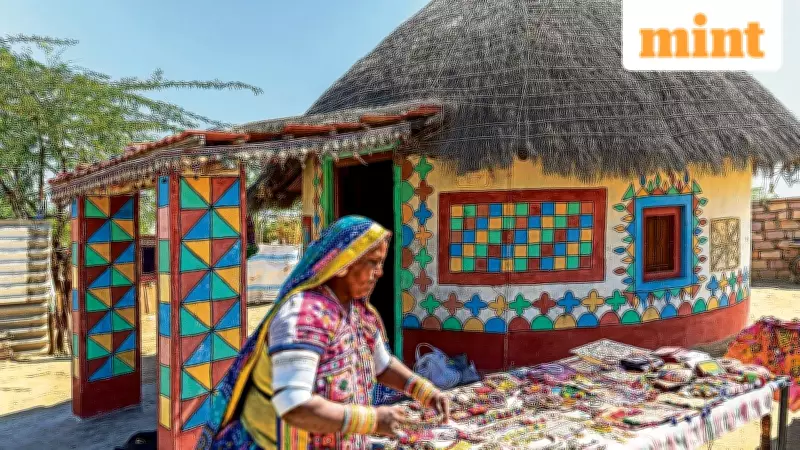
In contrast, a post-earthquake survey revealed that traditional round mud structures called bhunghas had remarkably withstood the severe seismic jolts. This discovery highlighted the importance of incorporating age-old wisdom into rehabilitation efforts.
Interestingly, this traditional knowledge had roots in another historical earthquake—the devastating 1819 quake in the Rann of Kutch, which transformed the region's topography by altering the course of the Indus River. Following that disaster, the Meghwals, an agro-pastoralist community in northwestern Kutch, began constructing circular bhunghas using mud, cow dung, and bamboo instead of square or rectangular structures.
These circular dwellings proved exceptionally resilient, not only against seismic activity but also against high-velocity cyclonic winds. They offered excellent thermal regulation, remaining cool during harsh desert summers and warm in winter. However, over time, this traditional wisdom remained confined to Meghwal hamlets while the rest of Kutch embraced RCC construction—until the 2001 earthquake forced a dramatic shift in perspective.
The Science Behind Circular Structures
"We tested why the structure of bhunghas did not break in 2001," explains Sandeep Virmani, a Bhuj-based environmentalist and architect who works with indigenous communities across India to revive traditional building crafts. "In a square or rectangular structure, when the earth moves sideways, cracks develop at corners. When these deepen, walls collapse, followed by roof failure. In circular structures, energy circulates continuously and gradually dissipates back into the ground."
Virmani was part of Kutch Nav Nirman Abhiyan, a collective of non-profit organizations formed in 1998 after a devastating cyclone in Gujarat. This group continued rehabilitation work following the 2001 earthquake and eventually evolved into Hunnarshala in 2003, focusing on sustainable architecture and ecological restoration.
Community-Led Reconstruction Efforts
The late Dr. A.S. Arya, technical adviser to the Gujarat State Disaster Management Authority at the time, was fascinated by traditional knowledge in seismic zones that minimized loss of life and property. "So, we developed guidelines for bhunga architecture, and GSDMA published them," says Virmani. "After that, we saw widespread adoption of this style in Kutch."

Master artisans from the Meghwal community collaborated with Hunnarshala architects, engineers, and researchers to adapt the traditional conical thatch roof to an octagonal tiled roof. Women from the community helped develop stabilized earth paints, while architects assisted families in placing bhunghas on stone plinths.
Kutch Mahila Vikas Sangathan (KMVS), an organization founded in 1989 to empower women and girls in the region, took responsibility for building approximately 2,000 bhunghas for 1,200 families in the Banni Pacham area. These structures rehabilitated semi-nomadic tribes engaged in livestock rearing and milk product sales.
The new bhunghas featured stone foundations and were constructed using rammed earth or stabilized earth blocks. Some incorporated stone and mud mortar with through-stones that held walls together during earthquakes. Traditional community spaces between two bhunghas were maintained, with kitchens often located in open areas.
National and International Recognition
This community-driven project, completed in 2002, gained national attention and became a case study for architecture students across India. "The success of the project can be attributed to the community's active participation in the entire recovery process, from decision-making to construction implementation," states a 2020 report co-authored by Shreyasha Hadawale, then a fourth-year architecture student in Pune.
Internationally, the United Nations Development Programme approached KMVS and the Kutch collectorate to develop community-run resorts in bhunga style. This collaboration resulted in Shaam-e-Sarhad, a village resort in Hodka that boosted Kutch's tourism industry and helped restore livelihoods.
"We gathered 12 artisans together, ranging from wood carvers and lacquer artists to thatch specialists," says Virmani. "That culminated in a very interesting bhunga design." Today, nearly all homestays and resorts in Kutch incorporate this architectural style with modern adaptations. Even the annual Rann Utsav Tent City features bhunghas equipped with contemporary amenities.
Women's Central Role in Rehabilitation
Lata Sachdeva, a Bhuj resident and KMVS member, emphasizes women's significant contributions during rehabilitation. Volunteers visited northwestern Kutch to understand bhunga culture, and women expressed their desire for resilient mud houses while addressing practical concerns about maintenance.
"Women said they wanted these resilient mud houses but didn't have enough time to regularly embellish them with lippan (mud and mirror work)," explains Sachdeva. "That increased their labor and took time away from embroidery." A women-led committee convened to adapt designs accordingly.
These structures continue evolving based on community needs. For instance, many houses now use Mangalore tiles instead of dried grass for thatched roofs to reduce maintenance time. Remarkably, bhunghas constructed in 2001 still stand today, with women volunteers who monitored construction remaining engaged with their neighborhoods.
Preserving and Expanding Traditional Knowledge
Several craft collectives featuring over 1,200 women now operate within bhunghas across the region. Unlike other parts of India where youth from artisan communities are abandoning traditional wisdom, Kutch presents a different story. "They are carrying this knowledge forward in their own way," Sachdeva observes.
Meanwhile, Hunnarshala's research team has documented 12 different styles of traditional earthquake-resilient architecture in various Himalayan regions. This work is particularly significant since the entire Himalayan arc was upgraded to Zone VI (the highest seismic-hazard category) by the Bureau of Indian Standards last year.
Bridging Tradition and Modern Practice
Back in Bhuj, Karigarshala—initiated in 2011 and becoming independent in 2021—connects traditional artisans with architects and engineers. "They have such wonderful traditional knowledge of not just making earthquake-safe but also low-carbon buildings," says Vaghela, Karigarshala's founding member.
This 18-month gratis course for young artisans aged 18-25 combines traditional earth technologies with formal pedagogy and practical applications. Approximately 15 years ago, artisans even worked in Abu Dhabi on a state project restoring old mud buildings. "Neither architects nor engineers are familiar with these traditional technologies," notes Virmani. "There's big demand for low-carbon buildings, but trained artisans were scarce. Today, Karigarshala students have worked with 50-60 architects nationwide."
Ongoing Seismic Challenges and Preparedness
Kutch remains in Seismic Zone V according to the Bureau of Indian Standards seismic zonation map. The Institute of Seismological Research (ISR) recently hosted a conference with international delegates to discuss intraplate earthquakes like the 2001 event.
Santosh Kumar, director-in-charge of ISR Gandhinagar, recalls that 25 years ago, only one seismological station existed in Kutch/Bhuj. "As a result, the precise location and magnitude of the 2001 earthquake weren't known immediately after its occurrence," he says. ISR itself was established in 2003 following the earthquake.
Today, Gujarat has 110 seismological stations providing near real-time data to the institute. "Much has changed since 2001," Kumar notes. "Before that, intraplate seismic activity wasn't well-understood. Over 25 years, more than a hundred scientific research papers have been published on this subject. Continuous seismicity monitoring and extensive strong ground motion studies enable faster relief and rescue operations."
Heritage Conservation in Seismic Zones
Bhuj houses significant heritage structures like Prag Mahal and Aina Mahal. After the 2001 earthquake, the Indian National Trust for Art and Cultural Heritage (INTACH) found that 40% of 250 inspected buildings across 56 locations in Kutch and Rajkot had either collapsed or sustained extensive damage, with another 30% damaged.
Since then, heritage conservation initiatives have emerged in high-seismic regions. For example, CEPT University's Centre for Heritage Conservation established the Bhuj Site School in Nagarkhana, Darbargarh in 2022 to study both lived history and regional architecture.
The story of Kutch's recovery demonstrates how traditional wisdom, community participation, and innovative adaptation can create resilient societies. As Virmani hopes, "the people-centric rehabilitation and revitalization in Kutch will inspire many others across the country." Twenty-five years after devastation, Kutch stands as a testament to human resilience and sustainable rebuilding.





