

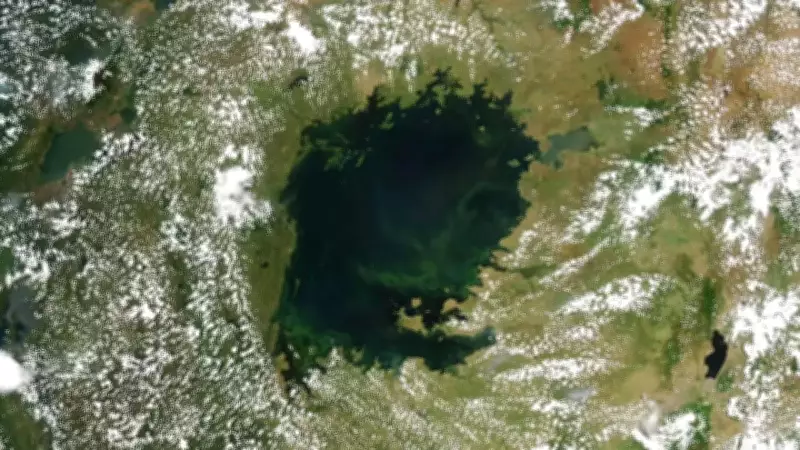
Lake Victoria's Toxic Green Transformation: A Permanent Crisis Unfolds
The waters of Lake Victoria, the world's largest tropical lake, have taken on an unsettling and persistent green hue that signals a profound environmental shift. What was once an occasional algal bloom has now become an almost permanent feature, alarming scientists and devastating communities across Kenya, Tanzania, and Uganda. Local fishermen, who have witnessed this transformation over decades, barely react to the change anymore—a testament to how normalized this ecological disaster has become.
The Toxic Culprits Behind the Green Scourge
Experts point to a familiar combination of pollutants as the primary drivers of this crisis: nitrogen, phosphorus, fertilizer runoff, and untreated sewage. These contaminants are washed into the lake by rainfall, creating ideal conditions for Cyanobacteria to thrive. Satellite imagery reveals haunting green glows in certain bays, indicating widespread algal blooms that are not merely cosmetic but dangerously toxic.
A 2021 study measured staggering nitrate levels in rivers feeding Lake Victoria. The Nyando River discharges over 6,000 kilograms of nitrates daily during peak rains, while the Nzoia River contributes approximately 22,000 kilograms per day. This massive influx of nutrients from fertilizer, manure, and sewage is more than enough to trigger explosive algal growth. The resulting blooms deplete oxygen in the water, leading to fish deaths and the creation of dead zones in deeper parts of the lake.

A Historical Decline: From Gradual Change to Systemic Collapse
The degradation of Lake Victoria did not happen overnight. Scientific records show a steady increase in photosynthetic pigments since the 1920s, followed by a crash in zooplankton populations in the 1960s and the disappearance of Haplochromine cichlids in the 1980s. Researchers emphasize that the current state is the long-term result of cumulative human activities, including land use changes, damming, and shifts in rainfall patterns within the catchment area.
Today, toxic cyanobacteria genera like Microcystis and Dolichospermum dominate the lake's ecosystem. Both produce microcystin, a potent liver-damaging toxin, indicating that the blooms are not static but evolving. Scientists have also identified hundreds of uncharacterized cyanobacterial genes, suggesting unknown risks. Locals cannot rely on visible green scum to assess water safety, as clear water may still harbor dangerous toxins.
Fisheries in Peril: An Economic and Survival Crisis
The fisheries of Lake Victoria, which support hundreds of thousands of tons of catch annually and a $600 million export industry, are now under severe threat. Oxygen fluctuations and the collapse of food webs jeopardize fish stocks, causing concern among fish processing factories about consistent supply. Seasonal die-offs, once considered normal, have become systemic, pushing the lake toward a potential tipping point from which recovery may be impossible.
Lake Victoria's green transformation serves as a stark warning. The interplay of human activity, rapid population growth, and climate change may have pushed this vital ecosystem past a line of no return, with dire consequences for millions who depend on it for water, food, and livelihood.






