

The tragic death of an eight-year-old boy in a leopard attack has ignited fury among residents of Pargaon village in Pune's Junnar tehsil. The incident, which occurred on Monday, has spotlighted the persistent failure of authorities to implement effective, on-ground measures to prevent fatal encounters between humans and big cats.
Capture of Suspected Leopard
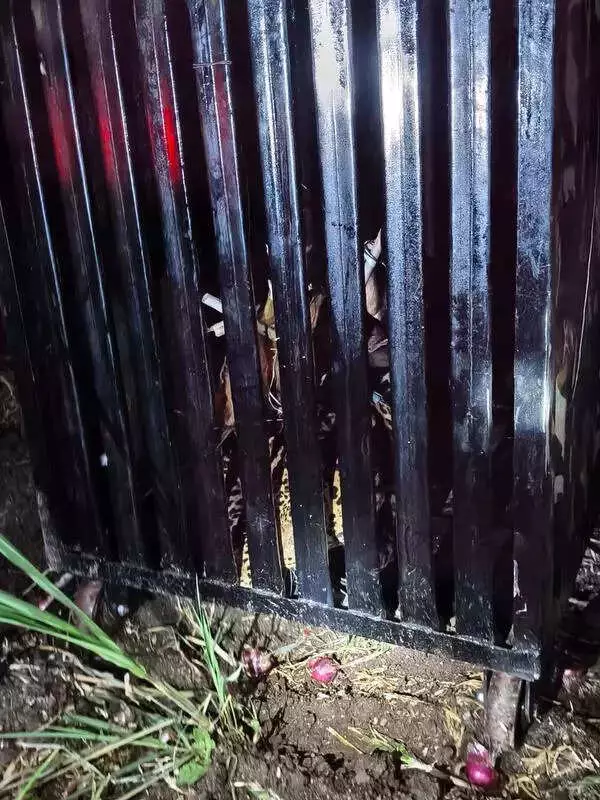
In response to the attack, forest officials from the Junnar division managed to trap a male leopard from the same locality in Pargaon village on Tuesday evening. The animal is estimated to be five to six years old. Assistant conservator of forests Smita Rajhans explained that a cage was placed in the exact area where the boy, identified as Rohan Babu Kapre, was mauled to death. Officials believe the leopard returned to the location in search of food, leading to its capture.
To scientifically confirm if the captured animal is the one responsible for the fatal attack, forest officials have collected pugmarks from the incident site for matching. "We suspect that we have trapped the same leopard. However, confirmation through scientific matching of pugmarks will be available by Wednesday," added Rajhans. Another senior official noted that in such cases, animals often revisit the same spot, bolstering their confidence in the capture.

Villagers' Anger and Demands
For the local community, the capture of one leopard is a grossly insufficient response. This attack marks the fourth such fatal incident in the Junnar forest division in just three months, underscoring a deep-seated and unresolved crisis. Villagers argue that the reactive strategy of capturing animals after an attack does nothing to ensure daily safety.
"After every attack, leopards are captured, and then everything goes quiet until the next incident," said a frustrated Pargaon resident. "Our children walk to school, people go to farms, and elderly people move around in fear every day. Capturing animals alone is not a solution."
The villagers have leveled serious allegations against the forest department and political representatives, accusing them of neglecting repeated pleas for preventive infrastructure. Their demands are clear and technology-driven:
- Large-scale deployment of AI-based monitoring systems, including thermal cameras and motion sensors.
- Implementation of real-time alert mechanisms to warn of leopard movement.
- Intensified trapping operations and relocation of problem animals.
- Adequate patrolling in vulnerable areas near forest fringes.
Narendra Dhome, sarpanch of nearby Pimparkhed village, stressed, "If leopards are repeatedly entering human habitations, they must be caught in larger numbers and relocated. Human life cannot be compromised."
Official Response and Expert Opinion
Forest officials maintain that sustained efforts are ongoing. They revealed that 68 leopards have been captured across the Junnar division in recent months as part of mitigation measures. Rescue teams are on high alert, and awareness drives are being conducted in fringe villages.
"We are taking all possible steps within established protocols," stated Rajhans. "Captures are carried out based on ground assessment, and our teams are monitoring leopard movement continuously. We have also got permission from higher authorities to tranquilise leopards if they are not captured." She emphasized that lethal action would only be considered as a last resort if capture or tranquilization fails.
However, wildlife experts caution that frequent captures are a superficial fix. They point to root causes like habitat fragmentation, a shrinking natural prey base, and expanding human settlements near forests. An anonymous biologist advocated for a holistic approach: "Conservationists have long advocated a combination of scientific interventions, habitat management, community participation, and technology-driven monitoring to reduce encounters. These efforts need to work out on the ground at a substantial level."

The incident has also renewed criticism of the political leadership. Villagers like Kiran Gajare from Jambut village in Shirur tehsil lament that promises of funds and schemes never materialize into tangible action at the village level, leaving communities perpetually vulnerable.





