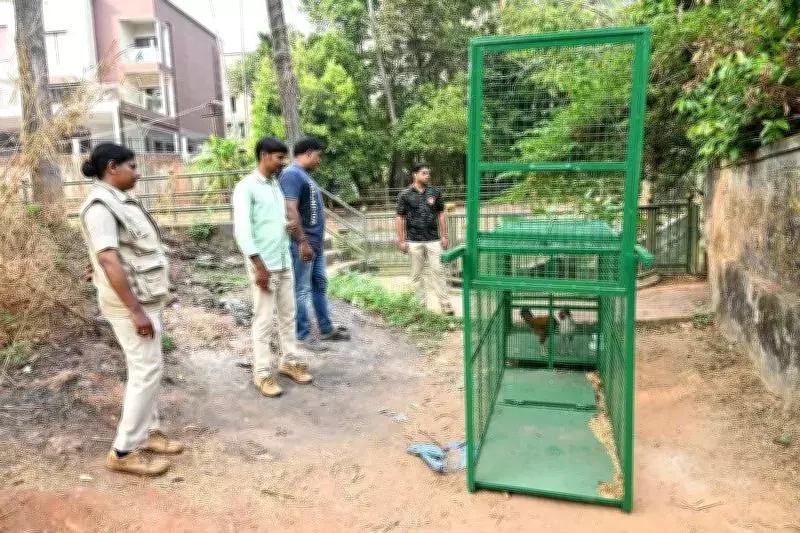
Leopard Sighting in Mangaluru's Kadri Area Triggers Forest Department Action
The forest department in Mangaluru has significantly ramped up surveillance and monitoring efforts in the Kadri locality following a confirmed leopard sighting captured on a CCTV camera near Doctors Colony. This incident has prompted immediate and coordinated action from wildlife officials to ensure public safety while addressing the presence of the wild animal in a residential zone.
Immediate Response and Deployment of Resources
Deputy Conservator of Forests (DCF) Antony Mariyappa confirmed that the department received the CCTV footage showing the leopard's movement, which was recorded on Tuesday night. In response, forest staff have been strategically deployed across the area to monitor the situation closely and implement necessary measures. A cage has been placed in the vicinity as of Wednesday, serving as a humane and non-aggressive method to capture the leopard safely.
"Our priority is to safely capture the leopard, and hence we cannot adopt aggressive measures. The cage will be kept for about a week to attract the animal," stated DCF Antony Mariyappa. He emphasized that the department is adhering to standard operating procedures for capturing and relocating wildlife, ensuring minimal stress to the animal and reduced risk to residents.

Safety Guidelines and Public Awareness
To reassure and protect the local community, forest department personnel have been stationed in the Kadri area, with officials advising residents to maintain a safe distance from the cage and exercise caution. General safety guidelines have been issued, urging people to avoid late-night walks alone and remain vigilant, especially during nocturnal hours when leopards are most active.
Officials noted that leopards are inherently nocturnal creatures and typically avoid human interaction. "In fact, the animal is more scared of humans," Mariyappa added, highlighting that such sightings often result from habitat encroachment rather than aggressive behavior from the wildlife.
Underlying Causes and Broader Context
Discussing the increasing instances of leopard sightings in Mangaluru city, Mariyappa pointed out that similar movements have been reported in areas like Shaktinagar and Vamanjoor, which were once part of a forested belt. "Habitat loss and fragmentation due to developmental requirements are forcing wildlife to move closer to human settlements. However, the number of such incidents in Mangaluru is still relatively low compared to other cities and districts in the state," he explained.
Additionally, improper waste disposal has been identified as a contributing factor to these incidents. Mariyappa elaborated, "Waste dumping leads to a rise in stray dog populations around garbage sites, which in turn attracts leopards into urban areas in search of prey." This connection underscores the need for better waste management practices to mitigate human-wildlife conflicts.
Ongoing Monitoring and Future Steps
The forest department continues to closely monitor the situation in Kadri, with the cage remaining in place for approximately a week to maximize the chances of capturing the leopard. Officials suspect that this may not be the first such sighting in the locality, indicating a pattern that requires sustained attention and proactive measures.
Residents are encouraged to cooperate with forest staff and report any further sightings or unusual activities promptly. The department's efforts aim to balance wildlife conservation with public safety, addressing both immediate concerns and long-term strategies to prevent similar occurrences in urban areas of Mangaluru.