Lonar Lake Water Crisis: Ancient Meteorite Crater Faces Unprecedented Threat
The Lonar Lake, a 50,000-year-old meteorite-impact crater located in Buldhana district of Maharashtra, has long captivated scientists and tourists alike with its rare ecology, high salinity, and distinctive alkaline pH. For years, conservationists have expressed concerns about human pressure on this unique site. However, the lake now confronts a more immediate and alarming threat: a sharp, unexplained rise in water levels that is not only threatening to alter the fundamental character of the lake but also submerging parts of its precious shoreline heritage.
Submerged Heritage and Ecological Peril
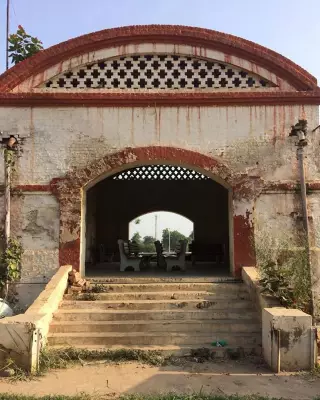
Since September of last year, the water level at Lonar Lake has surged by an astonishing 15 to 20 feet. This dramatic increase has left several ancient Shiva temples and the Kamalja Devi Temple, which are clustered along the banks, partially underwater. The water level began its concerning ascent during the 2025 monsoon season. Conservation experts are warning that any delay in identifying the precise source of this influx could seriously endanger Lonar's unique biodiversity and its invaluable geological legacy.
In response to this escalating crisis, the Nagpur bench of the Bombay High Court has taken suo motu cognisance of the situation and ordered a public interest litigation. A division bench comprising Justice Anil Kilor and Justice Raj Wakode has appointed Mohit Khajanchi as the amicus curiae. The court has also sought detailed replies from various state departments to address the emergency.

Divergent Expert Theories on the Water Surge
In the absence of an official, scientifically-backed explanation, experts remain divided on the root cause of the water level rise. One prominent theory attributes the surge to sustained freshwater inflow from four perennial springs surrounding the crater. Such a change could potentially dilute the lake's signature salinity and drastically alter its chemical composition. Adding to the concern are reports of fish appearing in the lake, which raises alarms about the disruption of an ecosystem considered globally significant for scientific research.
Another group of experts posits that the increase is being driven by sewage inflow into the lake. Environmentalist Professor Atul Bodkhe, who has meticulously tracked the lake for years, counters that the springs are not a new phenomenon and have never been linked to such a dramatic surge in the past. He argues that additional, unidentified water sources must be entering the lake and has urgently called upon the forest department to undertake continuous monitoring and publish comprehensive scientific findings.
Multiple Factors Under Scrutiny
Rajendra Dhongde, a retired range forest officer with extensive study of Lonar, emphasizes that multiple factors require thorough verification. These potential contributors include:
- Sewage inflow from surrounding areas
- Exceptionally heavy monsoon rainfall
- Possible percolation from the Kini Percolation Tank located approximately two kilometres away
Dhongde noted that nearly 700 shanties once stood near the lake but were relocated in 2022, raising questions about whether sewage alone can account for the current dramatic rise. He has also advocated for a detailed groundwater-current survey, citing increased porosity and altered subsurface flow due to extensive borewell drilling around the crater ridge, where tourism-related development is rapidly expanding.
He issued a stark warning that human activity near the eco-sensitive zone is weakening the crater's ridge—known as its ejecta blanket—through deforestation and land disturbance. This, in turn, is accelerating erosion and geological instability. Dhongde has urged the implementation of urgent measures to arrest the water-level rise and safeguard the lake's fragile and unique biodiversity.
Court-Appointed Amicus Curiae Recommendations
Mohit P. Khajanchi, the amicus curiae appointed by the Nagpur bench of the Bombay High Court on January 21, made his formal submission on January 28. His prayers included various critical court directives:

- The Principal Secretary of the Water Resources Department and the Buldhana Collector need to implement an emergency water diversion plan to prevent excessive inflow of water into the Lonar crater and further submergence of the Kamalja Devi Temple and other protected 1,200-year-old temples and heritage structures on the lake's rim.
- IIT-Bombay should immediately conduct a comprehensive study and publish a report identifying the source of the excessive water inflow into the crater and suggest concrete measures to stop it.
- The Principal Secretary of Environment and Climate Change, the Maharashtra Pollution Control Board (MPCB), and the Union of India through its Secretary of the Ministry of Environment, Forest and Climate Change need to establish a real-time Water Quality Monitoring Station at the Lonar crater site to investigate an alarming drop in pH and salinity levels.
- The appointment of an independent expert committee to suggest and implement effective measures for the preservation and restoration of the Lonar crater to its natural state.
UNESCO World Heritage Site Status: A Distant Dream
The state government is actively working to secure UNESCO World Heritage Site status for Lonar Lake. However, this development is progressing at a snail's pace and currently falls short of global standards. Known more as an archaeological site than a wetland, Lonar Lake is considered a strong candidate for UNESCO recognition. Despite the lake area housing 15 ancient temples, some dating back over 1,200 years, the Lonar Crater Development Committee, constituted on the directives of the Bombay High Court, appears to have accomplished very little in terms of improving essential infrastructure.
Basic facilities, from public washrooms to a scientific interpretation centre, remain in an abysmal state. The government framed an ambitious ₹370 crore plan in 2022 to boost tourism, conservation, and infrastructure, but very little of this plan has been translated into tangible action on the ground. While the forest department is attempting to address these issues, it must operate within the constraints of the Wildlife Protection Act, which adds another layer of complexity to conservation efforts.
The Alarming Plummet in pH Levels
Lonar Lake, like two other Ramsar sites in Maharashtra—Nandur Madhameshwar in Nashik and Thane Creek—is a victim of prolonged neglect. The lake, which stood apart globally due to its high salinity and remarkably high pH level of 11.5, is now on the verge of losing this defining uniqueness. "Home to unique microbes and biodiversity, the lake threw up a surprise last year when fish were spotted in it," said Kishore Rithe, head of the Bombay Natural History Society (BNHS), in a conversation. "Lonar Lake is not known to host fish given its caustic nature. But the inflow of freshwater must have diluted the conditions," he explained.
Expressing deep concern over the plummeting pH of Lonar Lake (from 11.5 to nearly 8.5), Rithe strongly suggests that the government should immediately collect water samples and conduct rigorous checks. "What is more important for Lonar is the unique pH of its wetland," he emphasized. Following High Court directives, some conservation efforts were initiated, including ornithology courses through BNHS, a wetland management plan by the government, and awareness and community involvement programs. However, experts unanimously agree that a great deal more needs to be done urgently to preserve this geological and ecological marvel for future generations.