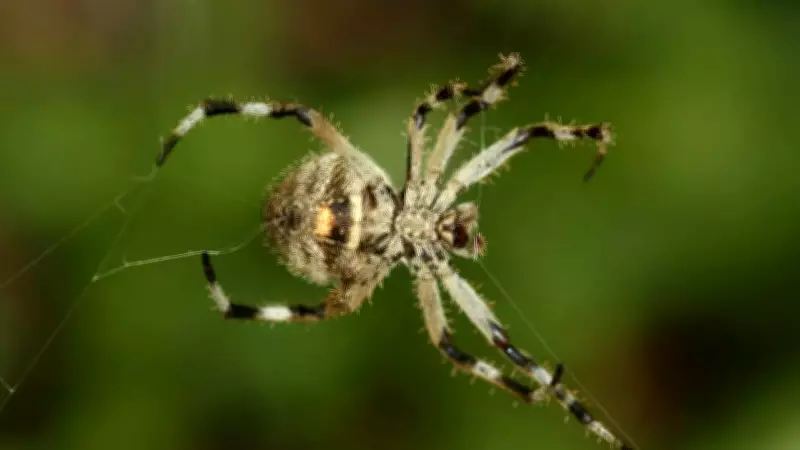
The Tiny Architect of Madagascar's Rainforests
Hidden within the lush, dense rainforests of Madagascar exists a creature so small it could easily fit on a coin, yet its engineering prowess rivals that of human-made materials. The Darwin's bark spider, barely measuring an inch across, remains largely unnoticed in its isolated ecosystem, but its creations are anything but ordinary.
Engineering Marvels Across Flowing Waters
What makes this spider truly remarkable is its ability to construct massive orb webs that stretch across flowing rivers and streams. Researchers have documented these incredible structures spanning more than 80 feet from bank to bank, with some individual threads reaching an astonishing 25 meters in length. The spider anchors these webs on trees growing on opposite banks, creating architectural wonders that seem more fitting for a superhero comic than the natural world.
These expansive webs can cover areas exceeding 30 square meters, creating efficient hunting grounds where the tiny spider captures dozens of insects in a single structure. The effort required to build such massive networks appears well worth it in Madagascar's unique ecosystem, where evolutionary isolation has produced numerous unusual creatures.

The Extraordinary Properties of Spider Silk
The real scientific fascination lies in the silk itself. Recent tests have revealed properties that outperform even the most advanced synthetic materials. According to Jessica Garb from the University of Massachusetts Lowell, this spider silk demonstrates characteristics that are "10 times better than Kevlar" in terms of toughness, not just strength.
What makes this silk particularly extraordinary is its combination of extreme strength and remarkable flexibility. Unlike rigid materials such as steel of comparable thickness, the spider silk can absorb tremendous amounts of energy before breaking. It stretches twice as far as silk from most orb-weaving spiders before snapping, making it tougher than many synthetic fibers currently used in body armor applications.
Scientific Discovery and Ongoing Mysteries
Researchers Igni Agnarsson and Matjaž Kuntner first identified these remarkable spiders back in 2008, sparking years of scientific investigation. Despite extensive study, scientists remain uncertain about exactly why this particular silk possesses such exceptional resilience. Each experiment conducted raises new questions about the biological mechanisms behind these properties.
The Darwin's bark spider stands out in Madagascar's ecosystem not for conventional beauty, but for its remarkable biological intelligence and engineering capabilities. As research continues, this tiny creature continues to challenge our understanding of material science and natural engineering, offering potential insights that could revolutionize various industries from protective gear to advanced materials development.