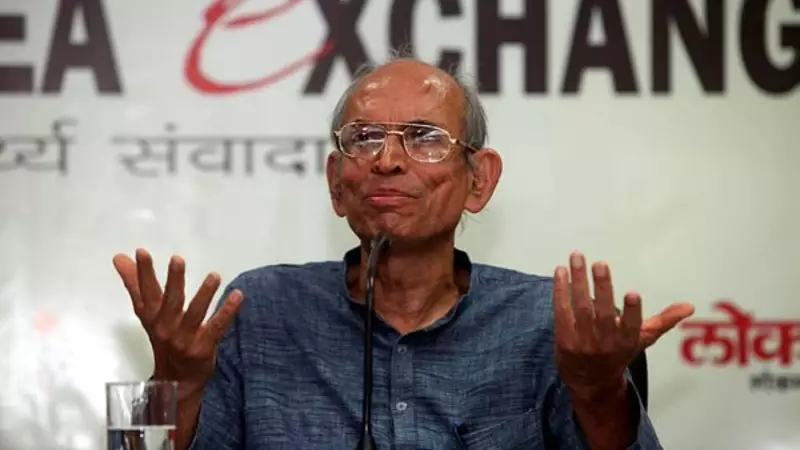
India's preeminent ecologist, Madhav Gadgil, passed away on January 7, 2026, following a brief illness. He was 84. Gadgil leaves behind a monumental legacy that uniquely blended rigorous scientific research with grassroots activism and policy advocacy, fundamentally shaping India's approach to environmental conservation by placing local communities at its heart.
A Life Dedicated to People and Nature
Born in Pune in 1942 to economist Dhananjaya Gadgil, Gadgil's deep connection with nature was forged during his childhood on his grandfather's farm in Nagpur and the hills of Sinhagad. Inspired early on by anthropologist Iravati Karve and ornithologist Salim Ali, he pursued a path in science. After earning his PhD from Harvard under E.O. Wilson in 1971, he returned to India with his wife, noted climate scientist Sulochana Gadgil.
In 1973, he joined the Indian Institute of Science in Bangalore, where he later founded the pioneering Centre for Ecological Sciences in 1983. It was here that he launched groundbreaking work on diverse ecosystems, from the sacred groves of Maharashtra and Karnataka to the dry deciduous forests spanning Karnataka and Kerala. His research on the sustainable harvest of bamboo by basket weavers was instrumental. This body of work played a fundamental role in the creation of the Nilgiri Biosphere Reserve in 1986 and in launching India's first wild elephant census.

The Gadgil Commission and an Unheeded Warning
To the Indian public, Madhav Gadgil is perhaps most widely recognized for chairing the Western Ghats Ecology Expert Panel (WGEEP), popularly known as the Gadgil Committee. Its 2011 report scientifically delineated vast stretches of the Western Ghats as Ecologically Sensitive Zones, recommending strict regulations on developmental activities.
The report sparked intense debate and was never implemented. Tragically, much of what Gadgil warned against has since transpired. Unchecked economic exploitation of hillsides, forests, wetlands, and rivers has led to devastating ecological damage and impacted the lives of millions residing in the mountain range.
Beyond policy, Gadgil was a prolific writer and collaborator. With anthropologist K.C. Malhotra, he studied pastoral communities in the Western Ghats. With historian Ramachandra Guha, he co-authored two seminal books on India's ecological history: This Fissured Land and Ecology and Equity. He also developed guidelines for People's Biodiversity Registers and established the Western Ghats Biodiversity Network.
A Legacy of Awards and Mentorship
Gadgil's contributions were recognized with numerous national and international honors, including the Padma Shri, the Padma Bhushan, the Volvo Environment Prize, the Tyler Prize for Environmental Achievement, and the UN Champions of the Earth award in 2024. He mentored ten PhD students and inspired generations of ecologists.
His later years were marked by personal loss with the passing of his wife, Sulochana, in July 2025. Despite this, he continued working, focusing on online talks and a project to create Marathi educational material using AI tools. In his 2023 autobiography, A Walk up the Hill: Living with People and Nature, he captured his philosophy: "the purpose of scholarship is not merely to understand, but to deploy that understanding towards action."
Madhav Gadgil's life stands as a powerful testament to the idea that true environmental conservation is inseparable from the welfare and wisdom of local communities. His work remains a crucial guide for building a sustainable future for India.