The Sahyadri mountain range, or the Western Ghats, has lost one of its most dedicated and passionate defenders. For over sixty years, ecologist Madhav Gadgil tirelessly worked for the conservation of this global biodiversity hotspot through rigorous scientific research, deep engagement with local communities, and powerful advocacy.
The Unwavering Champion of People and Science
Gadgil was a man of profound conviction, holding an unshakeable belief in both scientific inquiry and the wisdom of local inhabitants. He consistently argued that the best protectors of any ecosystem are the people who live closest to and depend on it. This philosophy became the cornerstone of his life's work. In 2010, when the then Environment Minister Jairam Ramesh decided to form an expert panel to draft conservation recommendations for the Western Ghats—prompted by the Save Western Ghats Movement—Gadgil was the unanimous choice to lead it.
This body, known as the Western Ghats Ecology Expert Panel (WGEEP), spent months conducting detailed scientific studies, undertaking numerous field visits, and holding extensive consultations with all stakeholders. The panel submitted its comprehensive report in August 2011. However, the report's fate is a well-documented chapter of environmental politics. It faced fierce opposition from mining interests in Goa and other vested groups in Kerala. A change in the environment ministry's leadership led to the formation of a new committee under Dr. K. Kasturirangan, effectively sidelining the pioneering Gadgil Committee Report.

The Athirappilly Visit: A Case Study in Transparency
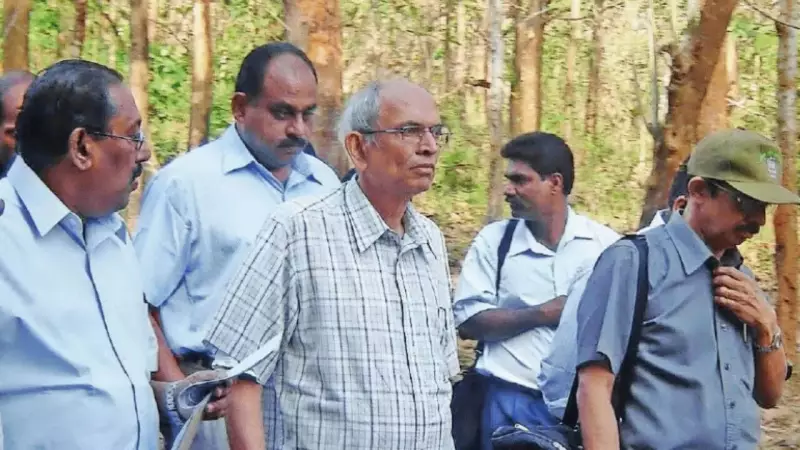
Beyond the broader study, the WGEEP was also tasked with reviewing four specific projects. One was the contentious Athirappilly hydroelectric project in Kerala's Chalakudy river basin. On January 29, 2011, Gadgil led the panel on a meticulously planned visit to the site. The process was structured into four clear segments: a field inspection, meetings with people's representatives, a public consultation, and a technical session. Every stakeholder was informed and invited well in advance, reflecting Gadgil's commitment to transparency and inclusive democracy.
This stood in stark contrast to the later, discreet visit by the Kasturirangan Committee, which was accompanied only by the project proponents. During the field visit, Gadgil's interaction with tribal communities was especially telling. He not only listened to their views on the project but also actively advised them on how to secure their rights under the Forest Rights Act—recommendations that were formally included in the final WGEEP report.
A Report Suppressed, A Vision That Endures
Ironically, the WGEEP report itself may never have reached the public domain without the Right to Information (RTI) efforts of activist G. Krishnan. Contrary to deliberate misrepresentations, the report did not call for draconian measures. Instead, it advocated for the faithful implementation of existing conservation laws and provided a pragmatic framework for sustainable living within the Ghats' fragile ecology. Gadgil's deep faith in grassroots democracy was embedded throughout the document.
The report provided clear, sector-wise guidelines on permissible and non-permissible activities across different Ecologically Sensitive Zones (ESZs). Gadgil and the panel insisted that these recommendations be translated into local languages and discussed in village assemblies (gram sabhas). Had this been done, the ecological and social trajectory of the region could have been profoundly different.
The recurring monsoon disasters and devastating floods in Kerala since 2018 caused Gadgil immense pain, even as they tragically validated the warnings in his report. In the aftermath, he sought to understand whether authorities had acted on prior alerts and actively supported community-led flood monitoring initiatives in river basins like Chalakudy, Meenachil, and Wayanad.

Fourteen years after its submission, as the climate crisis accelerates, states like Kerala and Goa find themselves increasingly vulnerable. Meaningful ecological restoration of the Sahyadris is no longer optional but essential for resilience. The most comprehensive, scientifically robust, and humane blueprint for this task remains the Gadgil Committee Report. Ultimately, embracing its wisdom would be the most fitting tribute to the legacy of Madhav Gadgil, the Sahyadri's cherished warrior.