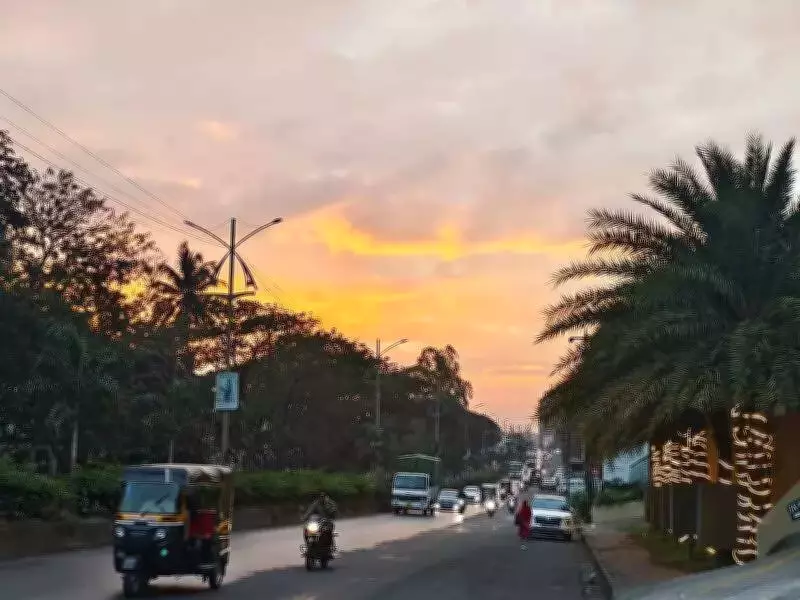
Sudden Climate Shift in Maharashtra Linked to Bay of Bengal Low-Pressure System
The Indian Meteorological Department (IMD) reported on Wednesday that a sudden climate change has been observed across parts of south-central Maharashtra, attributed to a low-pressure area developing in the Bay of Bengal. This meteorological phenomenon has resulted in partly cloudy skies and a significant alteration in temperature patterns throughout the region.
Notable Temperature Increases Recorded Across Multiple Cities
According to IMD data, minimum temperatures have risen sharply by 3°C to 5°C in several key cities. The cold nighttime conditions that residents had grown accustomed to have abruptly disappeared, marking a dramatic shift in the local weather scenario.
Detailed temperature changes include:

- Kolhapur: Minimum temperature increased by 4°C to reach 19.7°C, while maximum temperature rose by 1°C to 30.7°C
- Satara: Minimum temperature increased by 3.4°C to 15.9°C, with maximum temperature rising 0.6°C to 31.2°C
- Mahableshwar: Minimum temperature increased by 1°C to 13.4°C, while maximum temperature rose 2°C to 26.8°C
- Sangli: Minimum temperature increased significantly by 5.2°C to 20°C, with maximum temperature remaining constant at 31.2°C
- Solapur: Minimum temperature increased by 4.6°C to 21.1°C, while maximum temperature remained steady at 32.6°C
Residents Notice Immediate Changes in Daily Life
The sudden temperature shift has been immediately noticeable to local residents. Satish Koli, a security guard at a bank in Kolhapur's Laxmipuri area, shared his experience: "I had been lighting a bonfire almost every night for the past month to stay warm. However, since Tuesday, the cold has suddenly disappeared, and there is no need even to wear winter accessories."
This personal account highlights how the weather change has affected daily routines and comfort levels for people across the region.
Agricultural Concerns and Rainfall Predictions
The IMD has predicted rain in isolated areas of Kolhapur and Satara districts over the coming days. Such weather conditions are expected to have significant implications for agricultural activities in western Maharashtra.
Rohan Salvi, a mango farmer from Kolhapur, expressed concern about the potential impact: "If such weather conditions continue for a few more days and if there is rainfall, then the mango fruits — which will be reaching the harvesting stage from February and March — will be affected."
The weather shift is particularly concerning for several key crops in the region:
- Mango cultivation
- Cashew farming
- Grape production
- Wheat agriculture
Farmers and agricultural experts are closely monitoring the situation as these temperature fluctuations during critical growth phases could potentially affect crop yields and quality.
The sudden climate change serves as a reminder of how regional weather systems can be influenced by larger meteorological patterns, with the Bay of Bengal low-pressure area demonstrating its far-reaching effects on Maharashtra's weather conditions and agricultural prospects.