

Ecologists Uncover Maharashtra's Landscape Secrets Through 750 Years of Marathi Literature
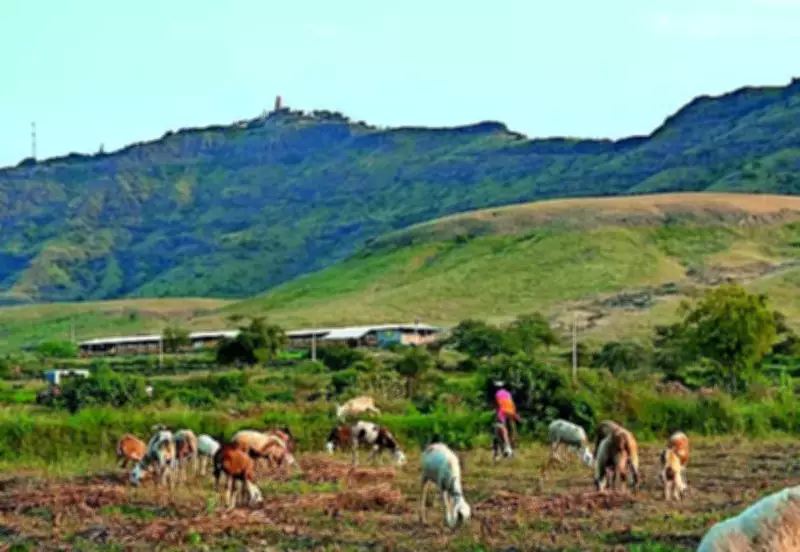
Before the urban sprawl transformed western Maharashtra, what was the true nature of its landscape? Was it covered in dense forests or dominated by open savannas? While science provides answers, convincing people requires more than just data. In a groundbreaking approach, ecologists Ashish Nerlekar and Digvijay Patil have turned to an unexpected archive: 750 years of Marathi literature, spanning from the 13th to the 20th century.
Bridging Science and Culture
Ashish Nerlekar explains the motivation behind this unique research: "People often misunderstand the history of our landscape. There's a tendency to romanticize the past, assuming everything was once forest. When they encounter grasslands today, they mistakenly believe something has gone wrong environmentally."
Ecologists have long maintained that India's tropical savannas are ancient, stable ecosystems rather than degraded forests. This view is supported by fossil pollen records, animal remains, and evolutionary studies. However, Nerlekar recognized that scientific evidence alone wasn't enough to shift public perception. The solution lay in finding culturally resonant evidence that felt familiar to local communities.

Methodology: Rigorous Textual Analysis
The researchers published their findings in the October 2025 edition of People and Nature, a journal by the British Ecological Society. Their article, titled "Utilizing traditional literature to triangulate the ecological history of a tropical savanna," details their meticulous approach.
They focused exclusively on Marathi literature from seven districts of western Maharashtra: Nashik, Ahmednagar, Pune, Satara, Sangli, Solapur, and Kolhapur. Sources included:
- Sant biographies and devotional poetry
- Oral folklore and traditional myths
- Women's grindmill songs (ovi)
- Stories associated with local deities
The researchers applied three strict filters:
- Exclusion of Sanskrit and Urdu texts, focusing solely on Marathi sources
- Geographic restriction to western Maharashtra districts
- Requirement for precise georeferencing - texts had to be tied to specific, identifiable locations
Nerlekar emphasized: "We retained only sources firmly embedded in place, where religious narratives intertwine with detailed landscape descriptions. These savanna indicators aren't incidental - they're woven into the fabric of the environment people actually lived in."
Case Study: The Kolvihire Village Foundation Myth
One particularly revealing example comes from a folk tale describing the founding of Kolvihire village near Jejuri in Pune district. The story follows Valhya Koli, a robber who transforms into the sage poet Valmiki through years of penance. As a symbol of this transformation, leaves sprout from his former weapon - a stick that grows into a padala tree, which the tale claims still stands in Kolvihire.
Beyond its moral narrative, the story's precise ecological details proved valuable. The specific naming of a tree species tied to a known location demonstrates how such texts preserve reliable environmental information. The tale also reflects a common savanna settlement sequence: hunting communities (kolis) arrive first, followed by pastoral groups (gavlis and dhangars), mirroring ecological transitions from hunting to grazing-based livelihoods.
Evidence of Ancient Grazing Practices
Another compelling example comes from a 'dhangari ovi' - traditional poetry of the dhangar shepherd community. A song from Chitalenagar in Solapur district describes Lord Khandoba caring for an impossibly large flock of sheep and lambs at Kolvihire. While the numbers are mythic, the setting reveals important ecological realities.
Large-scale sheep grazing requires open grasslands with abundant fodder - not dense forests. By placing such scenes in devotional songs linked to real locations, the research demonstrates that grazing and open landscapes were long-standing features of these regions, not indicators of environmental degradation.

Surprising Continuity Across Centuries
The most striking discovery was the remarkable consistency of the landscape over 750 years. Nerlekar noted: "What surprised us most was the continuity. We expected to find open canopies given other scientific evidence, but we didn't anticipate the landscape remaining so consistent for at least 750 years. The dominant tree species described in these texts are still present today in similar proportions."
Academic Validation and Broader Implications
Kundlik Paradhi, assistant professor in the Marathi department at Savitribai Phule Pune University, commented on the research's significance: "Folk literature in Marathi and other regional languages has traditionally been read symbolically or devotionally. This research reminds us that these texts are also grounded in lived landscapes, offering valuable historical ecological data."
The research began when Nerlekar and Patil were reading Stories of Indian Saints: Translation of Mahipati's Marathi Bhaktavijaya by JE Abbott. They noticed repeated references to specialist plant species and descriptions of open landscapes. What started as interesting observations evolved into a systematic research methodology that could revolutionize how we understand historical ecology.
This innovative approach demonstrates how traditional literature can serve as a bridge between scientific evidence and cultural understanding, potentially influencing policymakers and helping communities appreciate the ancient, natural state of their landscapes.





