

Microplastic Contamination Discovered in Brahmani River Sediments Within Bhitarkanika Sanctuary
In a concerning environmental development, researchers have detected tiny plastic particles in the sediments of the Brahmani River as it flows through Odisha's ecologically sensitive Bhitarkanika wildlife sanctuary. The findings, published in the journal Water, Air, and Soil Pollution on April 14, raise significant alarms about pollution infiltrating one of the state's most protected ecosystems.
Widespread Presence Across All Sampling Locations
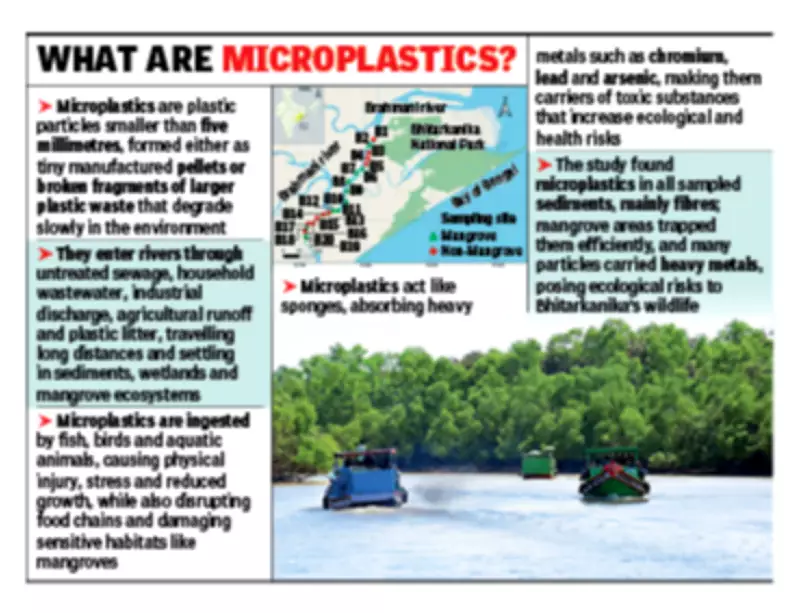
The comprehensive study revealed microplastics at every sampling location along the river within the sanctuary boundaries. Scientists emphasized that even minuscule amounts of these particles—invisible without specialized stereomicroscopes—could create long-term hazards for the delicate mangrove forests, diverse fish populations, and numerous wildlife species that depend on the Brahmani River for survival.
The highest concentrations of microplastics were documented near areas with visible human activity, suggesting anthropogenic sources as the primary contributors. The particles identified were predominantly fibers, fragments, and thin films—materials commonly associated with household wastewater discharge, discarded fishing equipment, packaging materials, and degraded plastic waste transported downstream.

Fragile Ecosystem Faces Disproportionate Risk
While the overall microplastic levels measured lower than those reported from many heavily polluted Indian rivers, researchers issued a stern warning about Bhitarkanika's particular vulnerability. The sanctuary's mangrove sediments were found to effectively trap these microscopic particles, substantially increasing exposure for plants and animals inhabiting the mudflats and shallow waters.
"All sediment samples contained microplastics, indicating their widespread presence even in protected areas," the research team noted in their publication. They further explained that such contamination could disrupt aquatic wildlife populations and compromise the ecological functioning of the entire sanctuary ecosystem.
Toxic Heavy Metals Amplify Environmental Threat
Beyond the plastic particles themselves, the study uncovered an additional layer of danger: microplastics were found to carry toxic heavy metals on their surfaces, including arsenic, lead, cadmium, chromium, and zinc. This combination significantly elevates risks for the sanctuary's diverse inhabitants, including fish species, saltwater crocodiles, turtles, and numerous bird populations.
International Research Collaboration Sounds Alarm
The study was conducted by a collaborative team of scientists from Nalanda University, Manipal Institute of Technology, Auburn University in the United States, TERI, and Nagaland University. Rakesh Kumar of Auburn University, one of the study authors, emphasized the high ecological stakes, stating, "Buffer zones around Bhitarkanika should be strengthened for solid-waste management, with stricter controls on riverbank settlements, tourism operators, and agricultural practices."
Biodiversity Hotspot Requires Immediate Protection Measures
Bhitarkanika National Park is renowned for its extensive mangrove forests, healthy population of saltwater crocodiles, nesting sites for Olive Ridley turtles, numerous migratory bird species, and a resident elephant population. Researchers assert that their findings should serve as both a warning signal and a baseline for policymakers to implement enhanced waste management and river protection measures to safeguard the sanctuary's irreplaceable biodiversity.
Kumar highlighted that citizen science initiatives and increased public awareness represent the most pragmatic solutions to address this growing environmental challenge. The study establishes crucial data that can guide conservation efforts and regulatory actions to prevent further degradation of this vital ecosystem.






