Middle East Crisis Triggers Global Aviation Shutdown, Thousands of Flights Cancelled
The rapidly escalating military conflict in the Middle East has plunged global aviation into chaos, forcing the cancellation of thousands of flights and leaving passengers stranded worldwide. This unprecedented disruption stems from the closure of airspace across multiple Gulf nations and key transit hubs, following a series of retaliatory strikes between the United States, Israel, and Iran.
Conflict Escalation Forces Airspace Closures
The crisis was triggered by a joint US-Israeli military operation that targeted Iran, resulting in the death of Iran's Supreme Leader, Ayatollah Ali Khamenei. In retaliation, Iran launched a barrage of missiles and drones targeting Israel and US military installations throughout the Gulf region. This exchange of fire has rendered the skies over West Asia extremely hazardous for civilian aviation.
Consequently, several nations have taken the drastic step of shutting their airspace entirely. The list of affected countries includes Israel, Qatar, Syria, Iran, Iraq, Kuwait, Bahrain, Oman, and the United Arab Emirates. The closure of these critical air corridors has severed vital flight paths connecting Europe, Asia, and Africa.

Massive Flight Cancellations and Operational Chaos
The impact on global flight schedules has been catastrophic. According to data from Flight Aware, more than 2,800 flights were cancelled across the Middle East on Sunday alone. West Asian carriers were responsible for approximately 1,600 of these cancellations.
The ripple effects were felt strongly in India, where nearly 350 flights were cancelled. Major Indian airports reported significant disruptions:
- Delhi Airport: 100 flight cancellations
- Mumbai Airport: 125 flight cancellations
- Tiruchirappalli Airport: Multiple cancellations reported
Airlines operating through the region now face severe operational challenges. Flights are being diverted over Saudi Arabia or forced to take much longer oceanic routes, leading to substantial delays and significantly higher fuel costs.
Major Airlines Suspend Operations Indefinitely
In response to the ongoing crisis, major international and Indian carriers have announced extensive flight suspensions and cancellations.
Indian Carriers Take Precautionary Measures
Air India has extended the suspension of all flights to and from the UAE, Saudi Arabia, Israel, and Qatar until 2359 hours IST on March 2, 2026. The airline has cancelled around 125 international flights and will operate its North America and Europe flights using alternative routes with technical stops in Rome.
IndiGo has suspended select international flights that utilize West Asian airspace until March 2, offering affected passengers rebooking options or refunds. The airline stated this extension is a "precautionary measure to ensure the highest standards of safety for our customers and crew."
Akasa Air has suspended flights to and from Abu Dhabi, Doha, Jeddah, Kuwait, and Riyadh until March 2, offering full refunds or free rescheduling for passengers with bookings until March 7, 2026.
SpiceJet has cancelled all flights operating between India and the UAE for March 1 and 2, 2026, citing the temporary closure of UAE airspace.
Gulf Carriers Halt Operations
The region's flagship carriers have been forced to ground their fleets. Emirates has suspended all flights to and from Dubai until at least 1500 hours UAE time on Monday, March 2. Similarly, Qatar Airways has halted operations due to the closure of Qatari airspace, with a further update expected on March 2.
Etihad Airways has suspended all flights to and from Abu Dhabi until 1400 hours UAE time on Monday, March 2. Aviation analytics agency Cirium reports that the Gulf carrier has cancelled 30 percent of its scheduled flights.

Security Alert in India and Regional Fallout
The escalating tensions have prompted security responses beyond aviation. The Indian Ministry of Home Affairs (MHA) has issued alerts to states, while security has been tightened and internet restrictions imposed in Kashmir as a precautionary measure.
Regional reports indicate further military actions, with Israeli airstrikes targeting Hezbollah positions in Beirut. Gulf nations have collectively vowed to defend themselves, signaling a potential for further escalation.
Thousands of Passengers Stranded with No Clear Resolution
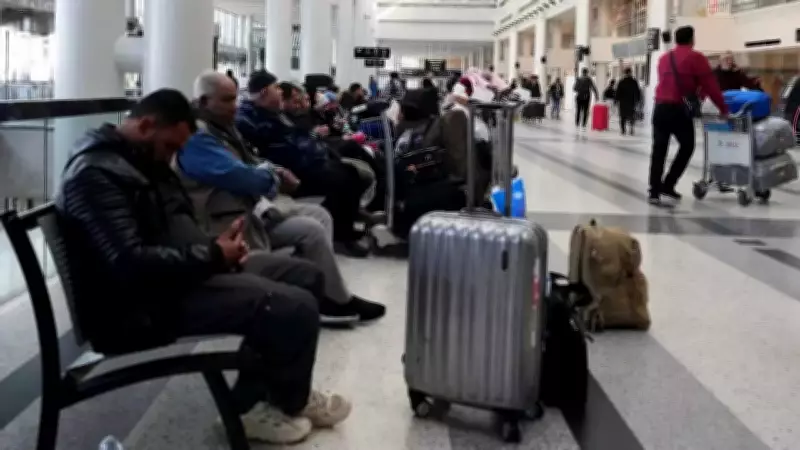
The widespread flight suspensions have left thousands of passengers stranded across West Asia and other international transit hubs. Travelers are facing indefinite waits at airports and hotels, with airlines unable to provide a clear timeline for the resumption of normal operations as military hostilities continue.
With key transit hubs like Dubai, Doha, and Abu Dhabi effectively shut down, and no immediate diplomatic resolution in sight, the global aviation industry faces one of its most severe disruptions in recent history. Airlines are advising all passengers to check their flight status directly before heading to any airport.