

Middle East Crisis Escalates Into Full-Scale War, Threatening Global Stability
The ongoing Middle East crisis has transformed from a geopolitical standoff into a full-scale war zone, with profound implications for multiple economies worldwide. The conflict, primarily involving Israel, Iran, and the United States, is now sending shockwaves through global markets, particularly affecting oil supplies and consumer costs.
Strait of Hormuz: A Critical Chokepoint in Disarray
At the heart of the economic concern lies the Strait of Hormuz, a narrow waterway that carries approximately one-fifth of the world's oil supply. As the war intensifies, this critical route has been severely disrupted. Iran's new supreme leader, Mojtaba Khamenei, declared in his first public message that the strait would remain closed as a "tool of pressure," exacerbating the situation.
Despite efforts by 32 countries to release a record 400 million barrels of oil into the market, prices surged above $100 per barrel. US Energy Secretary Chris Wright noted that it could take weeks for the US Navy to begin escorting oil tankers through the strait. Currently, only Iranian ships are transiting the route, allowing Tehran to maintain oil revenue while other nations face significant disruptions.

Immediate and Long-Term Economic Consequences
Analysts warn that the closure of the Strait of Hormuz could have dire consequences for consumers and the broader economy. Homayoun Falakshahi, lead crude research analyst at Kpler, estimated that restoring operations might take one to three months, requiring the clearance of hundreds of ships and repairs to damaged facilities.
Jay Hatfield, CEO of Infrastructure Capital Advisors, projected that oil prices could reach $150 per barrel if the strait remains closed. This spike is already translating into higher fuel costs:
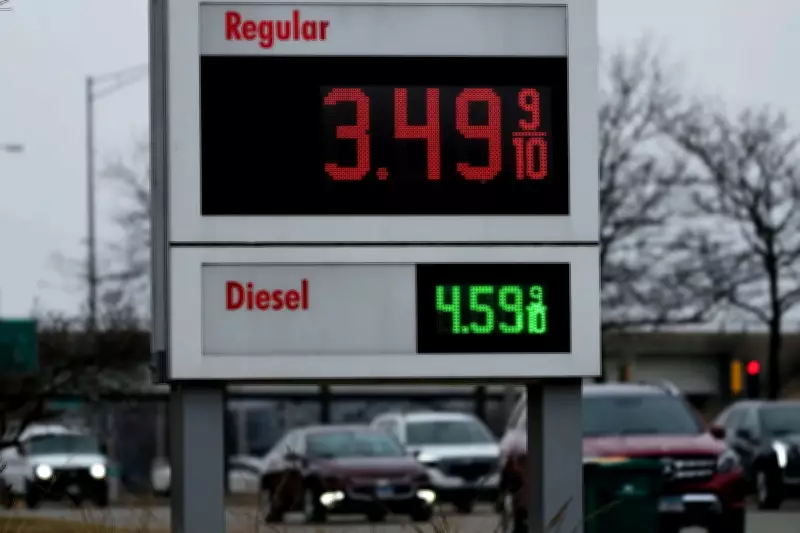
- Petrol prices are approaching $4 per gallon.
- Diesel prices are projected to near $5 per gallon, impacting the transportation sector.
Trucking companies, such as FedEx, have begun implementing fuel surcharges, and businesses are unlikely to absorb these added costs. According to JPMorgan, consumers may bear around 80% of tariff-related expenses this year, leading to price increases for perishable goods like dairy, fruits, and vegetables, as well as potential hikes in airfares.
Broader Economic Outlook Under Pressure
The economic impact extends beyond immediate consumer costs. Large spikes in oil prices have historically preceded weaker economic activity, as seen during the 1973 oil crisis and the 1990 Gulf War. A prolonged rise in energy costs could result in:
- Reduced hiring or layoffs by businesses.
- Declines in stock markets.
- Decreased consumer spending, which accounts for about two-thirds of US economic output.
Economists at Goldman Sachs have revised their outlook, increasing forecasts for inflation and unemployment and raising the probability of a recession this year to 25%, up from 20%. This situation contrasts with the oil price surge following Russia's invasion of Ukraine in 2022, when the US job market was more robust.
Political and Military Dimensions
The conflict has drawn significant political attention. Former US President Donald Trump urged nations to send warships to the Strait of Hormuz, highlighting the intensifying tensions. Meanwhile, the US military's role has been emphasized, with analysts noting its supremacy in the region as China faces challenges in engagements with Iran and Venezuela.
As the war continues, the global community watches closely, with the potential for further escalation and economic disruption looming large. The intertwined nature of geopolitics and economics in this crisis underscores the urgent need for resolution to mitigate widespread impacts.






