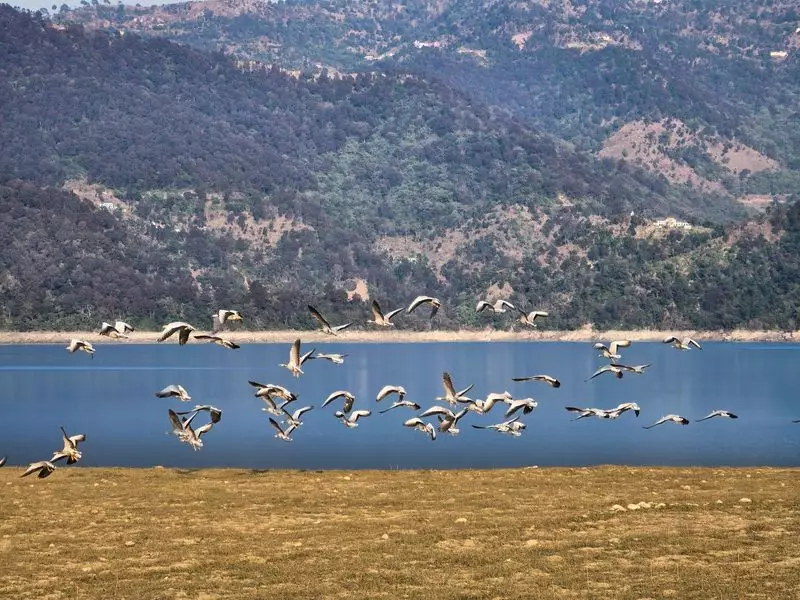
In a significant ecological development, the vast Gobind Sagar reservoir in Himachal Pradesh has transformed into a bustling new haven for thousands of migratory birds this season. The shallow waters created by receding water levels in the lake, a consequence of the ongoing water drawdown for irrigation in Punjab, Haryana, and Rajasthan, have become an unexpected but ideal resting and feeding ground for winged visitors from far-off lands.
An Unplanned Sanctuary Emerges
The Gobind Sagar lake, formed by the Bhakra dam, is currently witnessing water levels approximately 40 feet below its full capacity. This natural recession has exposed vast stretches of shallow water and muddy banks, rich in aquatic vegetation, insects, and small fish. This environment is perfectly suited for wading and dabbling birds, offering them ample food and relative safety. Forest Department officials and wildlife enthusiasts have noted an unprecedented congregation of various species in these areas, a sight less common when the reservoir is full.
Key species observed include the bar-headed goose, common pochard, northern pintail, common teal, and the great cormorant. The presence of the bar-headed goose, known for its incredible high-altitude migration over the Himalayas, is of particular note. This shift in habitat usage underscores how changing water dynamics in man-made reservoirs can create temporary but vital ecosystems for wildlife.

Official Recognition and Conservation Efforts
The Himachal Pradesh Forest Department has officially acknowledged this new trend. Ramesh Chand, the Divisional Forest Officer (DFO) for Wildlife in Bilaspur, confirmed the increased activity, stating that the department is actively monitoring the populations. While the reservoir area is not a formally declared wildlife sanctuary, the department is treating these congregations with serious conservation interest.
Officials are employing regular patrols and monitoring to protect the birds from potential threats such as poaching or disturbance. The department is also considering more structured studies to understand the long-term implications of this pattern and how water management policies of the Bhakra Beas Management Board (BBMB) interact with local biodiversity. The creation of these shallow zones essentially functions as a seasonal wetland, a habitat type that is crucial for migratory bird survival but is declining globally.
Broader Ecological Implications
This phenomenon at Gobind Sagar is more than just a seasonal spectacle; it highlights the complex interplay between water resource management and ecological conservation. The drawdown for agricultural needs, while a planned annual activity, has inadvertently crafted a perfect stopover site on the Central Asian Flyway. This flyway is one of the major routes for birds migrating from breeding grounds in Siberia and Central Asia to wintering grounds in the Indian subcontinent.
The situation presents a unique opportunity for eco-tourism and birdwatching in the Bilaspur region, potentially boosting local economies if managed sustainably. However, it also poses a challenge: ensuring that these temporary habitats are not disrupted by human activity and that the birds remain protected. The Forest Department's vigilance is crucial in this interim period before the water levels rise again with the monsoon rains.
In conclusion, the shallow waters of Gobind Sagar lake have emerged as an accidental yet vital refuge for migratory birds. This event serves as a powerful reminder of nature's adaptability and the unintended consequences of human engineering. It calls for a nuanced approach in managing our water resources, one that considers not just agricultural and energy needs but also the preservation of the delicate ecological networks that depend on these changing landscapes.