

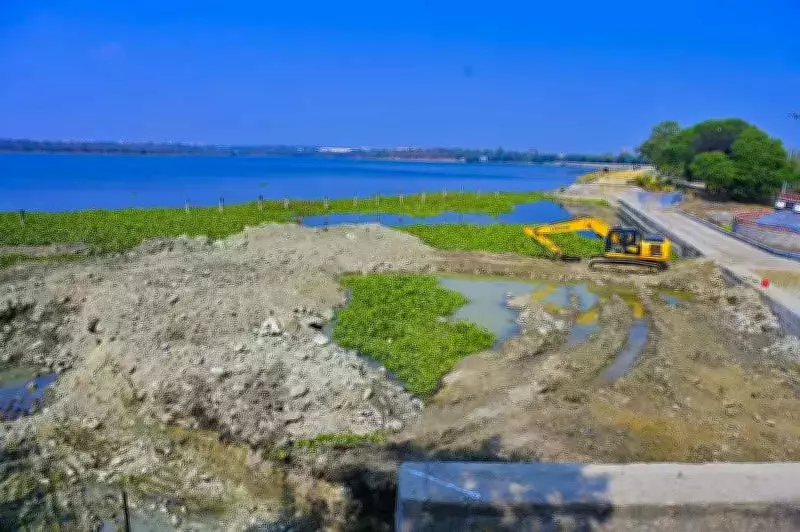
Migratory Birds Identified as Key Spreaders of Invasive Water Hyacinth in Nagpur
The aggressive spread of the invasive aquatic weed Eichhornia crassipes, commonly known as water hyacinth, is posing a severe threat to the ecological balance of urban water bodies in Nagpur. Recent scientific studies have pinpointed migratory birds as a primary vector in dispersing this problematic plant across lakes and reservoirs throughout the region.
Ecological Impact on Urban Water Bodies
The unchecked proliferation of water hyacinth is causing significant environmental damage:
- Shrinking open water areas in lakes and reservoirs
- Disturbing aquatic ecosystems and harming fish populations
- Affecting feeding and nesting patterns of seasonal migratory birds
- Creating dense mats that block sunlight and reduce dissolved oxygen levels
Environmental experts warn that these ecological changes threaten the very survival of migratory bird species that depend on Nagpur's urban wetlands during their seasonal visits.

Scientific Findings from Ambazari Lake Study
The National Environmental Engineering Research Institute (Neeri) conducted a comprehensive study of Ambazari lake, examining multiple factors including:
- Water quality parameters and pollution levels
- Water inflow patterns and circulation
- Ecological stressors affecting the lake ecosystem
- Reproductive mechanisms of water hyacinth
This detailed research was commissioned by the Nagpur Municipal Corporation after conventional approaches failed to control the water hyacinth menace. The findings have been submitted to municipal authorities with specific recommendations for sustainable management.
How Migratory Birds Facilitate Spread
Scientists from premier research institutions explain that water hyacinth, originally introduced to India as an ornamental plant, has spread rapidly due to its aggressive reproductive capacity. A key revelation from recent research is the role of migratory birds in this expansion.
"Migratory birds moving between multiple lakes are believed to play a significant role in carrying seeds from one water body to another," explained a scientist from a national research body. "This natural dispersal mechanism has aided the plant's expansion across the Nagpur region."
Reproductive Capacity and Control Challenges
The water hyacinth's reproductive characteristics make it particularly difficult to control:
- A single plant can produce hundreds to nearly 1,000 seeds
- Seeds can remain dormant in water for up to five years
- Germination occurs rapidly when environmental conditions become favorable
- Once established, the seed bank leads to dramatically increased growth rates
Scientists emphasize that removal efforts must consistently outpace the weed's growth rate. While mechanical and physical removal using specialized equipment remains the most practical current method, this approach requires sustained, scientifically planned implementation to be effective.
Environmental Paradox: Benefits vs. Ecological Damage
Environmental expert Suresh Chopane highlights the complex nature of water hyacinth: "Eichhornia doesn't grow due to pollution. In fact, it is a good anti-pollution agent in polluted water bodies. Yet it can disturb the ecology of clean water sources. Hence, it has both bad and good uses."
While water hyacinth has some commercial applications including biomass production, fibre extraction, and limited pollution absorption capabilities, environmentalists unanimously agree that its ecological damage far outweighs these benefits when growth remains unchecked.
Need for Continuous Ecological Management
Experts stress that urban lakes require ongoing ecological management rather than sporadic clean-up drives. Suresh Chopane notes that invasive species like water hyacinth can quickly undo restoration efforts if seed dispersal and regeneration mechanisms are not addressed scientifically.

"Protecting urban wetlands also means protecting the migratory birds that depend on these water bodies for survival," he emphasizes, highlighting the interconnected nature of the ecosystem.
The situation in Nagpur serves as a critical case study for urban water body management across India, demonstrating how invasive species, climate conditions, temperature variations, and natural dispersal mechanisms combine to create complex ecological challenges requiring sophisticated, science-based solutions.





