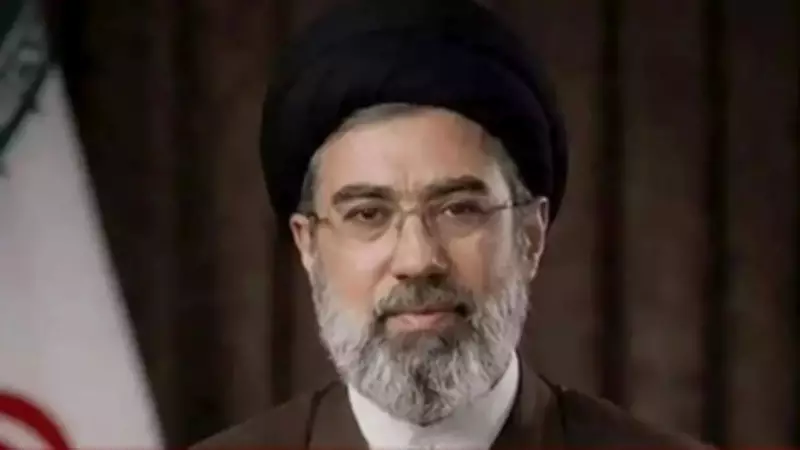
Iran's New Supreme Leader Mojtaba Khamenei Survives Deadly Israeli Airstrike on Family Compound
In a shocking revelation, Mojtaba Khamenei, the newly appointed supreme leader of Iran, narrowly survived a devastating Israeli airstrike that targeted his family and the top echelons of the Islamic Republic's leadership. According to an exclusive audio recording obtained by The Telegraph, Mojtaba was the intended target in the same attack that claimed the life of his father, the late Supreme Leader Ayatollah Ali Khamenei, along with other senior officials.
Miraculous Escape from Missile Strike
On February 28, Israeli Blue Sparrow ballistic missiles struck the supreme leader's compound in a coordinated assault. Mojtaba Khamenei had stepped outside for a brief walk in the garden just minutes before the missiles hit his residence. This fortuitous absence spared his life, resulting only in a minor leg injury, while the building was obliterated.
The audio, recorded during an address by Mazaher Hosseini, head of protocol for Ali Khamenei's office, to senior clerics and Islamic Revolutionary Guard Corps commanders on March 12, provides the first detailed account of the events inside the compound. Hosseini disclosed that Mojtaba's wife, Zahra Haddad-Adel, and their son Bagher were killed instantly in the strike. The body of Mohammad Shirazi, chief of Khamenei's military bureau, was "blown to pieces," with only a few kilograms of flesh recovered for identification.

Targeted Assassination Attempt on Leadership
Hosseini explained that the attack was meticulously planned to wipe out the entire Khamenei family and disrupt Iran's succession planning. The missiles struck multiple locations simultaneously, including:
- The supreme leader's quarters
- Mojtaba's upper-floor residence
- The home of Misbah Khamenei
- The residence of Mostafa Khamenei and his wife
Mostafa and his wife survived unharmed, shielded by dust and rubble from a nearby strike. Hosseini emphasized that the targeting of Mohammad Shirazi was strategic, as he was a crucial link between Iran's military command and the supreme leader, intended to prevent effective succession and allow external influence over new commanders.
Casualties and Aftermath of the Attack
Apart from Ayatollah Ali Khamenei, the airstrike killed several high-ranking officials who were gathered for a meeting inside the compound. These included:
- Mohammad Pakpour, IRGC chief
- Aziz Nasirzadeh, Iran's defence minister
The audio has fueled speculation about Mojtaba Khamenei's injuries and his capacity to lead. Earlier media reports suggested he was in a coma after being critically wounded, but an Iranian official told The Telegraph that military commanders have no information on his current condition. Mojtaba's only communication since the attack has been through a written message read on state television, and none of Ali Khamenei's other children have appeared publicly.
Background and Implications for Iran's Future
Mojtaba Khamenei first gained public attention at age 17 when he disappeared for a week in March 1985 while serving on the front lines of the Iraq-Iran war. Initially regarded as inexperienced by IRGC commanders, he survived the conflict and has now emerged as a central figure in Iran's leadership turmoil. The attack highlights the intense geopolitical tensions in the region, with Israel targeting Iran's core leadership in what appears to be a bold escalation.
As Iran grapples with this devastating blow, the survival of Mojtaba Khamenei raises questions about the stability and future direction of the Islamic Republic. The detailed account from the audio recording underscores the precision and brutality of the strike, leaving a leadership vacuum and a nation in mourning.