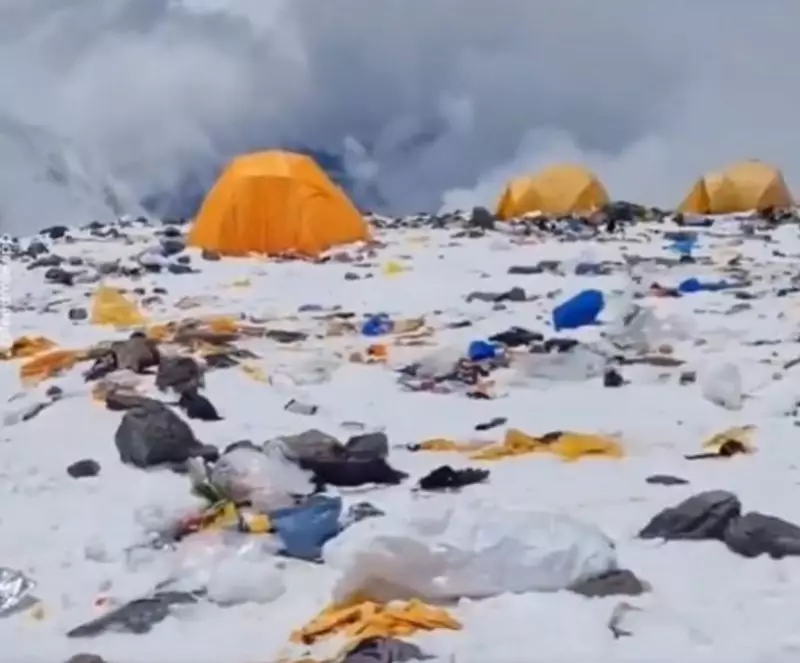
The world's tallest mountain, Mount Everest, is drowning under a tide of human waste and discarded gear, creating a severe environmental crisis in one of the planet's most fragile ecosystems. The iconic peak, known as Sagarmatha in Nepal and Chomolungma in Tibet, is now littered with an estimated over 140,000 pounds (approximately 63,500 kilograms) of trash, accumulated over decades of commercial expeditions. This growing problem threatens the pristine Himalayan environment and the health of the region.
The Alarming Scale of the Everest Trash Problem
The waste on Everest is not just unsightly; it is a complex mix of hazardous and non-biodegradable materials. Climbers and their support teams leave behind a shocking array of debris, including empty oxygen cylinders, torn tents, discarded climbing equipment, food containers, and human excrement. The problem is concentrated at key camps, especially the higher ones like Camp IV (South Col) at nearly 8,000 meters, where the extreme cold preserves waste indefinitely. With hundreds of climbers attempting the summit each year during the brief spring window, the accumulation rate has skyrocketed.
This issue gained global attention following viral social media posts showing heaps of garbage on the slopes. The situation is exacerbated by the 'death zone' above 8,000 meters, where the lack of oxygen and extreme conditions make it difficult for climbers to carry anything beyond essential survival gear, often forcing them to abandon equipment. The trash not only scars the landscape but also poses risks of contaminating water sources downstream as glaciers melt.

Clean-Up Efforts and the "Cash for Trash" Initiative
In response to the escalating crisis, Nepalese authorities and environmental groups have launched concerted clean-up campaigns. A significant initiative is the "Cash for Trash" program run by the Sagarmatha Pollution Control Committee (SPCC). This program incentivizes climbers and Sherpas to bring back waste by offering financial rewards. For instance, climbers can receive around $2.30 per kilogram of trash they retrieve from the mountain. Since 2019, dedicated clean-up missions have successfully removed tens of thousands of kilograms of waste.
Furthermore, the Nepalese government has implemented stricter regulations. Climbers are now required to pay a $4,000 deposit, which is refundable only if they bring back at least 8 kilograms (18 pounds) of trash. Despite these measures, enforcement remains a challenge due to the remote and dangerous terrain. Non-profit organizations and veteran climbers also regularly organize expeditions focused solely on waste removal, often retrieving tons of garbage from high-altitude camps.
The Human and Environmental Cost
The waste crisis has profound implications beyond aesthetics. Human waste, estimated to be thousands of kilograms each season, poses a serious health hazard, potentially spreading disease at base camps. The non-biodegradable plastics and metals will remain on the mountain for centuries, leaching chemicals into the ice and snow. This pollution ultimately affects the watershed of the Khumbu region, impacting local communities who rely on glacial meltwater.
The situation underscores the ethical dilemma of commercial mountaineering. While climbing Everest generates significant revenue for Nepal, the environmental cost is staggering. There is a growing call within the mountaineering community for a paradigm shift towards sustainable and responsible climbing practices. This includes better waste management plans for expeditions, mandatory training on environmental stewardship, and developing more efficient methods to transport waste down the mountain.
The future of Mount Everest hangs in the balance. While clean-up drives are a positive step, they are akin to treating a symptom. The long-term solution requires a fundamental change in how climbing expeditions are planned and regulated, ensuring that the quest for the summit does not come at the expense of the mountain's health. The world watches to see if the highest peak can be saved from the deep footprint of human ambition.