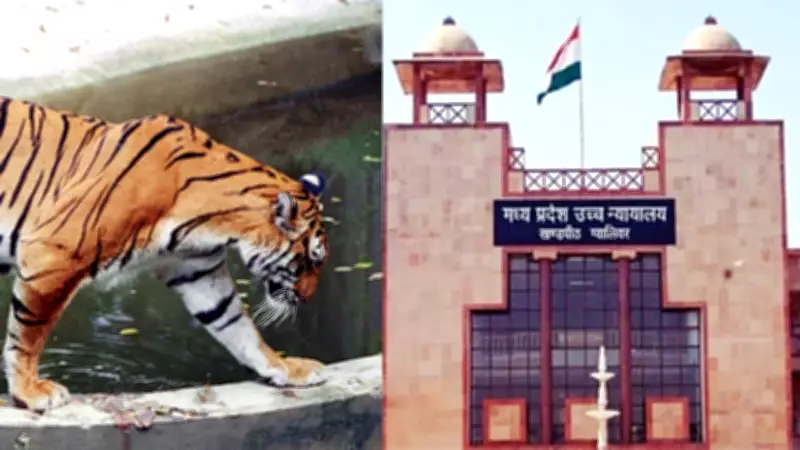
MP High Court Reviews Alarming Tiger Deaths in Bandhavgarh Reserve
A detailed status report on the recent spate of tiger fatalities in Madhya Pradesh's Bandhavgarh Tiger Reserve (BTR) was presented before a division bench of the Madhya Pradesh High Court on Wednesday. The report, submitted by the BTR field director, addresses concerns raised in a public interest litigation (PIL) regarding the surge in tiger deaths across the state.
Breakdown of Tiger Deaths in Bandhavgarh
Between November 21, 2025, and February 2 of this year, eight tigers died in the Bandhavgarh Tiger Reserve. According to the field director's report, the causes of death varied significantly between tigers inside the reserve and those that ventured outside.
Deaths Inside the Reserve: Among the four tigers that died within the reserve boundaries, two succumbed to injuries sustained during territorial fights. One tiger drowned, and another died from a disease. The report explicitly denied allegations by petitioner Ajay Dubey that poachers were active inside the reserve, stating there was no evidence to support such claims.

Deaths Outside the Reserve: The remaining four tigers, which strayed into territorial forest areas adjoining the reserve in revenue zones, died due to electrocution. Three of these tigers were electrocuted by open live electric wires, while one died after becoming entangled in a solar-powered electric fence. In all these cases, the offenders were identified and arrested, as per the report.
Court Proceedings and Petitioner's Concerns
The division bench, comprising Chief Justice Sanjeev Sachdeva and Justice Vinay Saraf, had earlier sought this status report while hearing the PIL filed by Ajay Dubey. The petitioner highlighted a disturbing trend in tiger deaths across Madhya Pradesh.
In his petition, Dubey noted that 2025 saw 54 tiger deaths in the state, the highest number since the inception of Project Tiger in 1973. Additionally, there have been 10 more tiger deaths reported in 2026. He provided comparative data, showing 43 tiger deaths in 2022, 45 in 2023, 46 in 2024, and the sharp rise to 54 in 2025, underscoring his allegation that tiger fatalities are increasing alarmingly in Madhya Pradesh.
The court has deferred the hearing of the case until March 25, granting the petitioner an opportunity to file a rejoinder to the field director's report. This move allows for further examination of the evidence and arguments presented.
Implications for Tiger Conservation
This report sheds light on critical issues facing tiger conservation in one of India's premier reserves. While natural causes like territorial fights and disease account for some deaths, the high number of electrocution cases outside the reserve points to human-wildlife conflict and inadequate safety measures in surrounding areas.
The arrests in the electrocution cases indicate enforcement actions, but the recurring incidents suggest a need for more robust preventive strategies. Conservationists and authorities must address these challenges to protect the endangered tiger population effectively.
As the case progresses, stakeholders await further developments, hoping for measures that will curb the rising tide of tiger deaths in Madhya Pradesh and ensure the long-term survival of these majestic creatures in their natural habitats.