

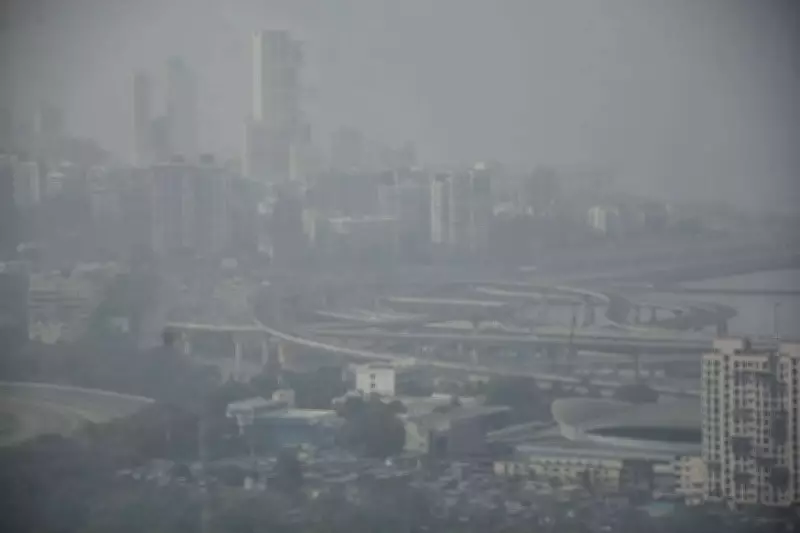
Mumbai's Air Quality Deteriorates: Fifth Highest February AQI Recorded at 130
Mumbai experienced a significant decline in air quality on Friday, with the city recording its fifth highest Air Quality Index (AQI) for the month of February at 130. According to data from the Central Pollution Control Board's official SAMEER application, this reading was categorized as 'moderate'. The measurement was taken in the evening, based on comprehensive data collected from multiple monitoring stations strategically placed across the metropolitan area.
February's AQI Trends Show Consistent Three-Digit Readings
The SAMEER app data reveals a troubling pattern throughout February. Earlier this month, the AQI peaked at 141 on February 2, followed closely by 140 on February 3. Subsequently, readings of 134 were recorded on both February 4 and February 15. With the exception of February 10, 18, and 19—when the AQI remained below 100—the index has predominantly stayed in the three-digit range throughout the entire month, indicating persistently poor air conditions.
Key Locations Report Alarmingly High Pollution Levels
An analysis of prominent locations across Mumbai shows even more concerning figures. The Bandra Kurla Complex (BKC), a major business district, registered an AQI of 172. A separate monitoring device installed by the Maharashtra Pollution Control Board in the same BKC area displayed a reading of 140. Meanwhile, the densely populated neighboring locality of Kurla reported an AQI of 160.

Deonar, infamous for its massive dumping ground and adjacent slum pockets, recorded an AQI of 161. The most severe reading in the city was observed in Worli, where the AQI soared to 256, firmly placing it in the 'poor' category and highlighting severe localized pollution hotspots.
Comparative Analysis with January Shows Seasonal Decline
The SAMEER app data provides a comparative perspective with the previous month. In January, there were eight days when the AQI remained below 100, suggesting relatively better air quality. However, on January 22 and January 26, the AQI escalated to 133, marking the highest levels recorded during the winter season. This indicates a gradual worsening trend as the season progresses.
Health Implications and CPCB Classification Guidelines
According to the Central Pollution Control Board's classification system, an AQI of up to 100 is considered 'satisfactory', though it may still cause minor breathing discomfort to individuals with heightened sensitivity. An AQI ranging between 101 and 200 falls into the 'moderate' category, which can lead to breathing difficulties among people with pre-existing lung disorders, asthma, and heart conditions.
The SAMEER app has issued a stern caution, warning that sustained high AQI levels could significantly aggravate respiratory conditions and induce breathing discomfort. This risk is particularly acute for vulnerable demographic groups, including those suffering from asthma, chronic lung ailments, and cardiovascular diseases. The app emphasizes the need for preventive measures and heightened awareness to mitigate health risks associated with prolonged exposure to polluted air.






