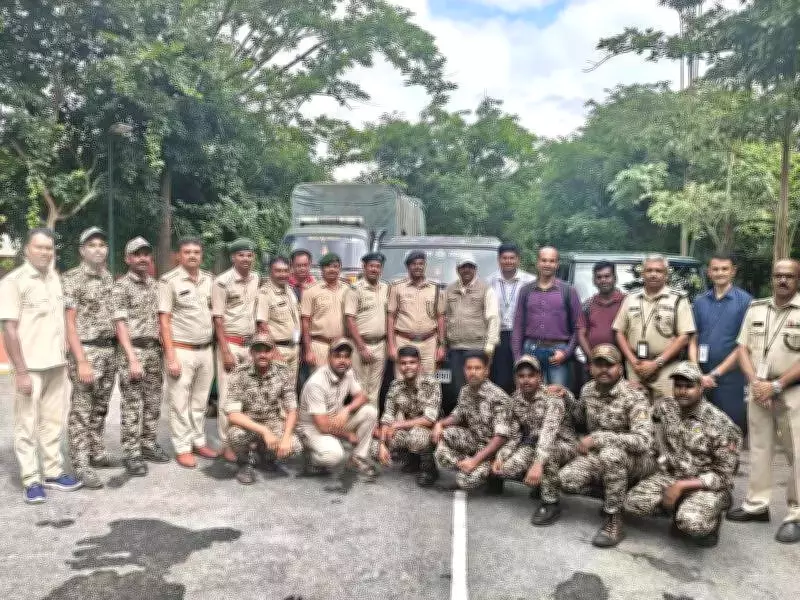
Mysuru's Leopard Task Force Marks Three Years of Reducing Human-Wildlife Conflict
In the heart of Karnataka, a specialized wildlife unit has been making remarkable strides in protecting both human communities and endangered predators. The Leopard Task Force, established in Mysuru on January 31, 2023, has evolved into an indispensable asset in managing the delicate balance between urban expansion and natural habitats.
A Response to Rising Tensions and Tragedies
The creation of this task force was not merely a precautionary measure but a necessary intervention. Prabhu Gouda, the Deputy Conservator of Forests (Wildlife) who leads the unit, explained that a disturbing surge in fatal encounters prompted immediate action. Between October 2022 and January 2023, the T Narasipur taluk in Mysuru district witnessed four human fatalities due to leopard attacks, alongside numerous livestock killings that devastated local farmers.
"The situation had reached a critical point where human lives were at constant risk, and agricultural livelihoods were being severely impacted," Gouda stated, highlighting the urgency that led to the task force's formation.

Quantifiable Impact: Rescue Operations and Community Relief
Over the past three years, the Leopard Task Force has demonstrated its effectiveness through tangible results. The team has received and addressed an astonishing 3,569 complaints from the districts of Mysuru and Mandya alone. From these distress calls, they have successfully rescued and rehabilitated 210 leopards, providing a second chance for these majestic animals while safeguarding human populations.
The demographic breakdown of the rescued leopards reveals a comprehensive approach to conservation:
- 89 male leopards
- 67 female leopards
- 54 cubs
Mysuru taluk emerged as the epicenter of conflict, accounting for 1,012 complaints and the rescue of 65 leopards. The task force's swift response to rural distress calls has prevented significant economic losses for farmers, whose livestock are often targeted by wandering predators.
Advanced Technology and Strategic Operations
What sets this 40-member team apart is its sophisticated arsenal of tools and vehicles designed for modern wildlife management. Their equipment includes:
- Fibre batons and protective shields for personnel safety
- Thermal drones for night operations and tracking
- 360-degree drones for comprehensive area surveillance
- Solar-powered sensor drones for sustainable monitoring
- High-intensity torches for illumination in dense terrain
- Various specialized cages and nets for safe capture
Regular review meetings conducted every three months ensure that operational efficiency remains high and that the team adapts to evolving challenges. This structured approach has enabled the task force to extend its expertise beyond Mysuru and Mandya, assisting in wildlife rescue operations across Hassan, Chamarajanagar, Shivamogga, Dharwad, and even Bengaluru districts.
Beyond Rescue: Prevention and Education
The Leopard Task Force recognizes that sustainable conflict reduction requires more than just reactive measures. Alongside their rescue operations, team members conduct extensive awareness programs in conflict-prone areas. These initiatives educate local communities about leopard behavior, precautionary measures to protect livestock, and appropriate responses during encounters.
By implementing preventive strategies and fostering community cooperation, the task force aims to minimize dangerous human-wildlife interactions before they occur. This holistic approach—combining rapid response with proactive education—has transformed the task force from a crisis management unit into a model for wildlife conservation in human-dominated landscapes.
As the Leopard Task Force enters its fourth year of operation, its legacy continues to grow. Through technological innovation, dedicated personnel, and community engagement, Mysuru has demonstrated that coexistence between humans and wildlife is not only possible but achievable through thoughtful, evidence-based intervention.