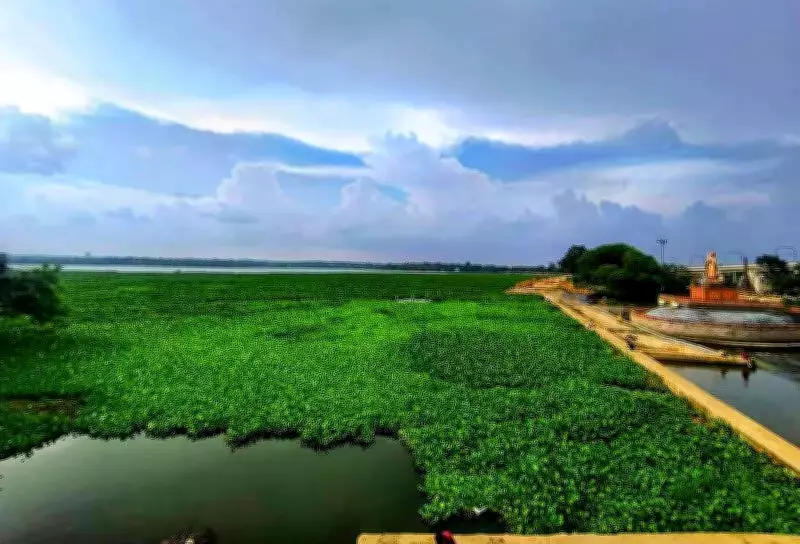
Nagpur's Iconic Ambazari Wetland Faces Ecological Crisis on World Wetlands Day
As the global community observes World Wetlands Day on February 2, Nagpur's renowned Ambazari wetland presents a distressing scenario, suffocating under rampant water hyacinth growth that highlights years of neglect, ineffective sewage management, and diminishing open water areas. This alarming situation is pushing the delicate ecosystem perilously close to collapse, raising urgent environmental concerns.
Sewage Inflow Identified as Primary Culprit
Local environmentalist Kaustav Chatterjee emphasized the direct correlation between sewage discharge and the explosive proliferation of eichhornia, commonly known as water hyacinth. "The unchecked inflow of sewage from regions like Wadi and MIDC is the root cause of this crisis," Chatterjee stated. "Merely removing the invasive weed without addressing the sewage problem will only provide a temporary fix, as the conditions for rapid regrowth will persist."
Oxygen Depletion Threatens Aquatic Life
Compounding the issue, the wetland lacks artificial aeration systems and relies entirely on atmospheric diffusion for oxygen supply. The dense mats of water hyacinth consume substantial amounts of available oxygen, leading to critically low oxygen levels in the water. This oxygen depletion poses a severe risk to fish and other aquatic organisms, potentially causing mass die-offs and disrupting the entire food chain.

Scientific Recommendations for Sustainable Management
According to sources at the National Environmental Engineering Research Institute (Neeri), a comprehensive report has been submitted to the Nagpur Municipal Corporation (NMC), proposing a scientifically grounded strategy to combat the water hyacinth menace. The report advocates for manual removal as the most effective immediate solution, stressing the need for systematic and sustained efforts.
"While the NMC has begun removal initiatives, they must be executed methodically to prevent recurrence," a Neeri source explained. "Allowing the plants to flower triggers rapid reproduction and fresh infestations, making timely intervention crucial. Although the process is labor-intensive and repetitive, consistent action over time can restore the wetland's health."
Call for Coordinated Action and Long-Term Planning
The crisis at Ambazari wetland underscores broader challenges in urban wetland conservation across India. Key issues include:
- Inadequate sewage treatment infrastructure leading to nutrient pollution
- Lack of regular monitoring and maintenance of wetland ecosystems
- Absence of integrated management plans involving multiple stakeholders
- Need for public awareness and community participation in conservation efforts
Environmental experts urge the NMC and other relevant authorities to implement the Neeri recommendations promptly while developing long-term solutions to address sewage management and habitat restoration. The preservation of Ambazari wetland is not only vital for local biodiversity but also for maintaining ecological balance and supporting community well-being in Nagpur.