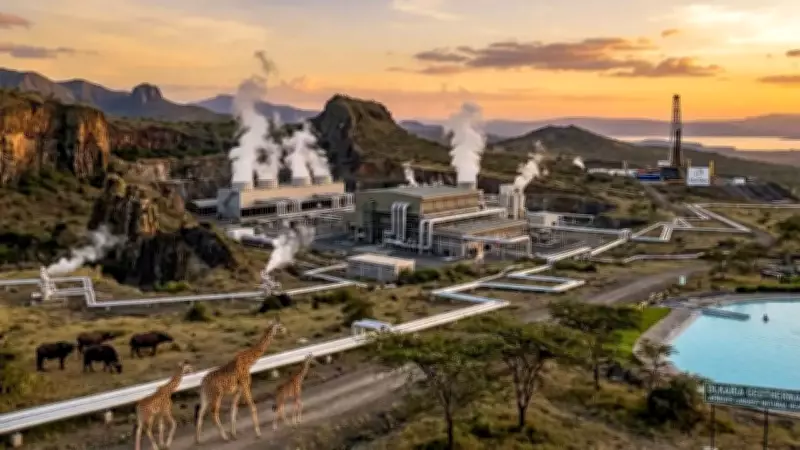
Naivasha Transforms into Africa's Premier Geothermal Hub
Nestled within the breathtaking cliffs of the Great Rift Valley, Naivasha has undergone a remarkable transformation. Once celebrated primarily as a picturesque lakeside retreat, this Kenyan town has now emerged as one of Africa's foremost leaders in renewable energy production. By harnessing the immense geothermal power generated by the volcanic forces beneath Hell's Gate National Park, Naivasha has become the cornerstone of Kenya's energy security, supplying close to 50% of the nation's total electricity.
The Rise of a Geothermal Capital
Naivasha's journey to becoming the Geothermal Capital of Kenya began with the commissioning of the Olkaria I power plant in 1981. This milestone made Kenya the first African nation to successfully tap into geothermal steam from volcanic sources. A study by the International Renewable Energy Agency (IRENA) highlights that Naivasha's strategic location on a major tectonic plate boundary provides a distinct advantage. The area features a thin continental crust and a high thermal gradient, allowing magma to heat subterranean aquifers to temperatures exceeding 300 degrees Celsius.
This unique geological setting enables the Olkaria geothermal complex to produce approximately 900 megawatts (MW) of energy, which accounts for roughly 47% of Kenya's total electrical consumption. Geothermal energy boasts an impressive availability factor of about 95%, significantly higher than solar or wind power, positioning Naivasha as the most reliable energy hub in East Africa for electricity generation.

Direct-Use Applications and Economic Impact
Beyond electricity generation, Naivasha's geothermal success extends to innovative direct-use applications. The town is the epicenter of Kenya's multi-billion shilling flower industry. According to a United Nations report titled 'Sustainable Geothermal Power Generation and Heating of Greenhouses and Spas in Kenya's Rift Valley,' geothermal steam is utilized to heat large greenhouses, maintaining controlled ambient temperatures. This allows for year-round rose production and reduces fungal diseases by eliminating reliance on costlier, polluting fossil fuels.
Additionally, a 1,000-acre Special Economic Zone (SEZ) in Naivasha offers manufacturers subsidized geothermal energy at rates as low as 7 US cents per kilowatt-hour (kWh), compared to market rates of around 18 cents. This cost advantage fosters industrial growth while promoting sustainable practices.
Environmental Harmony and Eco-Tourism
Naivasha's geothermal operations are uniquely situated within Hell's Gate National Park, necessitating advanced engineering to minimize environmental impact. Through the use of low-profile pipelines and silent turbines, large mammals like giraffes and buffalo roam freely alongside energy infrastructure. Furthermore, the mineral-rich brine byproduct from steam production is repurposed to fill the Olkaria Geothermal Spa, recognized as Africa's largest natural health spa. This initiative significantly boosts eco-tourism revenue, demonstrating how industrial activity can coexist with conservation.
Powering Kenya's Vision 2030
In terms of technical achievements, Naivasha ranks sixth globally for geothermal energy production from 2024 to 2026. The Kenyan government, under its Vision 2030 program, has set an ambitious goal to add up to 5,000 MW of electricity-generating capacity in Naivasha. The state-owned Geothermal Development Company (GDC) plays a crucial role by reducing drilling risks for private investors, paving the way for Naivasha to drive Kenya toward its target of a 100% renewable electricity grid.
Naivasha stands as a powerful model for other nations, showcasing how renewable energy can fuel industrial development, protect wildlife, and enhance economic resilience against climate change, all while preserving the natural beauty of its surroundings.