

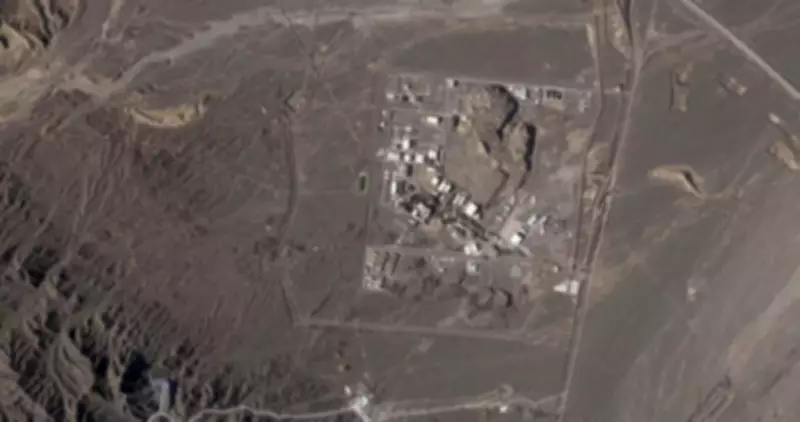
Natanz Nuclear Complex: The Persistent Fault Line in Iran-US-Israel Confrontation
The extensive Natanz nuclear complex in Iran has emerged as the enduring fault line in the escalating confrontation between Iran, the United States, and Israel. According to a report by Reuters citing Iran's ambassador to the UN nuclear watchdog, the facility was targeted during recent US and Israeli military actions against Islamic Republic installations. This marks the second attack on the nuclear facility within a single year, following previous strikes that Iranian television reported caused loud explosions in Natanz city, raising immediate concerns about potential radiation risks.
Why Natanz Remains Crucial for Iran's Nuclear Ambitions
Natanz serves as Iran's primary uranium enrichment hub, situated approximately 220 kilometers southeast of Tehran. The facility has enriched uranium to 60% purity, a level technically short of but alarmingly close to weapons-grade material. Over the years, Natanz has faced repeated disruptions including Israeli airstrikes and the infamous Stuxnet cyber sabotage widely attributed to joint US-Israeli operations. Despite extensive damage to both above-ground and underground structures from US bunker-busting munitions last year, the complex maintains its strategic importance.
The paradoxical result of repeated strikes has been to deepen Natanz's symbolic and strategic centrality rather than neutralize its capabilities. Each attack appears to reinforce Tehran's determination to protect and potentially expand its nuclear infrastructure, creating a dangerous cycle of escalation that concerns international observers.

IAEA Raises Alarm Over Regional Nuclear Safety Threats
International Atomic Energy Agency chief Rafael Mariano Grossi has issued stark warnings about the growing threat to nuclear safety in the region. With operational nuclear reactors spread across multiple countries including the United Arab Emirates, Jordan, and Syria, further escalation could carry "serious consequences" including the risk of radiological release requiring evacuations of areas as large as major cities.
"We cannot rule out a possible radiological release with serious consequences," Grossi emphasized, noting that the IAEA has extensive knowledge of nuclear and radiological materials in the region and clear guidance for response actions. "The situation today is very concerning. Iran and many other countries in the region that have been subject to military attacks have operational nuclear power plants and nuclear research reactors, as well as associated fuel storage sites, increasing the threat to nuclear safety."
The IAEA chief urged utmost restraint in all military operations, highlighting that countries including Bahrain, Iraq, Kuwait, Oman, Qatar, and Saudi Arabia have also been attacked while utilizing various nuclear applications.
Iran's Protective Measures and Reconstruction Efforts
Satellite imagery from Planet Labs PBC reveals Iran's deliberate steps to shield its nuclear infrastructure from further scrutiny and attack. Newly constructed roof coverings over damaged buildings at Natanz and Isfahan appear designed less for full reconstruction and more to obstruct overhead surveillance, particularly as Tehran has restricted access to IAEA inspectors.
Experts analyzing the imagery believe these coverings may allow Iranian technicians to assess what equipment or material survived strikes without exposing those efforts to satellite monitoring. This focus on concealment is especially significant given the strategic importance of both facilities, suggesting Tehran is working to secure, salvage, and potentially restore elements of its nuclear program under tighter protective measures.
To mitigate future risks, Iran has expanded construction at greater depths near Kuh-e Kolang Gaz La (Pickax Mountain), seeking to shield critical infrastructure from attacks. Despite these protective efforts, the IAEA has stated that any radioactive contamination has remained confined within the Natanz complex boundaries.

Iran's Defiant Stance on Nuclear Development
Iranian President Masoud Pezeshkian has reiterated Tehran's unwavering commitment to rebuilding its nuclear infrastructure despite repeated strikes. "Destroying buildings and factories will not create a problem for us, we will rebuild and with greater strength," he declared during a visit to Iran's atomic energy organization.
The president emphasized that Iran's nuclear program is intended for peaceful purposes, stating: "It's all intended for solving the problems of the people, for disease, for the health of the people." He maintained Tehran's official position that the country does not seek nuclear weapons, even as it continues uranium enrichment activities that bring it closer to weapons-grade capability.
This defiant stance, combined with ongoing protective measures and reconstruction efforts, ensures that Natanz remains at the center of regional tensions. The complex's continued operation despite repeated attacks demonstrates both its technical resilience and its symbolic importance in Iran's strategic calculations, making it likely to remain a flashpoint in the ongoing confrontation between Iran and its adversaries.





