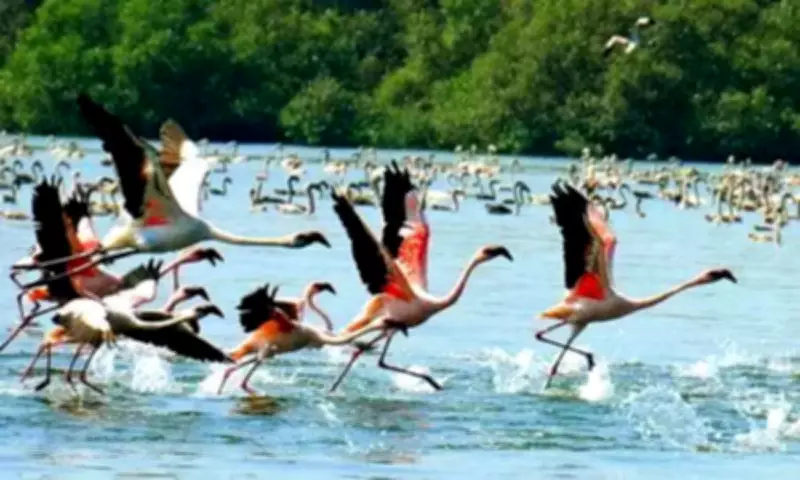
Navi Mumbai's Critical Flamingo Wetland Suffers Severe Ecological Damage
Environmentalists in Navi Mumbai have raised urgent alarms over the rapid deterioration of a vital 14-hectare intertidal wetland located near T S Chanakya in Nerul. This crucial ecosystem, once an important feeding ground for migratory flamingos, is now facing an ecological crisis after tidal channels were deliberately blocked and parts of the waterbody were encroached upon for fishpond development.
Blocked Tidal Flows Trigger Alarming Stagnation
According to environmental activists, wooden barricades were strategically placed across narrow tidal inlets that traditionally allowed Thane creek water to flow freely in and out of the wetland. This obstruction has severely disrupted the natural tidal flushing system that sustained the delicate ecosystem for generations. The consequences are visibly devastating: the waterbody is now covered with a thick, suffocating carpet of algae, a clear indicator of stagnation and declining ecological health.
"The wetland today presents a pathetic picture with algae growth, encroachments and blocked water channels. In its present condition, it is hardly ready to support flamingos," emphasized B N Kumar, director of the environmental watchdog NatConnect Foundation, which has lodged a formal complaint with the Union Ministry of Environment, Forest and Climate Change demanding immediate intervention.

Official Recognition Contrasts with Administrative Inaction
Environmental advocates point out the bitter irony that the ecological importance of the T S Chanakya wetland has been officially recognized through multiple government initiatives. The site was listed in the National Wetland Inventory and Assessment, a comprehensive satellite-mapped database of significant wetlands prepared by the Union environment ministry. Additionally, it was documented among thousands of coastal ecosystems tracked by the National Centre for Sustainable Coastal Management.
Despite this formal acknowledgment, activists report that administrative paralysis has allowed the habitat to degrade unchecked. The wetland falls under the jurisdiction of the City and Industrial Development Corporation (Cidco), which reportedly declined a proposal from the state Mangrove Cell to take over the site for protection under wildlife laws.
Jurisdictional Conflicts Hinder Conservation Efforts
Further complicating conservation efforts, activists reveal that Cidco has not responded to a request from the Navi Mumbai Municipal Corporation (NMMC), which sought to manage the wetland as part of an eco-tourism circuit alongside the nearby NRI and DPS flamingo lakes. "Cidco is neither removing encroachments nor allowing other agencies to maintain the wetland," stated Nandakumar Pawar of the environmental organization Sagar Shakti, adding that Cidco has refused to acknowledge the area as a wetland despite overwhelming evidence.
Pawar also referenced a significant Supreme Court ruling from a case filed by Vanashakti, which established that governments have a legal duty to conserve wetlands larger than 2.25 hectares—a category the T S Chanakya wetland clearly qualifies for, given its 14-hectare expanse.
Urgent Calls for Central Intervention
Environmentalists are now making desperate appeals to the central government to intervene before irreversible damage occurs. They emphasize that the situation represents a serious threat to coastal biodiversity and demand immediate action to restore tidal flows and remove illegal encroachments. The blockage of natural water movement not only affects flamingo populations but could have cascading effects on the entire regional ecosystem.
The degradation of this wetland highlights broader challenges in wetland conservation across India, where jurisdictional conflicts and administrative delays often undermine environmental protection efforts despite formal recognition of ecological significance.