

New Ant Species Discovered in Guwahati's Garbhanga Reserve Forest
A newly identified ant species has been discovered in the Garbhanga Reserve Forest on the outskirts of Guwahati, Assam, demonstrating that urban-adjacent forest patches can still harbor undocumented wildlife. This significant finding underscores the ecological importance of preserving green corridors near rapidly expanding cities.
Scientific Details and Naming
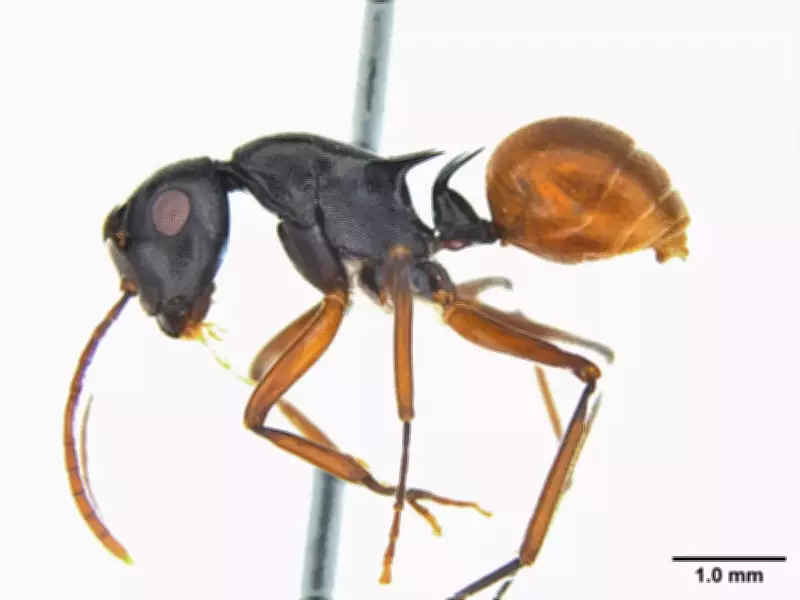
The species has been formally named Polyrhachis garbhangaensis, after the forest where it was found. It belongs to the rare mucronata group of spiny ants, which are known for their distinctive physical characteristics. The formal description of this ant was published in the international journal Asian Myrmecology on January 30, marking a milestone in entomological research.
Research Team and Discovery Process
The discovery was led by Ankita Sharma of the Animal Behaviour and Cognition Programme at the National Institute of Advanced Studies (NIAS) in Bengaluru. Team members Paul Antony Mangaly, Suraj Kumar Singha Deo, and Sangavi D contributed equally under the supervision of Professor Anindya Sinha. Specimens were first collected in August 2023 during field surveys in the Garbhanga Reserve Forest, a 117-square-kilometer green corridor that links Guwahati with the nearby Rani Reserve Forest.

Ankita Sharma explained that this finding emerged from research examining how rapid urban growth is influencing ant and spider communities around Guwahati. "Beyond adding a new species to science, the discovery sends a strong conservation message. Forests on the edges of cities like Guwahati are often overlooked or considered degraded, but this finding shows they can still shelter unique and unknown life forms," she said, emphasizing that protecting these green lungs matters not only for people but also for the many species living within them.
Unique Characteristics and Significance
This ant belongs to a rare and specialized group of spiny ants called the mucronata group, and it is only the third species of this group ever recorded in India. Although India has more than 70 known species of Polyrhachis ants, Assam stands out as a major center of diversity, with 21 species recorded so far.
At about 5.6 millimeters long, the Assamese Spiny Ant is visually striking. Unlike its close relatives, which are usually black, this species has a bright yellow-orange abdomen. It also has curved spines on its body that likely help protect it from predators, making it a fascinating subject for further study.
Ecosystem Insights and Mimicry
Researchers also recorded an ant-mimicking spider in the same area. They noted that the spider closely resembles the newly discovered spiny ant, suggesting that this mimicry may help it evade predators. This observation points to complex predator-prey relationships that shape forest ecosystems, highlighting the intricate web of life in these habitats.
The discovery of Polyrhachis garbhangaensis not only adds to India's biodiversity records but also serves as a reminder of the critical need to conserve urban-adjacent forests. As cities expand, preserving such green spaces becomes essential for maintaining ecological balance and protecting undiscovered species.






