

New Dragonfly Species Discovered in Kerala's Coastal Regions
Researchers have officially confirmed the discovery of a new species of dragonfly, named Lyriothemis keralensis, from the low-lying coastal areas of Kerala. Commonly referred to as the Slender Bombardier, this species was formally identified after more than a decade of rigorous scientific investigation, as reported by news agency PTI.
Decade-Long Research Leads to Breakthrough
The groundbreaking study was conducted by a team led by Dr. Dattaprasad Sawant, Dr. A. Vivek Chandran, Renjith Jacob Mathews, and Dr. Krushnamegh Kunte. Their findings have been published in the prestigious International Journal of Odonatology, marking a significant contribution to entomology and biodiversity research.
Initial Misidentification and Subsequent Clarification
The dragonfly was first observed in 2013 in the Varappetty region of Kothamangalam. Initially, scientists believed it to be Lyriothemis acigastra, also known as the Little Bloodtail, a species commonly found in northeastern India. However, detailed examinations in subsequent years revealed distinct physical and behavioral characteristics, leading researchers to classify it as a separate and unique species.

Distinctive Physical Characteristics
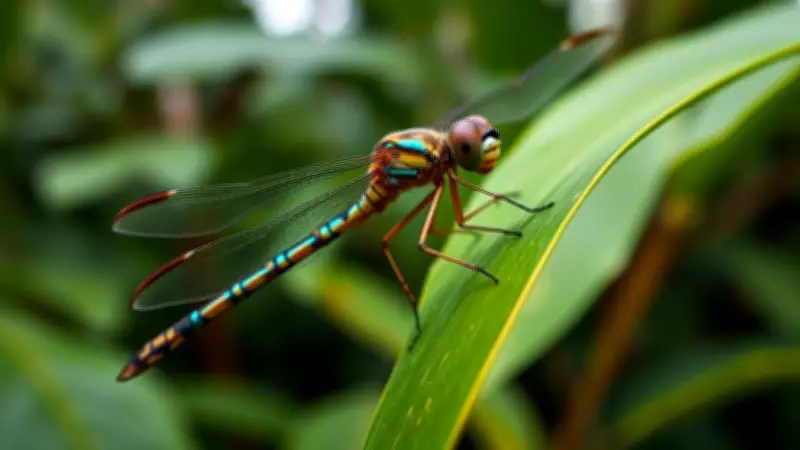
According to the research paper, Lyriothemis keralensis differs from the Little Bloodtail in several key aspects. It possesses a slimmer abdomen along with a unique tail and genital structure. Male dragonflies exhibit a deep blood-red abdomen adorned with black markings, while females are slightly broader and display a striking combination of yellow and black coloring. The species measures approximately three centimeters in length, and its identification was further confirmed through the analysis of century-old museum specimens.
Unusual Habitat Preferences
Unlike many dragonfly species that inhabit protected forest areas, Lyriothemis keralensis thrives in human-modified irrigation landscapes. It is predominantly found in pineapple and rubber plantations, specifically in shaded canals and seasonal pools within agricultural land. This habitat preference is unusual and highly specific, setting it apart from other odonates.
Call to Rethink Conservation Priorities
Researcher Vivek Chandran emphasized the urgent need to broaden conservation efforts beyond traditional forest areas. "It is crucial that our actions for the preservation of biodiversity do not focus solely on forests," he stated, as quoted by PTI. He added that odonates occupy a wide range of habitats, including human-dominated environments, which must be protected to ensure their survival.
The species is active during the monsoon season and retreats once the rains subside. Since its survival depends on fragile microhabitats located outside national parks and protected areas, researchers have issued a warning: its future largely rests on human responsibility and the protection of local ecosystems within farmlands. This discovery underscores the importance of inclusive conservation strategies that account for biodiversity in all types of landscapes.






