National Green Tribunal Broadens Sahibi River Pollution Case, Includes Ganga Mission
The National Green Tribunal (NGT) has significantly expanded the scope of a long-running environmental case concerning the severe pollution of the Sahibi river. In a pivotal development, the tribunal has formally added the National Mission for Clean Ganga (NMCG) as a respondent to the proceedings. This strategic inclusion marks the first time that this critical pollution issue has been brought under central-level environmental monitoring and oversight.
Connecting Local Pollution to National Waterways
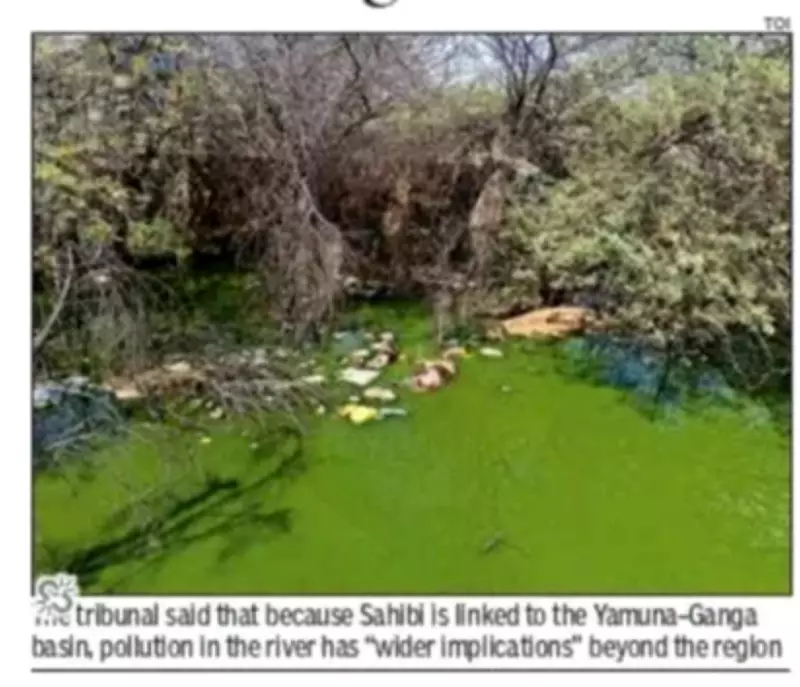
During a hearing held on February 25, the NGT explicitly noted that the Sahibi river ultimately drains into the Yamuna, which then flows into the Ganga. This hydrological connection means that pollution in the Sahibi has "wider implications" that extend far beyond the immediate regional boundaries. Consequently, the tribunal has directed the NMCG to file its official reply before the next scheduled hearing on April 22.
The original case was initiated by social activist Prakash Yadav, a resident of Kharkhra village. His petition raised serious alarms about untreated sewage, hazardous industrial effluents, and rampant encroachments entering the Sahibi river. These pollutants eventually collect at the Sahibi barrage located near Masani, creating a concentrated environmental hazard.

Activist Hopes for National Accountability
"With the Ganga Mission now part of the case, the issue has finally received the national-level attention it deserves," stated Prakash Yadav. He elaborated on the dire local conditions, "For years, villagers were forced to live with foul-smelling groundwater, damaged farmland, and a dying river. We hope this step ensures accountability from all agencies involved."
Yadav's detailed petition alleges that both treated and untreated sewage from the Dharuhera and Rewari regions flows directly into the Sahibi river. This waste settles in large, toxic quantities near the barrage, posing severe and ongoing risks to groundwater reserves and the surrounding ecosystem. Furthermore, he highlighted that increasing encroachments along the riverbanks are constricting the natural flow of water, exacerbating the pollution problem.
Legal Proceedings and Committee Formation
During the recent hearing, legal counsel representing the existing respondents—the Haryana Shehri Vikas Pradhikaran and the district development and panchayat office of Rewari—accepted the formal notice on behalf of the newly added NMCG. They have requested additional time to prepare and submit a comprehensive response to the tribunal's directives.
This environmental matter first reached the NGT in September 2022, when the tribunal treated an email complaint from Prakash Yadav as a formal petition. In its subsequent order dated September 30, 2022, the NGT documented allegations that sewage from multiple Sewage Treatment Plants (STPs) in Rewari was being discharged into hundreds of acres of vacant land along the Sahibi river near Kharkhara and Khaliawas. This improper discharge was reported to cause:
- Severe waterlogging in the area
- Contamination of hand-pump water sources
- Widespread destruction of local vegetation
Taking serious cognizance of these allegations, the tribunal initially directed several state bodies to respond, including:
- The Haryana state government
- The Haryana State Pollution Control Board (HSPCB)
- The Rewari Municipal Corporation
- The district administration of Rewari
Additionally, the NGT constituted a joint inspection committee comprising representatives from the HSPCB, the municipal corporation, and the office of the district magistrate. This committee was tasked with conducting a thorough on-site inspection, meeting with the complainant to verify the facts, and submitting a detailed report on the ground realities of the Sahibi river pollution.

The expansion of this case to include the National Mission for Clean Ganga represents a substantial escalation in the legal and environmental scrutiny of the Sahibi river's deteriorating condition. It underscores the interconnected nature of India's river systems and establishes a precedent for holding national agencies accountable for pollution in tributaries that feed into major national waterways like the Ganga.