

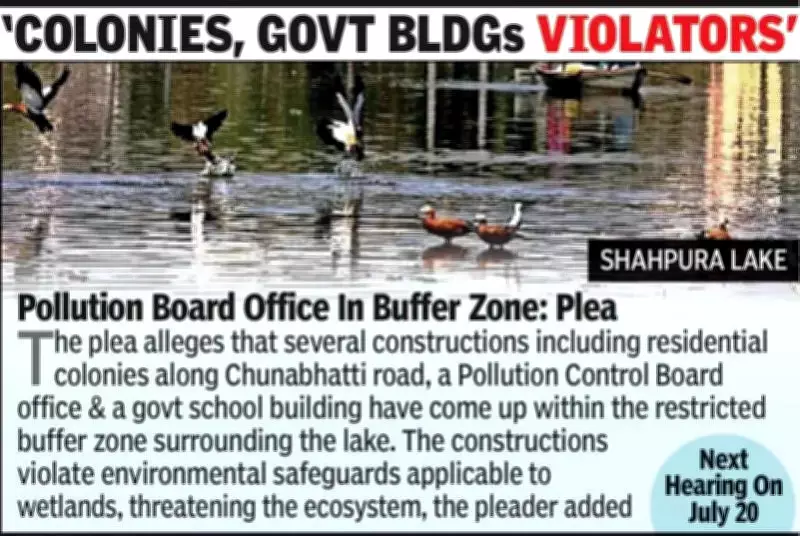
NGT Takes Action on Shahpura Lake Encroachments in Bhopal
The National Green Tribunal (NGT) has taken a serious stance on reported encroachments in the green belt surrounding Shahpura Lake in Bhopal. On Thursday, the tribunal constituted a committee to visit the site and submit a detailed report within six weeks. This move comes in response to a petition filed by environmental activist Nitin Saxena, who raised alarming concerns about the lake's deteriorating condition.
Petition Highlights Blatant Violations
In his petition before the central bench of the NGT, Saxena charged that the green belt has been blatantly encroached upon, with illegal constructions emerging in the buffer zone of the lake. These actions are in direct violation of Wetland Rules, posing a significant threat to the ecological balance of the area.
Counsel for the petitioner, Chinmay Singh, elaborated on the issues: "Untreated water is being discharged into the lake, natural drainage channels that feed the lake are being obstructed, and efforts are being made to stop the discharge of accumulated water. This is causing the lake area to shrink, potentially enabling further encroachments on its banks. Consequently, there is continued degradation and ecological deterioration of Shahpura Lake."

Historical Significance and Current Threats
Shahpura Lake, constructed during 1974-75 by the government, was originally intended for irrigation and groundwater recharge purposes. Historically, it functioned as a vital ecological resource, surrounded by a dense green belt and natural drainage channels that supported groundwater recharge and maintained ecological balance.
However, over the past decade, the lake has faced rapid and uncontrolled urbanization. This has resulted in widespread encroachments, illegal constructions, and obstruction of the natural drainage channels that feed the lake, severely compromising its environmental integrity.
Severe Pollution and Public Health Concerns
Environmental concerns are further aggravated by severe pollution of the lake water. According to reports from the MP Pollution Control Board, the water quality currently falls under Class-E category, indicating it is unsuitable for use without treatment.
The pollution is largely attributed to continuous inflow of wastewater through various drains and nullahs feeding the lake. These drains pass through densely populated colonies and slums, where untreated sewage and solid waste are discharged directly into the water system, eventually entering the lake.
Despite the deteriorated water quality, fish cultivation is reportedly being carried out in the polluted waters of Shahpura Lake. The fish cultivated here are used for human consumption, raising serious public health concerns.
Additionally, numerous eateries—both permanent and temporary—operate around the lake in the evenings. Waste generated from these establishments is often thrown directly into the lake, exacerbating the pollution problem.
Beautification Efforts Fall Short
The environmental degradation of Shahpura Lake is occurring despite ongoing beautification works undertaken by the Bhopal Municipal Corporation. The petitioner noted that these works focus primarily on 'aesthetic' development without addressing the core environmental concerns that threaten the lake's sustainability.
NGT's Response and Committee Formation
Following arguments presented during the hearing, the bench of Justice Sheo Kumar Singh and expert member Sudhir Kumar Chaturvedi acknowledged that a substantial environmental issue had been raised. The tribunal issued notices to respondents, seeking replies within four weeks.
Furthermore, the NGT ordered the constitution of a joint committee to investigate the matter thoroughly. This committee will include:
- One representative from the Principal Secretary, Urban Development
- One representative from the Water Resource Department
- A representative from the Director, Central Pollution Control Board
- A representative from the MP Pollution Control Board
The committee's mandate is to conduct a site visit, assess the extent of encroachments and pollution, and provide recommendations for remedial actions to protect Shahpura Lake's ecological health.






