

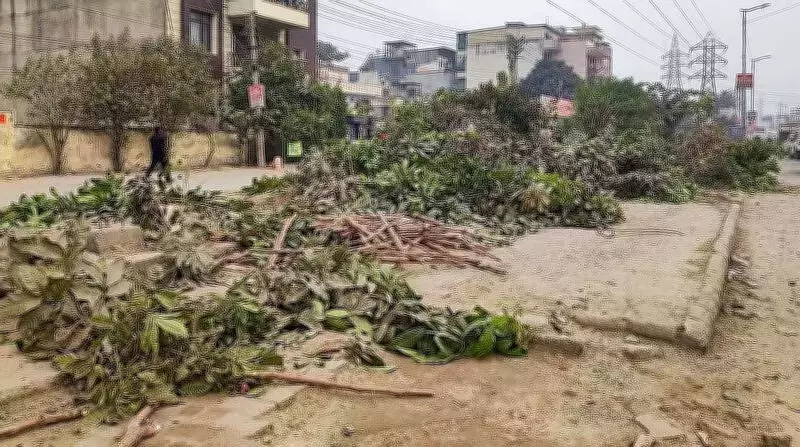
National Green Tribunal Takes Up Illegal Tree Felling Case in Gurgaon Society
A city resident's complaint about the alleged illegal cutting of fully grown trees inside a gated housing society in Gurgaon's Sector 109 has prompted the National Green Tribunal (NGT) to seek detailed responses from civic and forest authorities. The tribunal is examining whether environmental regulations and tree preservation laws were violated in the residential complex.
NGT Grants Four Weeks for Official Responses
Hearing the matter on Tuesday, a bench headed by NGT chairperson Justice Prakash Shrivastava and expert member Dr. Afroz Ahmad granted four weeks to government agencies, including the Municipal Corporation of Gurgaon (MCG) and the divisional forest officer (DFO), to file their responses. The tribunal noted that some private respondents linked to the apartment owners' association have already submitted replies, while counsel for government agencies requested additional time to prepare their responses.
The tribunal has now directed that all replies must be filed within four weeks, with the applicant permitted to submit a rejoinder within two weeks thereafter. The next hearing in this environmental compliance case has been scheduled for July 6, 2026, allowing sufficient time for thorough examination of the allegations.

Detailed Allegations of Environmental Violations
The plea was filed by Gurgaon resident Gaurav Saluja, who alleged illegal felling of trees within ATS Kocoon, a group housing society in Sector 109. According to the complaint, at least two mature bakain trees, each over ten years old, were cut without obtaining mandatory approvals from competent authorities. The applicant emphasized that these trees did not fall under any exempted category and required proper authorization before any felling could occur.
Saluja further submitted that the trees were originally part of the green plan approved for the housing project and were allegedly cut at the direction of office bearers of the apartment owners' association. He provided photographic evidence showing that another tree was cut on December 7, 2025, strengthening his case against the alleged environmental violations.
Forest Department's Position and Previous Tribunal Action
A forest department official stated that the matter is currently under examination, confirming that authorities have noted the tribunal's directions and will file their response within the stipulated timeframe. "We will verify whether permissions were sought or granted and take action as per law if violations are found," the official stated, indicating a commitment to proper legal procedures.
In an earlier order dated December 22, 2025, the tribunal had already taken cognizance of Saluja's complaint, recognizing that the application raised "substantial issues relating to compliance of environmental norms." At that time, the NGT issued notices to multiple respondents, including:
- Municipal Corporation of Gurgaon (MCG)
- Divisional Forest Officer (DFO)
- Haryana State Pollution Control Board
- Commissioner of Police
- Deputy Commissioner
- Representatives of the apartment owners' association
Broader Implications for Environmental Compliance
With replies now awaited from various authorities, the tribunal will conduct a comprehensive examination to determine whether tree preservation laws and environmental regulations were violated within the residential complex. The case highlights growing concerns about urban development's impact on green cover and the enforcement of environmental protections in rapidly developing areas like Gurgaon.
The tribunal's scrutiny extends beyond mere tree cutting allegations to broader questions of accountability and regulatory oversight. By directing multiple government agencies to respond, the NGT is ensuring that all aspects of environmental governance are properly examined, potentially setting important precedents for how similar cases are handled in the future.
This case represents a significant test of environmental compliance mechanisms in urban residential developments, with potential implications for how housing societies manage their green spaces and adhere to statutory requirements designed to protect urban ecosystems.






