

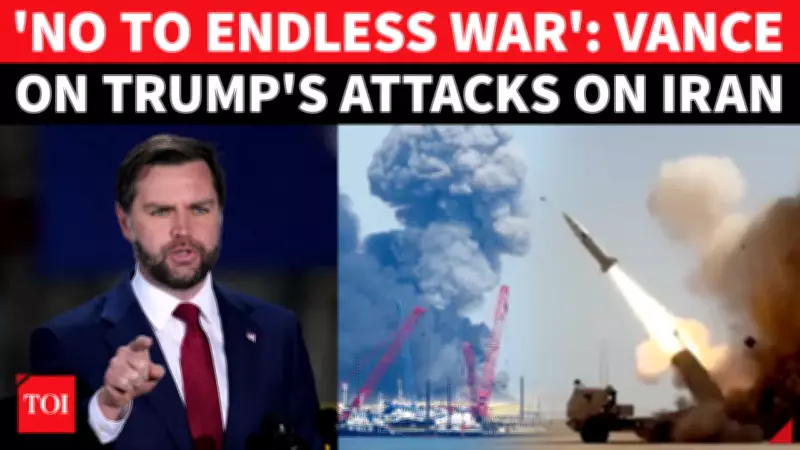
JD Vance Breaks Silence on US 'Endless Wars', Stresses Trump's Iran Stance
In a significant statement, US Vice-President JD Vance has publicly addressed America's military engagements, declaring, "Nobody likes war." He emphasized that President Trump is resolutely focused on preventing prolonged military conflicts, while maintaining a firm stance on a critical red line: Iran must never acquire a nuclear weapon.
Diplomacy Over Conflict, But Preparedness Remains Key
Vance outlined the administration's preference for diplomatic solutions in dealing with international tensions, particularly concerning Iran. He stated that diplomacy is the core reason behind recent decisions regarding Iran, but he also made it clear that the United States is prepared to take necessary actions if diplomatic efforts fail. This balanced approach underscores a strategic shift towards avoiding what Vance termed "endless wars," a phrase that has resonated in American political discourse.
Internal Unity and Presidential Decisions
Addressing internal differences within the administration following the departure of Joe Kent, Vance highlighted the importance of debate and discussion among officials. He encouraged open dialogue but stressed that, ultimately, all officials are expected to stand by presidential decisions or consider stepping aside. This comment aims to reinforce unity and adherence to Trump's policies, especially in matters of national security and foreign policy.

Context and Broader Implications
The statement comes amid heightened global tensions, with recent headlines highlighting various incidents involving Iran, such as missile attacks and executions. Vance's remarks serve to clarify the Trump administration's position, aiming to project a message of restraint combined with unwavering resolve on nuclear non-proliferation. This approach seeks to balance domestic concerns about military overreach with international security demands.
Key Points from Vance's Address:- Emphasis on avoiding prolonged military engagements.
- Firm opposition to Iran acquiring nuclear weapons.
- Preference for diplomacy, backed by readiness to act if needed.
- Call for internal unity and support for presidential decisions.
This development marks a pivotal moment in US foreign policy discourse, as Vance breaks his silence to articulate a vision that prioritizes strategic caution without compromising on core security interests.






