NGT Condemns 'Greedy Elite Class' for Alarming Destruction of Water Bodies and Wetlands
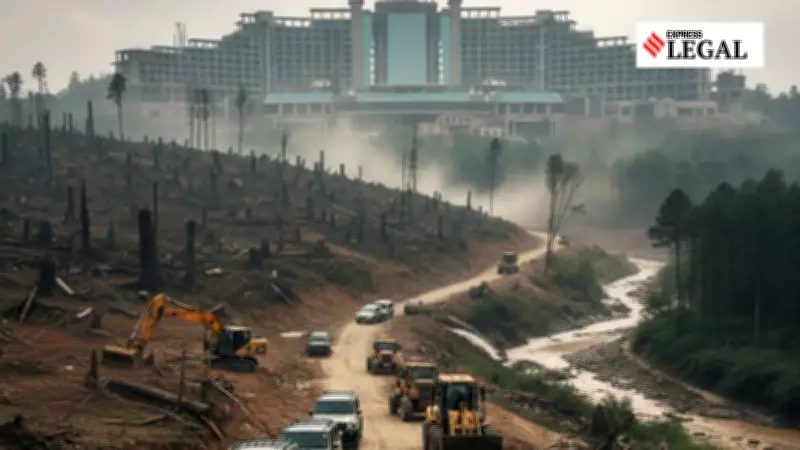
The National Green Tribunal (NGT) has issued a scathing rebuke against what it terms the "greedy elite class" for their role in the unchecked ruin of water bodies and wetlands across India. In a recent order, the tribunal highlighted severe cases of environmental degradation, including the destruction of the Aravalli Hills and the vanishing lakes of Bengaluru, framing these as part of a national pattern of ecological neglect driven by luxury and development pursuits.
Constitutional and Ethical Violations in Environmental Degradation
In a bench comprising Justice Sheo Kumar Singh and expert member Sudhir Kumar Chaturvedi, the NGT emphasized that environmental protection is not merely an ecological issue but a fundamental duty under Article 51A(g) of the Constitution. The tribunal invoked the five elements of life—earth, sky, air, fire, and water—stating that pollution disrupts this natural cycle. It further linked the right to a healthy environment to Article 21, which guarantees the right to life, and Article 48(A), which directs states to safeguard the environment. The NGT warned that when law protectors, such as statutory authorities, become violators by allowing harmful activities near natural resources, it undermines the Public Trust Doctrine, which holds these resources in trust for the public.
Case Study: Sacred Pond Turned Sewage Sink in Rajasthan
The tribunal's remarks came during a hearing on a plea by Shri Kalyan Rai Ji Mandir Samiti, a temple council in Jhalawar, Rajasthan, concerning the pollution of a sacred pond. According to the plea, this once-pristine water body, used for religious rituals and supporting migratory birds and aquatic life, has been severely contaminated by untreated domestic sewage, dairy waste, and municipal effluents. Rapid urbanization, unplanned construction, and population growth have led to direct waste discharge, causing ecological imbalance, biodiversity loss, and public health risks. The NGT directed authorities to expedite restoration efforts, stressing the need for an integrated approach with community involvement and strict enforcement against encroachments.

National Patterns of Destruction: Aravallis and Bengaluru Lakes
The NGT pointed to widespread environmental harm, noting the destruction of the Aravalli Hills in Delhi and similar hill chains in other states. In Bengaluru, the tribunal observed that hundreds of lakes have dwindled to just a few, with most being reclaimed, encroached upon, or usurped by development activities. It criticized the elite class for moving from urban centers to natural areas on city outskirts, under the guise of enjoying nature, while actually causing damage through luxury constructions. The tribunal argued that such projects near water bodies or forests are not necessities for shelter or economic development but serve to increase commercial value, with statutory authorities often failing to enforce protective measures rigorously.
Global Context and Regulatory Failures
Highlighting the global scale of environmental issues, the NGT referenced international commitments like the Ramsar Convention on wetlands and the Wetlands (Conservation and Management) Rules, 2017, which prohibit activities such as solid waste dumping and construction within 50 meters of flood levels. It noted that irresponsible development has led to air pollution, water scarcity, and extreme weather, turning once-comfortable cities into nightmares. The tribunal called for regulators to act more responsibly, conducting deeper studies before permitting construction near wetlands, and emphasized that protection of these areas is crucial for addressing drinking water scarcity, a problem affecting both India and the world.
Final Directions and a Call for Accountability
While acknowledging that some corrective work has begun, the NGT stressed the importance of sustainable restoration plans, including ecological mapping and community participation. It reiterated the pious duty of municipal corporations to plan for environmental protection, urban forestry, and public health. The tribunal's sobering warning serves as a reminder that nature's loss compromises a healthy environment, and it urged all stakeholders to prioritize conservation over unchecked development.