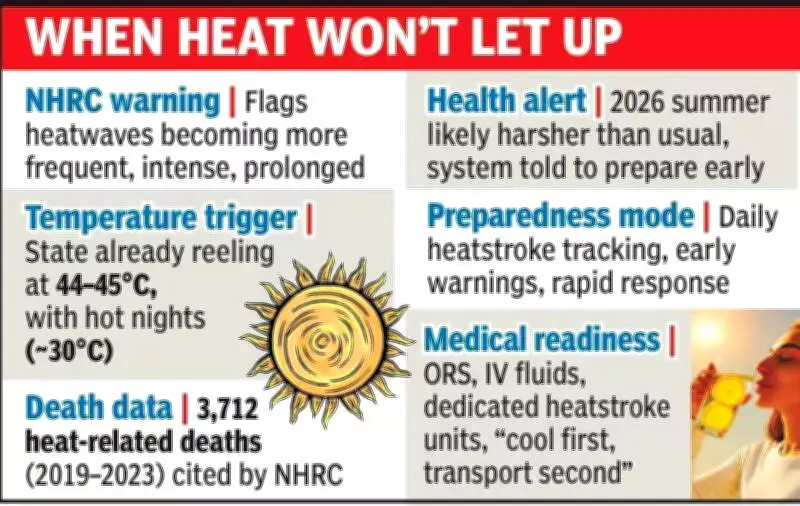
The National Human Rights Commission (NHRC) on Tuesday warned of a deepening heatwave threat across the country, prompting Chhattisgarh, already sweltering under 44–45°C temperatures, to redraw its response. Chief secretary Vikas Sheel has ordered gram panchayat-level climate action plans to protect vulnerable populations.
Severe Early Summer Spell
The warning comes as the state faces one of its harshest early summer spells, with hot winds sweeping across central districts and nights offering little relief. In an advisory issued to 21 states, including Chhattisgarh, the NHRC flagged that heatwaves are becoming more frequent, intense and prolonged, posing serious risks to outdoor workers, the poor, children and the elderly. It called for immediate implementation of relief measures and adherence to National Disaster Management Authority (NDMA) guidelines. Data cited by the commission shows that 3,712 people died due to heat or sunstroke in India between 2019 and 2023.
Preparedness Measures
National Health Mission managing director Ranbir Sharma said India's top disease control body has also warned that the summer of 2026 could be harsher than usual, stressing the need for early preparedness. Chhattisgarh has been asked to move into 'preparedness mode', with daily tracking of heatstroke cases, early warning dissemination and hospitals equipped for rapid response. Measures include ensuring adequate stocks of ORS and IV fluids, setting up dedicated heatstroke management units, and adopting a 'cool first, transport second' approach to stabilise critical patients before shifting them.

Current Temperature Scenario
Across Raipur, Durg, Bhilai, Rajnandgaon, Dhamtari and Balodabazar, temperatures are hovering between 42°C and 44°C, while minimum temperatures near 30°C are extending heat into the night. Even Bastar, long considered a relatively cooler belt, is recording 38°C to 41°C in districts such as Jagdalpur, Kanker, Dantewada and Narayanpur, indicating a shift in regional climate patterns.
Decentralised Action Plans
At the state secretariat, departments have been directed to prepare gram panchayat-wise climate action plans, marking a shift from reactive measures to decentralised preparedness. Officials said the plans will focus on water conservation, heat mitigation, agricultural adaptation and better use of CSR funds. The discussions also underlined how climate stress is becoming visible across sectors, from falling water levels to longer summers and erratic weather patterns, signalling a growing crisis.