

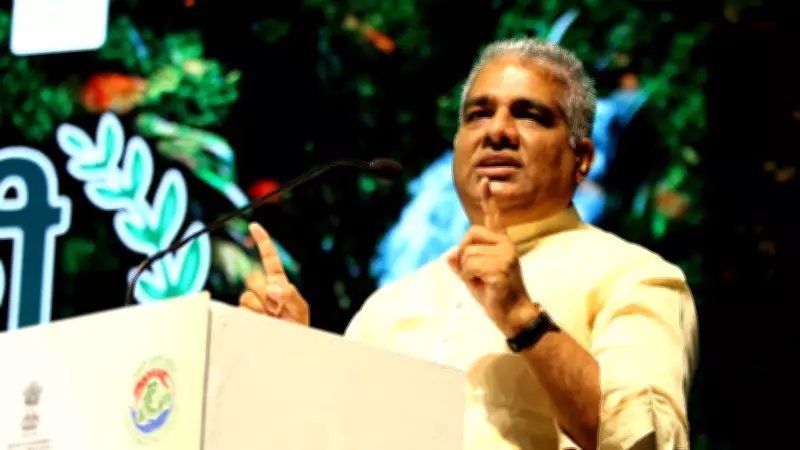
Union Environment Minister Issues Directive on Eco-Sensitive Zone Notifications
Union Environment Minister Bhupender Yadav has issued a clear directive that authorities must not place projects located in eco-sensitive zones (ESZs) for appraisal unless the draft or final ESZ notification has been published. This instruction was given during a recent meeting of the Standing Committee of the National Board for Wildlife (SC-NBWL), held on January 19, 2026, in New Delhi.
Strict Appraisal Criteria for ESZ Projects
According to the minutes of the SC-NBWL meeting, proposals for projects within ESZs will only be considered for appraisal in exceptional or extraordinary circumstances. Minister Yadav emphasized that, as a matter of principle, such proposals should not ordinarily be included as part of the 'table agenda' unless there is a justified urgency. The SC-NBWL is responsible for evaluating projects that fall within national parks, wildlife sanctuaries, or their surrounding buffer zones under the Wildlife Protection Act of 1972.
What Are Eco-Sensitive Zones?
Eco-sensitive zones are designated areas typically extending up to 10 kilometers around national parks and wildlife sanctuaries. These zones serve as a buffer to regulate activities and protect the ecology from the negative impacts of infrastructure development. If a state government has not proposed an ESZ, a default 10-kilometer area is enforced based on Supreme Court directives. Activities within ESZs are strictly controlled; for instance, commercial mining, sawmills, and polluting industries are prohibited, while other activities may be regulated or permitted.

Coordination with States to Expedite Notifications
In addition to the appraisal directive, Minister Yadav has instructed the Ministry of Environment, Forest and Climate Change to coordinate closely with state governments to accelerate the finalization of draft or final ESZ notifications. This move aims to ensure that ESZs, which act as a second-tier of legal protection, are properly established to safeguard wildlife habitats, water sources, and overall biodiversity.
Background and Guidelines for ESZs
The minister's directions follow a decision made during the SC-NBWL's December meeting to finalize draft guidelines for examining infrastructure proposals in ESZs and wetlands near protected areas. These guidelines are designed to balance infrastructure development with ecological safeguards. Data presented in the Rajya Sabha in November 2024 indicates that the ministry has published 347 ESZ notifications and granted environmental clearance to 43 projects in ESZs between 2018 and 2023.
The proposed guidelines categorize projects based on their location: within notified ESZs, within areas where draft ESZs have been notified, or in areas where ESZs have not been notified. Furthermore, discussions in June 2025 focused on revising ESZ guidelines to make them more site-specific, addressing ecological and socio-economic realities. Independent members have raised concerns about large-scale renewable energy projects, such as solar or wind farms, potentially threatening wildlife migration routes, suggesting stricter regulation.
Recent Developments and Statistics
In December 2025, Minister Yadav responded to a parliamentary question, revealing that 201 proposals were received for clearing infrastructure projects in eco-sensitive zones, wildlife corridors, national parks, and tiger reserves. This highlights the ongoing need for robust regulatory frameworks to manage development while preserving India's natural heritage.






