

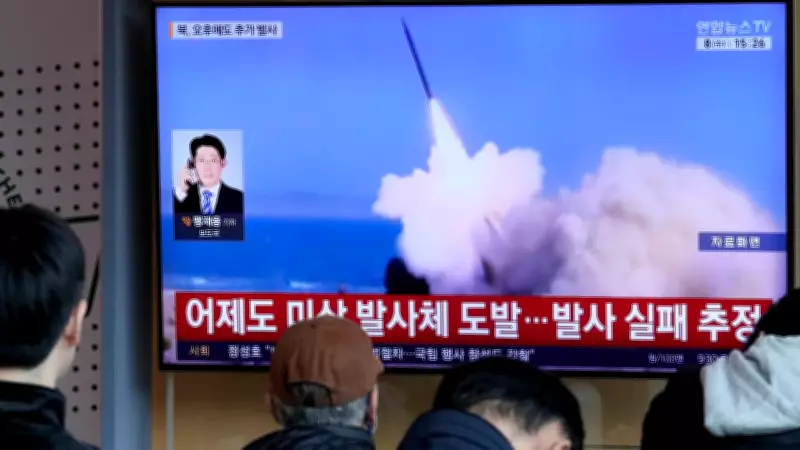
North Korea Conducts Multiple Ballistic Missile Launches Amid Diplomatic Tensions
North Korea fired several rounds of ballistic missiles on Wednesday, creating a stark contrast to recent diplomatic gestures between the two Koreas. The launches occurred mere days after North Korean leader Kim Jong Un expressed rare praise for South Korean President Lee Jae Myung, highlighting the volatile nature of inter-Korean relations.
Details of the Missile Launches
According to South Korea's Joint Chiefs of Staff, the missiles were launched from an area near Wonsan, targeting waters off North Korea's eastern coast. In response to these provocative actions, Seoul immediately convened an emergency meeting of its national security council. South Korean officials urged Pyongyang to cease all activities that blatantly violate United Nations Security Council resolutions, which strictly prohibit such missile tests.
Hours after the initial launches, North Korea conducted at least one additional ballistic missile test. While the precise range of this missile remains unclear, Japan's Coast Guard reported that the projectile had likely already fallen into the sea. These launches followed a suspected failed weapons test the previous day, where a missile reportedly malfunctioned shortly after launch and disappeared mid-flight, as noted by Yonhap News.

Diplomatic Context and Conflicting Messages
The missile tests came shortly after an unusual diplomatic exchange between North and South Korea. North Korea had conveyed Kim Jong Un's appreciation for President Lee's apology regarding a drone incident involving aircraft that crossed into North Korean airspace. Seoul described this communication as a "meaningful step forward" toward peaceful coexistence on the Korean Peninsula.
In a statement, Kim Jong Un's sister, Kim Yo Jong, stated that the North Korean leader viewed Lee's apology as indicative of a "frank and broad-minded" approach. However, Pyongyang later rejected Seoul's optimistic interpretation, dismissing it as a "hope-filled dream reading." A senior North Korean official emphasized that the message was intended as a stern warning, asserting that South Korea remains an "enemy state" regardless of its actions or rhetoric.
Analytical Perspectives and Regional Implications
The consecutive missile launches underscore the significant challenges facing President Lee's administration as it attempts to de-escalate tensions with nuclear-armed North Korea. Analysts suggest that Pyongyang is strategically countering Seoul's diplomatic narrative while reinforcing its own position of military strength on the Korean Peninsula.
Key points from experts include:
- North Korea aims to demonstrate its unwavering commitment to advancing its ballistic missile capabilities.
- The launches serve as a reminder of Pyongyang's persistent push for international recognition as a nuclear power.
- These actions complicate South Korea's efforts to foster dialogue and reduce hostilities in the region.
Earlier on Wednesday, North Korea also tested short-range missiles that traveled approximately 240 kilometers, further showcasing its evolving military prowess. The back-to-back tests highlight the delicate balance between diplomatic overtures and military posturing in inter-Korean relations.
As the situation develops, regional stability remains precarious, with both nations navigating a complex landscape of engagement and deterrence. The international community continues to monitor these events closely, given their potential implications for global security and non-proliferation efforts.






