

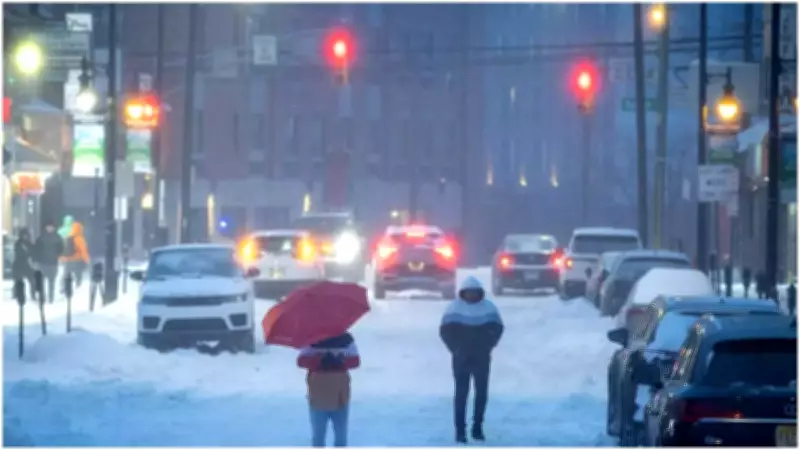
New York City Plunges into Historic Deep Freeze, Outchilling Antarctica
In a stunning meteorological event, New York City recorded temperatures colder than parts of Antarctica on Sunday, as life-threatening Arctic winds swept across the Northeast and New England over the weekend. The city's mercury dipped to a frigid 3 degrees Fahrenheit, with bitter wind chills dragging the real feel temperatures down to a bone-chilling 14 degrees below zero.
Unprecedented Cold Grips the Region
According to reports from the New York Post, parts of the northeast experienced wind chills that plummeted to an astonishing 40 degrees below zero. The National Weather Service issued Rare Extreme Cold Warnings for more than 43 million people, covering major metropolitan areas including New York and Philadelphia through Sunday evening.
"The last time New York City had a warning issued similar to what we have this morning was in 2004," stated FOX Weather Meteorologist Stephen Morgan on Friday, highlighting the exceptional nature of this cold outbreak.

A Stark Contrast with Antarctic Warmth
In a remarkable comparison, Antarctica's McMurdo Station registered a relatively balmy 21 degrees Fahrenheit, making it a full 18 degrees warmer than New York City at the peak of the freeze. This unusual inversion underscores the severity of the Arctic air mass that descended upon the northeastern United States.
New Yorkers can attribute this latest round of winter misery to a powerful blast of Arctic air that surged southward from the frozen tundra north of Hudson Bay, Canada. This system has created what forecasters are calling the most extreme prolonged cold stretch in at least a decade, and in some areas, the last two decades.
Forecasters Warn of Record-Breaking Conditions
"In many parts of the Northeast away from the coast, this prolonged stretch of cold is the most extreme in at least the last decade and, in some areas, the last two decades," explained AccuWeather Senior Director of Forecasting Operations Dan DePodwin. "Many locations will end up with a streak of days below freezing that falls into the top 10 longest such streaks on record."
This weekend marked the coldest day in what has already been a record-breaking cold snap, the worst the region has seen in over twenty years. AccuWeather Chief Meteorologist Jon Porter emphasized the severity, stating, "The deep freeze is returning to the northeastern United States this weekend. The combination of Arctic air and gusty winds could make it feel colder than any other point so far this winter for many in the region."
Tragic Human Toll and Municipal Responses
The extreme conditions have taken a tragic human toll. So far this year, at least 17 people have died outside in New York City, with 13 confirmed fatalities attributed to hypothermia. Despite the rising death toll, Mayor Mamdani has refused to implement mandatory measures to force homeless individuals off the streets and into shelters.
In contrast, other major cities have taken more proactive measures. Warming shelters were opened in Philadelphia, Washington DC, and Boston, where Mayor Michelle Wu issued a cold weather emergency for the city lasting through Monday. These efforts highlight the varying approaches to public safety during extreme weather events across different municipalities.
The historic cold snap serves as a stark reminder of the power of Arctic weather systems and their capacity to disrupt normal life, even in one of the world's most populous urban centers. As climate patterns continue to evolve, such extreme events may become more frequent, challenging cities to adapt their infrastructure and emergency response protocols accordingly.






