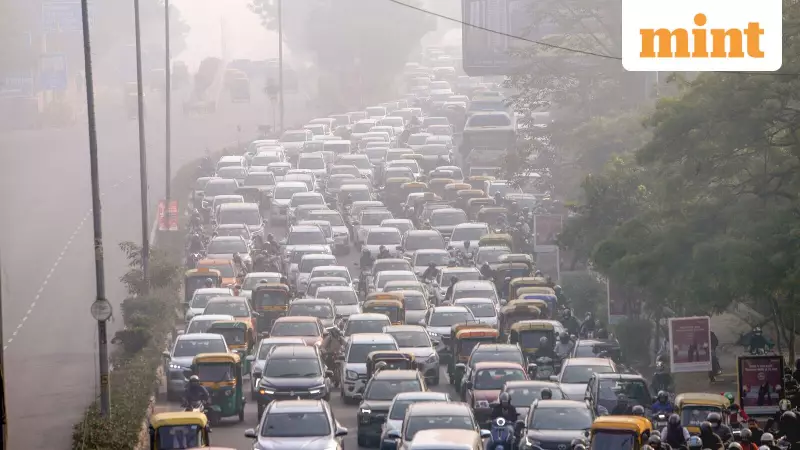
In a decisive move to tackle worsening air quality, the state of Odisha has launched a stringent campaign against vehicular pollution, mirroring recent actions in the national capital. The State Transport Authority (STA) has directed all oil marketing companies to stop dispensing petrol and diesel to any vehicle that does not possess a valid Pollution Under Control Certificate (PUCC).
Linking Fuel to Emission Compliance
This new mandate forms a critical part of Odisha's broader strategy to enforce stricter adherence to emission norms and reduce the environmental footprint of its transport sector. By directly linking access to fuel with compliance to clean air protocols, authorities aim to compel vehicle owners to prioritize regular maintenance and timely pollution checks. The urgency of this action is underscored by the state's current air quality. Official data recorded Odisha's Air Quality Index (AQI) at 177 on 21 December, a level categorized as 'unhealthy'.
Weather Woes: Fog Adds to Safety Concerns
Even as Odisha ramps up its anti-pollution drive, the state is simultaneously grappling with weather-related challenges. Forecasts predict dense fog in several districts in the coming days, prompting the State Transport Authority to issue urgent road safety advisories. The STA has urged all drivers to exercise extreme caution.

In a post on social media platform X, the authority stated, "Dense fog warnings have been issued by the Water Resources Department for various districts of the state. Keeping this in mind, road users have been urged to exercise caution to stay away from accidents." Key recommendations for motorists include:
- Reducing speed significantly.
- Using fog lights appropriately.
- Avoiding overtaking maneuvers in low-visibility conditions.
- Maintaining a safe distance from other vehicles.
Delhi's Aggressive Campaign Sets a Precedent
Odisha's policy closely follows the intensification of a similar campaign in Delhi. On Thursday, the Delhi government launched its 'No PUC, No Fuel' initiative, which yielded immediate and dramatic results. The campaign led to a massive surge in compliance, with over 61,000 PUCCs issued within a single 24-hour period.
Delhi's multi-pronged strategy is targeting pollution on four major fronts: vehicular emissions, dust from roads and construction, industrial pollution, and waste management. In a further tightening of regulations, the capital has also restricted the entry of non-Delhi vehicles that do not meet the stringent BS-6 emission standards, taking a zero-tolerance stance against high-emission transport entering the city.
Strict Enforcement Under GRAP IV
The enforcement in Delhi is being carried out rigorously under the Graded Response Action Plan (GRAP) Stage-IV regulations. Delhi Traffic Police have established extensive arrangements at the city's borders to ensure compliance. Additional Commissioner of Police (Traffic) Dinesh Kumar Gupta provided details on the crackdown, noting that officials are working round-the-clock.
To date, enforcement actions have resulted in 2,686 fines for PUCC violations and 422 fines for BS6 norm violations. Gupta also highlighted ongoing efforts to raise public awareness in neighbouring states about the GRAP-IV rules through social media and government advertisements.
The synchronized actions in Odisha and Delhi signal a growing recognition among Indian states of the need for hard enforcement measures to combat the severe public health crisis posed by vehicular pollution and deteriorating air quality.