

Odisha Tops India in Human Fatalities from Elephant Attacks, Study Finds
Bhubaneswar has become the epicenter of a grave wildlife crisis, with Odisha recording the highest rate of human fatalities from elephant attacks in the entire country. According to data compiled by the Wildlife Society of Odisha, an NGO, from the census conducted by the Wildlife Institute of India last year, the state reports a staggering 17 human deaths per 100 elephants.
Alarming Disparity Compared to Other States
This figure is substantially higher than other states with larger elephant populations. Karnataka, with 6,013 elephants, and Kerala, with 2,785 elephants, reported only one human death per 100 elephants. In contrast, Odisha's elephant population stands at 912 according to the WII report titled 'Status of Elephants in India: DNA-based Synchronous All India Population Estimation of Elephants, 2025'.
Wildlife conservationist Biswajit Mohanty emphasized the severity of the situation. "Assuming the WII DNA-based figure is accurate, Odisha reports a very high rate of human deaths compared with its elephant population," he stated. "Even if we consider Odisha's own elephant census figure of 2,103 as accurate, human deaths per 100 elephants comes to 7, which remains alarmingly high compared to other states."

Root Causes of the Escalating Conflict
Conservationists point to multiple factors driving this crisis:
- Degraded Elephant Corridors: Movement in traditional corridors has been severely affected by quarrying and development work. Despite a government decision in 2012, the forest department has not notified 14 identified corridors.
- Inadequate Mitigation Plans: Sources reveal that although the state government paid Rs 3.67 crore to a private consultant in 2016 for a wildlife conflict mitigation plan, no concrete measures have materialized.
- Human Activities: The forest department often cites early morning open defecation, firewood collection, and food gathering by villagers as primary triggers for attacks, resulting in families losing their earning members.
Sharp Rise in Human Fatalities
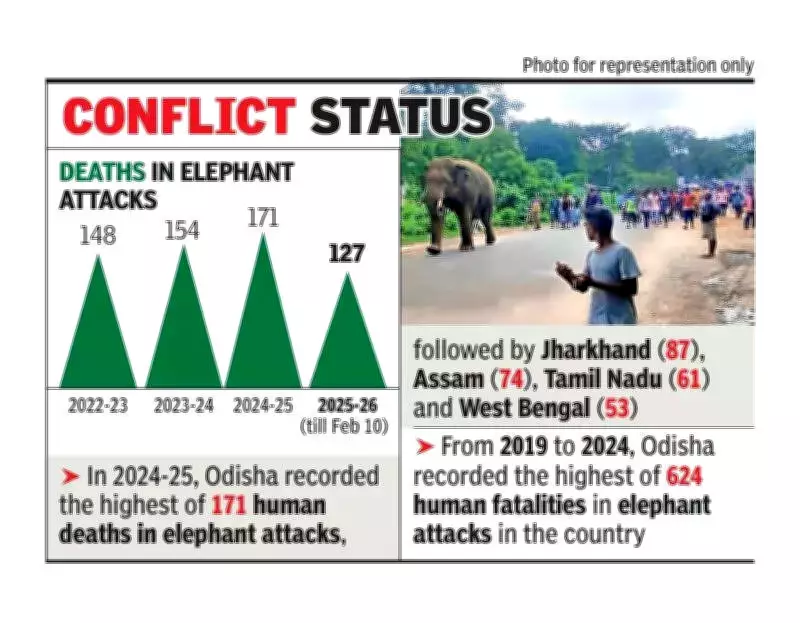
The human toll has escalated dramatically in recent years. Since 2019-20, fatalities have risen sharply, crossing 115, and reaching 171 in 2024-25. This trend underscores the urgent need for effective intervention strategies.
PCCF (wildlife) Prem Kumar Jha highlighted awareness and sensitization as crucial components in tackling human-elephant conflict. "Even in elephant zones, people are coming in the way of the animals despite knowing past incidents," he told TOI. "Early morning firewood collection and answering to nature's call are known factors. We are trying to sensitize people to remain alert."
The data paints a stark picture of a state grappling with a wildlife conflict that demands immediate attention, comprehensive planning, and robust conservation efforts to protect both human lives and elephant populations.






