

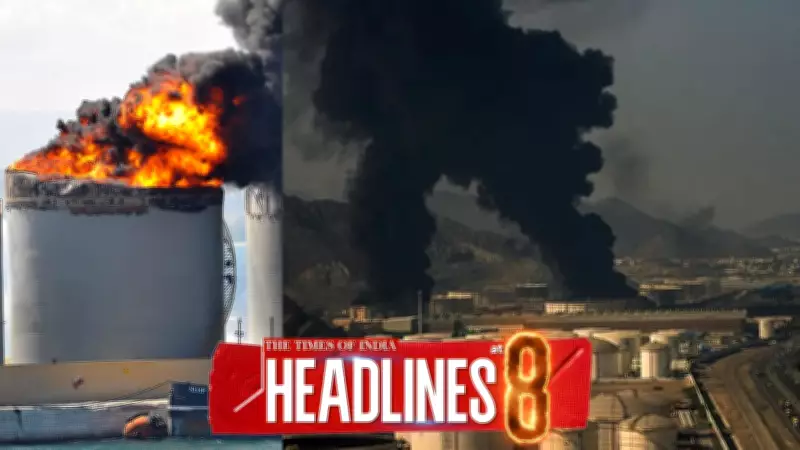
West Asia Conflict Spirals Into Full-Blown Oil War, Shaking Global Markets
The longstanding tensions in West Asia have now erupted into a direct oil war, with a series of tit-for-tat attacks on critical energy infrastructure sending shockwaves through global markets. This escalation marks a dangerous new phase in the regional conflict, as nations target each other's economic lifelines.
Tit-for-Tat Attacks on Gas Fields and Refineries
Recent weeks have seen a sharp increase in attacks on key energy hubs. Iranian drones have reportedly targeted facilities in multiple nations, including the burning of oil and gas installations in three countries. In retaliation, there have been bombardments of Saudi oil refineries, allegedly in response to attacks on gas facilities linked to Israel and the US.
Donald Trump has issued a stark warning, stating that if Qatar's LNG sites are hit again, the US will strike Iran's massive South Pars Gas Field. This threat underscores the high stakes involved, as these facilities are crucial to global energy supplies.

Saudi Arabia Warns Iran: 'Patience Is Limited'
Saudi Arabia has entered the fray with a strong statement, lambasting Tehran for its actions and hinting that its patience is wearing thin. The kingdom criticized Iran's role in Islamic causes and signaled it might join the conflict directly if attacks on energy sites continue.
This warning from Riyadh adds another layer of complexity to the already volatile situation, potentially drawing more regional powers into the confrontation.
US on High Alert as Drones Spotted Near White House
The conflict has reached close to home for the United States, with reports of Iranian drones spotted near a US military base in Washington DC. This triggered a high alert and lockdown at the facility, putting officials like Marco Rubio and Pete Hegseth in the spotlight.
In response to the escalating threats, the Pentagon is seeking an additional $200 billion in funding, a clear signal that the US is preparing for a deepening and prolonged conflict.
Iran Issues Direct Threats to US Allies
Iran has not held back in its rhetoric, issuing direct warnings to US allies in the region. The IRGC has been active, blowing up a ship near the UAE for defying a Hormuz ban and continuing attacks on energy facilities. Mojtaba, a key Iranian figure, has threatened to avenge every drop of blood over the killing of Larijani, targeting both Israel and the US.
Meanwhile, Iran has also bombed Palestine, resulting in casualties in the occupied West Bank, and Israel faces ongoing missile fury. The situation remains fluid and highly dangerous.
Global Implications and Market Reactions
The transformation of the West Asia conflict into an oil war has immediate global implications:
- Energy Prices: Attacks on key production and refining facilities are likely to drive up oil and gas prices worldwide.
- Geopolitical Stability: The involvement of major powers like the US and regional heavyweights like Saudi Arabia increases the risk of a broader conflict.
- Economic Impact: The additional $200 billion sought by the Pentagon indicates significant financial resources being diverted to military preparedness.
As tensions continue to escalate, the world watches anxiously, hoping for de-escalation but preparing for the worst. The oil war in West Asia is not just a regional issue; it is a global crisis in the making.






