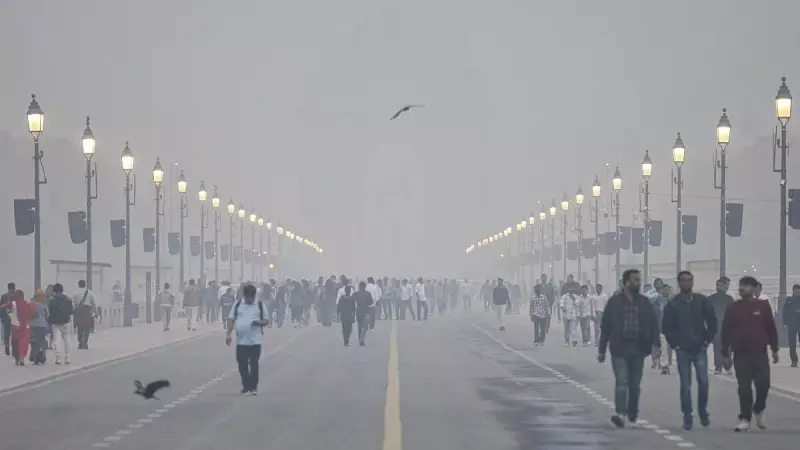
A significant disparity in India's fight against toxic air has come to light. While official data identifies a staggering 1,787 urban areas grappling with poor air quality, the central government's flagship National Clean Air Programme (NCAP) extends its reach to only 130 of them. This leaves a vast majority of polluted cities outside the ambit of the targeted national action plan.
The Selection Criteria Based on Old Data
The list of 130 cities included under the NCAP was not chosen arbitrarily. The selection was specifically based on historical ambient air quality data from the years 2011 to 2015. This five-year window served as the benchmark for identifying cities that consistently violated the National Ambient Air Quality Standards (NAAQS). Consequently, urban centres that have seen a rapid deterioration in air quality in more recent years may not feature on the current NCAP list, potentially missing out on focused resources and mitigation strategies.
A Vast Landscape Left Uncovered
The gap between the number of cities facing pollution and those receiving dedicated central assistance is substantial. With NCAP covering 130 cities, it implies that over 1,650 urban locations identified as polluted are not directly covered by this central scheme. These cities must rely on state-led initiatives or other non-NCAP funds and policies to combat their air quality issues. This uneven coverage raises questions about the scalability of the clean air mission and whether a more dynamic, data-driven approach is needed to include emerging pollution hotspots.

Implications and the Path Forward
The situation underscores a critical challenge in India's environmental governance. The NCAP, launched with the goal of reducing particulate matter concentration by 20-30% by 2024 (now extended), is a crucial framework. However, its limited scope means a large part of the country's urban population remains without its structured, time-bound target approach. Experts argue for a more inclusive and frequently updated mechanism that can respond to real-time air quality data and expanding urban clusters. The report, highlighted by journalist Chiranjeevi Kulkarni and published on 09 January 2026, brings this pressing issue to the fore, suggesting that India's war on pollution needs a wider battlefield.
Moving ahead, the focus may need to shift towards empowering state pollution control boards with greater resources and mandating city-specific clean air plans for all urban areas exceeding safe limits, regardless of their inclusion in the NCAP list. The health of millions in the uncovered cities depends on a more comprehensive and agile national response.