

Oran Bachao March Reaches Jaipur, Demands Legal Protection for Rajasthan's Grazing Lands
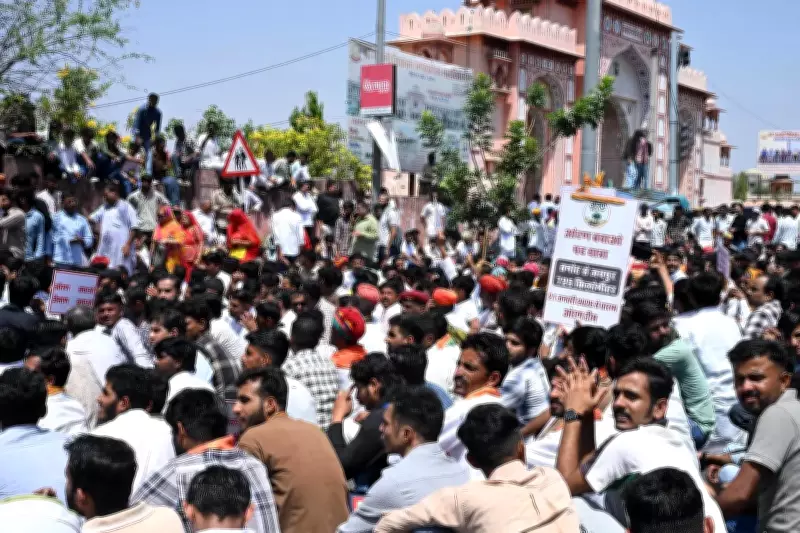
The "Oran Bachao" march, a significant environmental movement led by activists and local residents from Jaisalmer and surrounding regions, successfully arrived in Jaipur on Thursday. This procession, which drew participants from across the state, aims to advocate for enhanced conservation measures and formal recognition of traditional grazing lands, known as Orans, within Rajasthan's official revenue records to prevent ongoing encroachments.
Protest Halted by Police Before Reaching Chief Minister's Residence
Upon reaching Jaipur, the demonstrators gathered in front of Bhawani Niketan on Sikar Road to hold a peaceful demonstration. However, their planned progression towards the Chief Minister's residence was interrupted when police authorities stopped the march near Bhawani Niketan. This action prevented the protesters from directly presenting their grievances to state leadership.
Protesters expressed deep concerns regarding the lack of a clear governmental policy addressing the protection of Oran lands. They highlighted alleged encroachments on these unrecorded areas, which disproportionately affect rural and border communities reliant on these resources for sustenance and cultural practices.

Long Journey and Demands of the March
The march commenced on January 21 from the historic Tanot Mata Temple in Jaisalmer, with participants enduring harsh winter conditions and extreme summer heat while walking barefoot to Jaipur. Their struggle is dedicated to safeguarding Orans, grazing lands, khejri trees, rivers, drains, and ponds—vital ecological and communal assets.
Sumer Singh, the initiator of the march, stated, "We were not permitted to meet the Chief Minister or any senior government representatives. Consequently, we are returning to Jaisalmer to devise a new strategy for advancing our cause." He emphasized that if the government fails to address their demands promptly, the agitation will be intensified further.
Key Demands in the Submitted Memorandum
The memorandum submitted by the protesters outlines several critical demands focused on securing legal and ecological protection for traditional grazing lands and water systems in Jaisalmer. Key points include:
- Proper recording of all Orans (sacred groves), gochar (grazing lands), ponds, catchment areas, khadins, rivers, drains, wells, and other common resources in revenue records.
- Correction of existing land records in Jaisalmer to reflect accurate boundaries and ownership.
- Protection of key pastoral villages and formal recognition of shepherd settlements and traditional pathways.
- Establishment of solar parks exclusively in areas with low population and livestock density.
- Placement of industrial allotments at least 3 kilometers away from village settlements to minimize environmental and social impact.
- Documentation of heritage structures such as chhatris, temples, inscriptions, and memorials in official records to preserve cultural heritage.
Unresolved Issues and Previous Agitations
Protesters also raised the issue of the proposed bill for the protection of the khejri tree, a species integral to the region's ecology. Despite government assurances to introduce this bill in the Assembly, it has not yet been implemented, leading to frustration among activists.
Members of the Bishnoi community and other environmental groups have previously agitated on this matter, but announcements have not translated into concrete action on the ground. This ongoing neglect underscores the urgency of the current march's demands for systemic change and accountability in land management policies.






