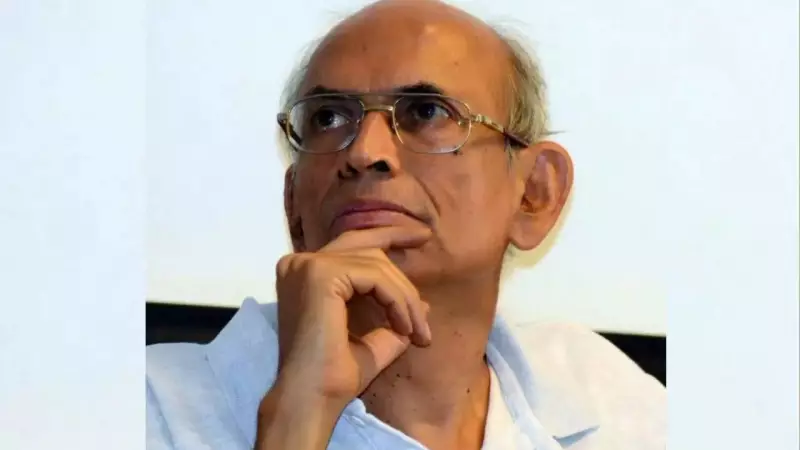
The world of environmental conservation and community rights in India has lost a towering figure. Renowned ecologist Madhav Gadgil passed away at the age of 83 on January 7. He breathed his last at Prayag Hospital in Pune following a brief illness.
A Legacy Forged in Science and Community
Madhav Gadgil was far more than a scientist; he was a passionate champion for the rights of local communities, believing they were the true custodians of nature. His work seamlessly blended rigorous scientific research with deep community engagement. This unique approach earned him the nation's highest civilian honours, the Padma Shri and the Padma Bhushan. Most recently, his lifelong dedication was recognised globally with the United Nations Environment Programme's (UNEP) 2024 Champions of the Earth Award, the UN's highest environmental honour.
The Western Ghats Report and a Life of Principle
Gadgil is perhaps most widely known for chairing the Western Ghats Ecology Expert Panel (WGEEP). Formed in 2010 by India's Ministry of Environment, the panel's landmark 2011 report recommended declaring approximately 75% of the Western Ghats as an Ecologically Sensitive Area (ESA). This bold recommendation, aimed at preserving one of the world's richest biodiversity hotspots, faced significant opposition from various quarters.

A subsequent review by the Kasturirangan committee in 2013 substantially reduced the proposed protected area to about 37%. Throughout the debate, Gadgil remained an outspoken advocate, consistently arguing that true development could never be achieved at the cost of irreversible environmental destruction.
From Pune to Harvard and Back: A Patriotic Scholar
Born in Pune, Maharashtra, on May 24, 1942, Madhav Gadgil was an alumnus of Fergusson College. He pursued higher studies at Harvard University in the USA, where he earned his PhD. Despite receiving numerous attractive offers from universities across the globe, he made the conscious decision to return to India and contribute to its scientific and environmental policy landscape.
His professional journey in India began at the Agharkar Research Institute, followed by a distinguished 30-year tenure at the Indian Institute of Science (IISc) in Bengaluru. His foundational work was instrumental in the establishment of India's first biosphere reserve, the Nilgiri Biosphere Reserve, in 1986. He also played a key role in shaping the country's landmark Biological Diversity Act of 2002.
Madhav Gadgil's life was a testament to the power of principled science in service of people and the planet. His cremation is scheduled for 4 pm on Thursday at the Vaikunth crematorium in Pune. He leaves behind an indelible legacy that will continue to guide environmental discourse in India for generations to come.