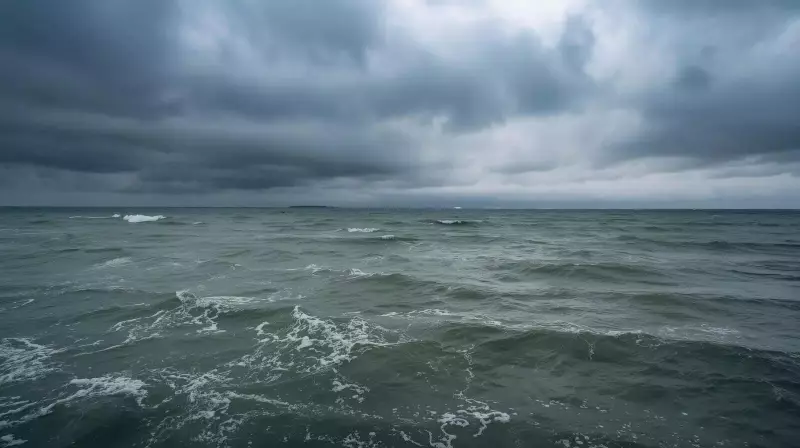
Something deeply unusual and quietly alarming occurred off the coast of Panama in the first months of 2025. Unlike a dramatic storm or a visible mass die-off, this event was defined by a profound absence. The ocean's reliable annual rhythm, a process scientists compare to the sea 'breathing,' simply did not happen. For the first time in decades, a vital ocean cycle that sustains marine life and cools coastal waters failed to arrive, marking a potentially significant shift in a system long thought to be resilient.
The Ocean's Missed Breath: What Failed in Panama?
Every year, typically between January and April, a dependable natural process unfolds. Winds crossing Central America arrive in short, powerful jets. These winds push the warm surface water away from the Panamanian coast, allowing colder, nutrient-rich water from the depths to rise—a phenomenon known as upwelling. This influx acts like a shot of adrenaline for the ecosystem. It cools the surface, delivers oxygen, and brings up nutrients that fuel explosive growth of phytoplankton, the base of the marine food web. Fish populations surge, and coral reefs get a critical respite from heat stress. While its strength can vary with climate patterns like El Niño and La Niña, this upwelling has been a constant, predictable feature. In 2025, it vanished.
A study published in the journal PNAS confirmed the failure using satellite data and field measurements. The surface water remained stubbornly warm, and the characteristic green bloom of phytoplankton never materialized. Research vessels discovered a sharp, unmoving boundary between the warm surface layer and the cold, oxygen-rich water below, with little of the usual mixing. Data stretching back to the mid-1980s shows no comparable event. Even during intense climate swings, the upwelling had weakened but never disappeared entirely. By the time scientists confirmed the full absence, the seasonal window for recovery had already closed.

Causes and Consequences: Why the Winds Stopped
The root cause was not weaker winds, but fewer of them. The short-lived wind jets that usually pulse regularly were far less frequent in early 2025. When they did blow, their strength was near normal, but there simply weren't enough pulses to set the upwelling process in motion. Researchers have linked this drop in frequency to a shift in a major atmospheric boundary near the equator, which aligned with a recent La Niña phase. Intriguingly, similar conditions in the past did not cause a complete shutdown, suggesting the system's vulnerability may lie in precise timing rather than overall force. Miss enough critical wind events, and the entire process stalls.
The ecological and economic consequences, while not an overnight collapse, began to accumulate swiftly. Phytoplankton numbers dropped, reducing food for small fish. Coastal fishers reported significantly lower catches of species that typically thrive during the upwelling months. Coral reefs suffered doubly: without the seasonal cooling, heat stress persisted and led to earlier and more widespread bleaching than anticipated. Furthermore, with the upwelling stalled, oxygen levels in deeper layers fell, putting pressure on sedentary marine animals. The stress built quietly across the ecosystem, with no quick recovery in sight.
A Global Warning from a Localized Failure
The failure of Panama's upwelling is a stark reminder of the interconnected fragility of our ocean systems. While such upwelling zones may appear small on a global map, they are disproportionately important. They support major fisheries, help regulate regional climate and heat, and are the anchors for rich coastal ecosystems. The fact that one of the tropics' most consistent upwellings can simply pause raises urgent questions about the stability of similar systems worldwide as the climate continues to change.
Scientists are cautious, noting that a single anomalous year does not necessarily establish a permanent trend. However, the 2025 event in Panama serves as a powerful signal. In an era of climate change, the most telling warning might not always be a violent storm or a catastrophic die-off. Sometimes, the alarm is sounded by a season that, quietly and ominously, does not arrive.