As the 2015 Paris Agreement marks a decade, a simple metric suggests failure: global greenhouse gas emissions continue to climb. Yet, a deeper look reveals a more complex narrative of foundational progress, driven by a clean technology boom the pact helped ignite.
The Stark Reality: Rising Emissions and Political Backsliding
The core goal of the landmark treaty, signed by 196 nations, was to limit global warming to "well below 2° Celsius" and aim for 1.5°C above pre-industrial levels. The reality, however, has been challenging. According to the EU's Copernicus climate service, the last three years are set to be the first period where the average temperature rise exceeds the 1.5°C target. The world remains far from achieving net-zero emissions.
Political winds have also shifted against the accord. In 2025, the United States—historically responsible for roughly 24% of all cumulative emissions—withdrew from the treaty for a second time under President Donald Trump. The European Union has softened key regulations, including its 2035 ban on new combustion engine cars. Furthermore, a trend of "greenhushing," where companies downplay environmental efforts to avoid scrutiny, is growing.

The Paris Effect: Catalysing a Clean-Tech Revolution
Despite these setbacks, analysts argue the Paris Agreement has fundamentally altered the trajectory. In October 2015, the Climate Action Tracker estimated the world was heading for a catastrophic 3.6° Celsius of warming by 2100. Current projections, thanks to policies spurred by the pact, have lowered that to 2.6°C—a significant, though insufficient, improvement.
The treaty's powerful signal for a net-zero future unlocked a flood of investment and innovation. The EU's Innovation Fund, created to meet treaty commitments, has financed breakthroughs in batteries, carbon-negative cement, and advanced recycling. The accord created the demand certainty that made green tech a viable field for massive R&D investment.
Global Green Shifts: Solar Booms and EV Adoption
The real-world impact is visible across the globe, particularly in developing nations where clean technology now makes clear economic sense.
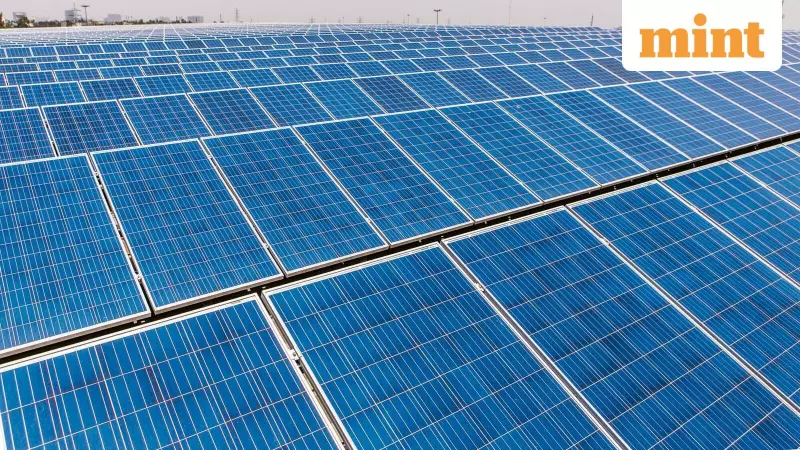
In Pakistan, frustration with high prices and blackouts has fueled a massive solar boom. In some large industrial regions, rooftop solar generation is expected to exceed grid demand during daytime hours next year—a historic first. Many African nations are following suit, leveraging cheap solar panel imports from China to leapfrog fossil fuel dependency. Countries like Kenya, Algeria, and Nigeria are setting renewable energy records.
The electric vehicle (EV) revolution is also taking root in unexpected places. In Nepal, over 70% of four-wheeled passenger vehicles imported last year were electric, helping combat Kathmandu's severe air pollution. In Ethiopia, the driver is economic: the country spends about $4.5 billion annually on fuel imports, and EVs offer a solution to chronic shortages and high costs.
These examples underscore a critical shift: the climate transition is increasingly powered by cleantech that is simply cheaper and more reliable.
The Road Ahead: Peak Emissions by 2030?
While fossil fuel demand remains at record highs, there is cautious optimism. The International Energy Agency forecasts that fossil fuel use could peak before 2030, with global emissions likely following suit. The rapid, cost-competitive expansion of renewables is key to this hope.
The Paris Agreement, by design, faced a "multi-prisoners' dilemma" with no penalties for inaction, encouraging some to free-ride on others' efforts. Petro-states and oil companies, who have made an estimated $2.5 billion in daily profit for 50 years, have little incentive to voluntarily surrender revenue.
Yet, the pact's legacy is not its final scorecard today, but the irreversible green revolution it set in motion. It moved the debate from *if* to *how* the world decarbonises. The journey is far from over, and the 1.5°C goal is in severe peril, but the foundation for a cleaner future has undeniably been laid. To call that a failure misses the profound transformation already underway.