

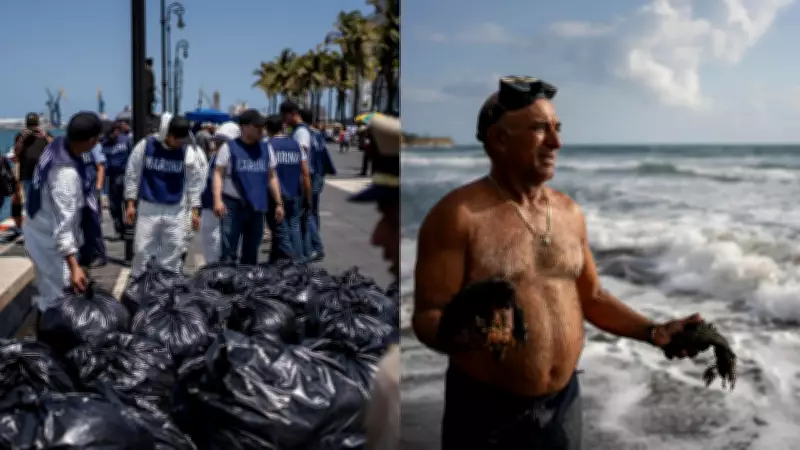
Pemex Oil Spill in Gulf of Mexico Triggered by Unreported Leak, Officials Confirm
Mexican officials announced on Thursday that a significant oil spill in the Gulf of Mexico, which occurred in March and polluted beaches, killed wildlife, and spread hundreds of miles, was initiated by a leak near the Abkatun field operated by the state energy company Pemex. The incident has led to disciplinary actions within the organization after it was revealed that the leak had gone unreported internally.
Disciplinary Actions and Unreported Incident
Pemex Chief Executive Officer Víctor Rodríguez stated that the leak had not been reported within the company, resulting in disciplinary measures. "There had been a leak and repairs senior officials had not been informed of," he explained, adding that several officials would be removed from their positions as a consequence. According to Reuters, Rodríguez confirmed that three company officials had already lost their jobs for failing to report the leak, which began in February and led to a crude oil spill that washed ashore in March.
Investigation and Source Identification
Over the past weeks, authorities scrambled to determine the source of the spill. Earlier investigations in late March had focused on petroleum tankers passing through the area before the leak was ultimately identified near the Abkatun field. According to the Associated Press, the oil spill in early March had spread to more than 600 kilometers (373 miles), impacting seven protected natural reserves. Mexican authorities indicated that the spill was linked to three possible sources:

- A vessel yet to be identified
- Two natural seepage points
In March, Navy Secretary Raymundo Morales detailed that satellite imagery and inspections identified three specific sources: a vessel anchored off the coast of Coatzacoalcos in Veracruz, a geological seepage site known as a "chapopotera" located 8 kilometers away, and another natural seepage in the Bay of Campeche. He noted that the vessel had not been identified, as 13 ships in the area had not been inspected at the time. "These oil seeps have a constant, natural emission; however, there has been a greater flow of contaminants in the last month," Morales said.
Environmental Impact and Cleanup Efforts
Authorities reported that approximately 430 tonnes of hydrocarbons have been recovered so far. The spill affected seven protected natural reserves across Veracruz and Tabasco, though Environment Secretary Alicia Bárcena stated that no severe environmental damage had been detected. Environmental authorities confirmed that six species, including sea turtles, birds, and fish, were contaminated. The National Commission of Natural Protected Areas (Conanp) conducted cleanup operations across multiple protected sites, such as:
- The Los Tuxtlas Biosphere Reserve
- Veracruz Reef System National Park
- The Centla Wetlands Biosphere Reserve
This incident highlights ongoing challenges in environmental management and corporate accountability in the region, with officials continuing to monitor the situation and assess long-term impacts.






