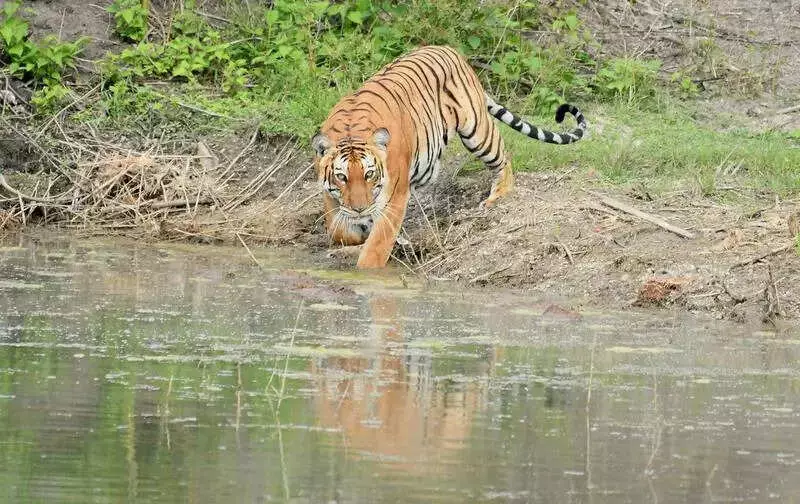
The state of Tamil Nadu is gearing up for a crucial wildlife survey as the first phase of the sixth All India Tiger Estimation (AITE) commences on Monday. This nationwide exercise, conducted once every four years, marks the beginning of an intensive week-long effort to assess the presence and habitats of tigers across the state.
Comprehensive Survey Across Reserves and Forests
Forest department teams will cover all four notified tiger reserves in Tamil Nadu: Mudumalai, Anamalai, Kalakad-Mundanthurai, and Sathyamangalam. However, the survey's scope extends far beyond these protected areas. It will also include tiger-bearing forest divisions outside the reserves, such as the Coimbatore forest division, where camera traps and pugmark evidence have consistently recorded tiger movement.
Chief Wildlife Warden Rakesh Kumar Dogra confirmed that forest divisions in Tiruvannamalai, Tiruppattur, and Vellore districts will also be surveyed due to signs indicating potential tiger presence. This expansive approach ensures a more accurate picture of the big cat's distribution across the state's landscape.

Focus on Prey, Vegetation, and Carnivore Signs
According to K Sankar, former senior professor at the Wildlife Institute of India (WII) and former director of SACON, Phase I will primarily focus on estimating prey density and assessing vegetation, including shrub cover. This foundational data is critical for understanding the health of the tiger's ecosystem.
The methodology involves line transect surveys, where forest staff will walk predetermined routes spanning several kilometres. During these walks, they will meticulously record prey sightings, signs of human disturbance, and indirect evidence like dung or pellet counts.
Simultaneously, a carnivore sign survey will be conducted to document pugmarks, scat, rake marks on soil, and claw marks on trees, alongside tracking herbivore movement. These field activities will be carried out continuously over the seven-day period by forest personnel who underwent specialized training from WII experts a few months ago.
Phased Approach Leading to Final Count
Sankar explained that the first three phases of the estimation will be executed entirely by the forest department staff. The final and decisive phase will involve collecting data from camera traps installed in vital locations within the core areas of the reserves. It is only after analyzing this camera trap data that the final tiger population estimates for both reserves and tiger-bearing areas will be derived.
He added that students, conservationists, and other volunteers will have the opportunity to participate in the process, but only during this last phase involving camera trap monitoring. This structured, multi-phase approach, led by trained professionals, aims to ensure the scientific rigor and accuracy of the national tiger census, providing vital data for the conservation of India's national animal.