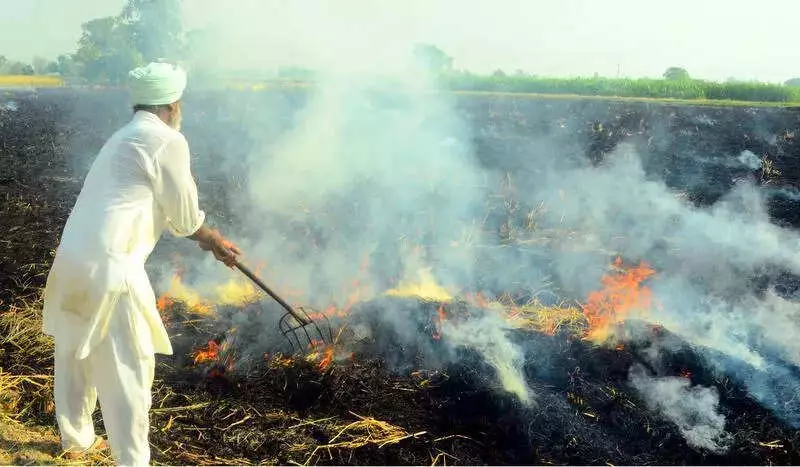
A startling new analysis by the Centre for Science and Environment (CSE), released on December 31, 2025, has uncovered a critical shift in Delhi-NCR's winter air pollution narrative. The study reveals that the most intense and widespread smog episodes occur after the period of crop residue burning has concluded, challenging the common perception that farm fires are the primary driver of the capital's seasonal air quality crisis.
The Alarming Data: Pollution Intensifies Post-Stubble
The CSE report meticulously compared two distinct phases of the early winter of 2025. The first phase, from October 1 to November 30, is heavily influenced by smoke from farm fires in neighbouring states. The second, post-stubble burning phase, covered December 1 to 29, when the contribution from agricultural fires becomes negligible.
The findings are unequivocal. During the stubble-burning period, Delhi recorded three days with 'severe' Air Quality Index (AQI). The peak AQI was 428, observed on November 11. In stark contrast, the post-stubble period witnessed five 'severe' AQI days. The season's worst air was recorded on December 14, with the AQI surging to a alarming 461.

More critically, the average concentration of deadly PM2.5 particles rose sharply from 163 micrograms per cubic metre (µg/m³) during the farm fire phase to 210 µg/m³ in December—a 29% increase. This surge happened even as the contribution from farm fires to PM2.5 levels crashed from an average of 4.2% to just 0.2%.
A Regional Crisis, Not Just Delhi's Problem
The analysis confirms the smog crisis is a widespread phenomenon across the National Capital Region. While Delhi saw a 29% jump in PM2.5 levels after stubble burning stopped, other urban centres experienced even steeper rises.
- Noida recorded the highest spike at 38%.
- Ballabhgarh saw a 32% increase.
- Baghpat registered a 31% rise.
- Gurugram and Faridabad each saw a pronounced 27% increase.
"This regional spike is driven by local emission sources and exacerbated by stagnant winter meteorology, which prevents the dispersion of pollutants," explained Sharanjeet Kaur, deputy programme manager of CSE's Urban Lab.
Local Sources Take Centre Stage: Vehicles Lead the Charge
The report pinpoints the culprits behind the persistent smog. Data from the Decision Support System (DSS) for December 1-15 shows that local sources within Delhi accounted for only about 35% of the total PM2.5. The remaining 65% originated from the wider NCR and beyond.
However, within Delhi's own contribution, the breakdown is revealing. Transport, primarily vehicles, emerged as the single largest local source, responsible for a staggering 46% of the city's PM2.5 load. Industry contributed 22%, while household-level emissions from cooking and heating accounted for 11%.
"The stark contrast between declining fire influence and rising pollution levels indicates the dominance of local and regional sources — vehicles, industry, waste burning, and solid fuels," stated Anumita Roychowdhury, executive director of research and advocacy at CSE.
The study, based on real-time data from operational air quality stations and SAFAR estimates, delivers a clear message. While managing seasonal farm fires remains necessary, it is insufficient. Achieving cleaner air requires aggressive, year-round action targeting urban and regional emission sources to enable a true zero-emissions transition. The smog is sustained by a toxic mix of local emissions, regional pollution inflow, and secondary aerosol formation, demanding coordinated airshed-level management.