

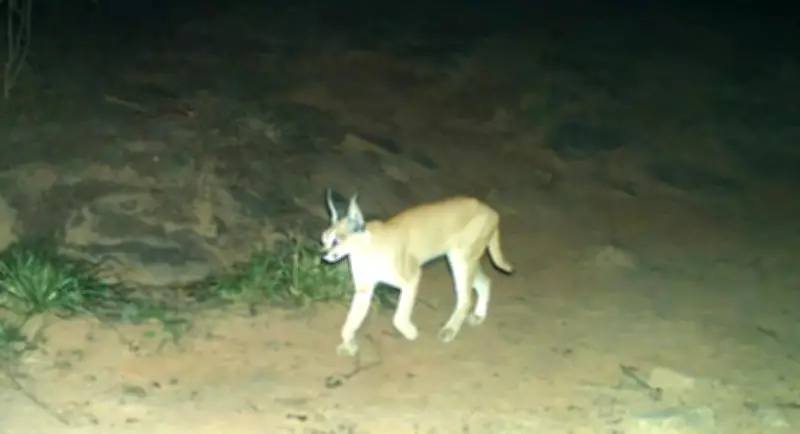
Project Caracal Launched in Rajasthan to Study Elusive Wild Cat Species
In a significant move to strengthen conservation efforts for one of India's least understood wild cats, "Project Caracal" was officially launched on Wednesday in the Greater Ranthambhore landscape of Rajasthan. This initiative marks the beginning of a structured 18-month scientific effort aimed at generating comprehensive data on the elusive predator across Rajasthan's arid and semi-arid regions.
Bridging Knowledge Gaps for a Shy Species
The project specifically aims to address long-standing knowledge gaps surrounding the caracal, a shy and rarely sighted wild cat species known for its distinctive tufted ears and remarkably silent movement patterns. Concurrent with the launch, a workshop titled "Conservation of Caracal in Rajasthan" brought together researchers, field biologists, and forest officials to assess existing data and develop strategic plans for future conservation actions.
Field biologist Dharmendra Khandal provided crucial insights into the caracal's current habitats during the workshop. "In India, three primary locations—Kutch in Gujarat, the Greater Ranthambhore landscape, and Desert National Park—maintain a good presence of caracals. Due to ongoing conservation efforts, a strong presence is also anticipated in the Dholpur region. Remarkably, in just the last three months, camera traps have captured approximately 70 images of these elusive cats," he reported.

Technological Support and Research Methodology
A major technological boost for Project Caracal comes from Tiger Watch, which has deployed an extensive network of 450 camera traps across the Ranthambhore landscape. These sophisticated monitoring devices are expected to provide crucial insights into the species' movement patterns, behavioral characteristics, and population trends—areas where scientific data has remained notably scarce for several decades.
Experts participating in the workshop emphasized that despite the caracal's historical range across India, the species now survives primarily in fragmented pockets and faces multiple environmental pressures. The animal's exceptionally secretive nature has further complicated monitoring efforts, making systematic research both essential and particularly challenging for conservationists.
Project Leadership and Institutional Support
Project Caracal was originally conceptualized by Arijeet Banerjee and will be led by Dr. Shomita Mukherjee of the Wildlife Institute of India–SACON. The project's co-leads include Dr. Dharmendra Khandal of Tiger Watch and Dr. Ayan Sadhu, who is associated with both the National Tiger Conservation Authority and the Wildlife Institute of India.
The launch event saw significant institutional support with senior forest officials including Dr. G S Bhardwaj and K C A Arun Prasad in attendance, along with field directors from Ranthambhore, Ramgarh Vishdhari, Mukundra, and Sariska tiger reserves. "Scientific research, field monitoring, community participation, and institutional coordination are absolutely crucial for conservation success. This project is expected to serve as a structured, comprehensive effort to secure the future of this rare predator," stated an official present during the workshop proceedings.
The collaborative nature of Project Caracal represents a promising step forward in understanding and protecting one of India's most enigmatic wild cat species, combining technological innovation with expert knowledge and institutional cooperation.






