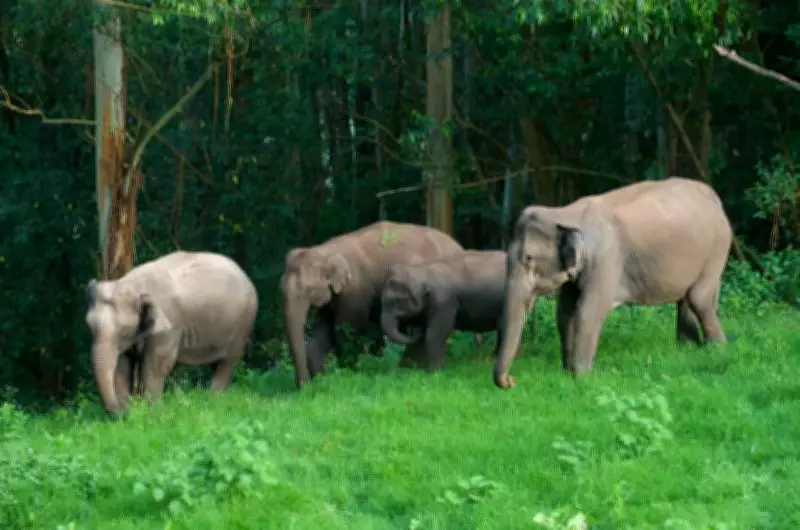
Project Elephant Intensifies Efforts with Technology to Curb Human-Animal Conflicts
The Ministry of Environment, Forests and Climate Change has rolled out a series of innovative initiatives under Project Elephant, aimed at deepening the understanding of elephant behavior and effectively mitigating conflicts with human populations. Minister Bhupender Yadav provided these details during a session in the Rajya Sabha on Thursday, highlighting a multi-pronged approach to conservation and conflict management.
Comprehensive Studies and Expansion Plans
In collaboration with the Wildlife Institute of India (WII), the ministry has successfully concluded a thorough study on elephant conflicts in the states of Assam, Chhattisgarh, and Jharkhand. Building on this foundation, the project is set to expand its scope significantly. Phase-II of the study will delve into 23 years of conflict data from Karnataka, Kerala, Odisha, West Bengal, and Tamil Nadu. This extensive analysis is expected to yield more refined strategies for managing interactions between elephants and humans, ultimately fostering safer coexistence.
Technological Innovations and Strategic Initiatives
Responding to a query from MP Sikander Kumar, Minister Yadav outlined several key technological advancements being implemented. These include:

- Establishing a genetic database for captive elephants to enhance breeding and health management programs.
- Utilizing radio collars to track the movements and behavioral patterns of wild elephants, providing critical data for informed decision-making in conflict mitigation.
- Deploying modern technologies such as AI-based monitoring systems and early warning alerts disseminated through social media applications to proactively prevent conflicts.
These measures represent a significant leap forward in leveraging technology for wildlife conservation and human safety.
Financial Support and Regional Action Plans
Through centrally sponsored schemes like Project Tiger and Project Elephant, the central government extends both financial and technical assistance to states and Union Territories. A dedicated Project Elephant steering committee convenes regularly to assess conservation progress and establish priority areas for action.
Furthermore, the ministry is partnering with WII to develop regional action plans across four major elephant-bearing regions. The planning process has already commenced in the southern and northeastern regions, with specialized committees conducting field visits to gather on-ground insights and tailor strategies to local needs.
Corridor Conservation and Ground Validation
In a crucial step towards habitat preservation, the ministry, along with state forest departments, has ground-validated 150 elephant corridors across 15 elephant range states. State governments and UT administrations have been advised to take necessary measures to protect and conserve these vital pathways, ensuring elephants can migrate safely without encroaching on human settlements.
This holistic approach under Project Elephant underscores the government's commitment to balancing ecological conservation with human welfare, using science and technology as key enablers in this ongoing effort.