

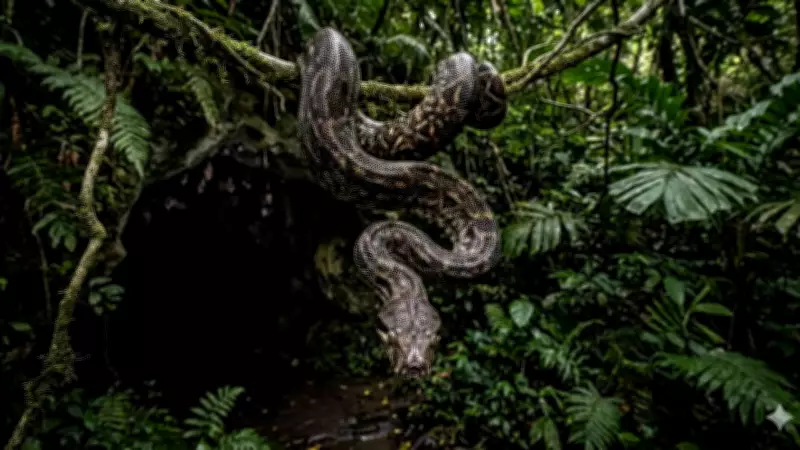
The Hidden World of Puerto Rico's Limestone Caves
Deep within the remote, north-western region of Puerto Rico lies a subterranean realm shrouded in darkness and humidity. These limestone caves form a complex network of winding tunnels, rocky chambers, and concealed pools, creating an environment few humans ever witness. The air is perpetually damp, and the silence is broken only by the faint scuttling of small creatures—cockroaches, crabs, and crayfish—that inhabit every crevice.
Unlike the surface world, birds are absent from these depths, but they are replaced by thousands of bats. Species such as the Antillean ghost-faced bat and the sooty moustached bat rely on these caves as sanctuaries for rest and raising their young. Yet, within this seemingly secure habitat, a silent and efficient predator lies in wait, perfectly adapted to exploit the cave's unique conditions.
The Eerie Hunting Technique of the Puerto Rican Boa
The Puerto Rican boa, a native and non-venomous snake, has evolved a hunting method that is both astonishing and eerie. These boas can grow up to two meters in length, making them formidable predators in the confined cave environment. Rather than pursuing prey on the ground, they employ a specialized ambush strategy.

Using the tip of their tails, the boas anchor themselves securely into cracks and fissures in the cave ceiling. They then let the majority of their muscular bodies dangle freely into the open space below. Remaining almost motionless, they sway subtly with the air currents, blending seamlessly with the shadows to avoid detection.
Timing is critical for their success. The snakes wait patiently for bats to fly within striking distance. When a bat passes close enough, the boa lunges with incredible speed and precision, executing a deadly mid-air calculation. In an instant, it wraps its powerful body around the bat, constricting tightly until the prey ceases to move. This method is not only efficient but also minimizes energy expenditure in an environment where resources are scarce.
Adaptability and Ecological Role
While bats are a primary target, Puerto Rican boas are opportunistic feeders. Their diet also includes lizards, rodents, and occasionally birds when available. Researchers note that these snakes adjust their hunting techniques based on prey availability, but the ceiling-hanging strategy appears reserved specifically for capturing flying mammals like bats.
Observers fortunate enough to witness this phenomenon might see several boas positioned simultaneously near cave entrances, each waiting for the perfect moment to strike. This behavior underscores the snakes' role as apex predators within the cave ecosystem.
A Thriving Yet Fragile Cave Ecosystem
The caves of Puerto Rico are far from barren. They teem with life, from insects darting through crevices to crabs and crayfish hiding in submerged pools. Bats congregate in clusters on the ceilings, while the boas patrol from above. This ecosystem, though fragile, demonstrates a remarkable balance where every organism has carved out a niche.
Experts emphasize that the boa's unusual hunting method highlights how predators adapt to confined environments. Survival in these caves depends on a combination of timing, patience, and luck, creating a natural, if sometimes grim, cycle of life and death.
Scientific Insights and Evolutionary Significance
Scientists are actively studying Puerto Rican boas to gain deeper insights into cave ecosystems. By observing these snakes, researchers learn how predators and prey coexist in tight spaces, revealing the intricacies of food webs in isolated habitats. The hanging boa is not merely an oddity; it is a key component of a delicate ecological balance.
This hunting style also serves as a compelling example of evolution in action. It demonstrates how a predator can develop specialized behaviors tailored to a specific environment—in this case, a snake that has mastered the art of hanging from ceilings to catch bats mid-air. Such adaptations underscore the dynamic interplay between species and their habitats, offering valuable lessons for conservation and biological study.






